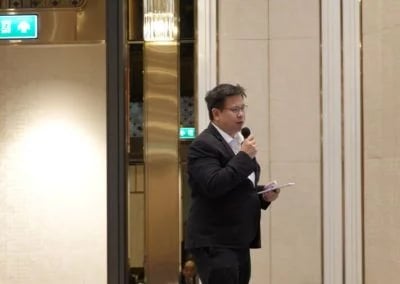

เมื่อวันที่ 9 พฤศจิกายน 2569 คณะอนุกรรมการโครงสร้างพื้นฐาน โลจิสติกส์และซัพพลายเชน สายงานอาเซียนและโลจิสติกส์ สภาอุตสาหกรรมแห่งประเทศไทย (ส.อ.ท.) ร่วมกับเครือข่ายธุรกิจเพื่อการจัดการสภาพภูมิอากาศประเทศไทย (ThaiCBN) และหน่วยงานพันธมิตร จัดอบรมหลักสูตร “Winning with Logistics Decarbonization” เพื่อเสริมสร้างความรู้และความเข้าใจเกี่ยวกับการลดการปล่อยก๊าซเรือนกระจกในภาคโลจิสติกส์และการขนส่ง พร้อมเชื่อมโยงการบริหารจัดการคาร์บอนเข้ากับการเพิ่มประสิทธิภาพการดำเนินงาน การลดต้นทุน และการสร้างความได้เปรียบในการแข่งขันทางธุรกิจ โดยมีสมาชิก ส.อ.ท. เข้าร่วมกว่า 50 ราย ณ อาคาร K+ Building ซอยจุฬาฯ 20
ในการนี้ นายอุดร คงคาเขตร กรรมการบริหาร ส.อ.ท. และประธานคณะอนุกรรมการโครงสร้างพื้นฐาน โลจิสติกส์และซัพพลายเชน สายงานอาเซียนและโลจิสติกส์ พร้อมด้วยนางสาวรัตนา ภัทรธนากานต์ เลขานุการเครือข่ายธุรกิจเพื่อการจัดการสภาพภูมิอากาศประเทศไทย ร่วมกล่าวต้อนรับและเปิดการอบรม
การอบรมครั้งนี้ได้รับเกียรติจากวิทยากรผู้เชี่ยวชาญร่วมถ่ายทอดองค์ความรู้ โดยมี รศ.ดร.จรรยา ชาญชัยชูจิต จากศูนย์การจัดการโลจิสติกส์และซัพพลายเชนอย่างยั่งยืน มหาวิทยาลัยสงขลานครินทร์ บรรยายเกี่ยวกับแนวคิดพื้นฐานด้านการลดคาร์บอน ปัจจัยขับเคลื่อนทางธุรกิจ และแนวทางสร้างความได้เปรียบในการแข่งขัน พร้อมสรุปองค์ความรู้และประเด็นสำคัญของการอบรม ขณะที่นางสาวสุธิดา ประเสริฐบดินทร์ กรรมการผู้จัดการ บริษัท เตียฮ่งซิน จำกัด ถ่ายทอดความรู้ด้านการเพิ่มประสิทธิภาพการดำเนินงาน การลดต้นทุนและการปล่อยคาร์บอน ตลอดจนการดูแลรักษายาง
หลักสูตรดังกล่าวออกแบบให้ครอบคลุมองค์ความรู้ 5 ด้าน โดยบูรณาการมุมมองทางวิชาการ เทคโนโลยี การดำเนินธุรกิจ และการเงิน เพื่อสนับสนุนการเปลี่ยนผ่านสู่ระบบโลจิสติกส์คาร์บอนต่ำอย่างเป็นระบบ ประกอบด้วย
1. UNDERSTAND – สร้างความเข้าใจ
ปูพื้นฐานแนวคิดและความสำคัญของการลดการปล่อยคาร์บอนในภาคการขนส่ง โลจิสติกส์ และห่วงโซ่อุปทาน รวมถึงปัจจัยขับเคลื่อนทางธุรกิจและโอกาสในการสร้างความได้เปรียบในการแข่งขัน โดยวิทยากรจากศูนย์การจัดการโลจิสติกส์และซัพพลายเชนอย่างยั่งยืน มหาวิทยาลัยสงขลานครินทร์
2. MEASURE – การวัดและประเมินผล
ถ่ายทอดหลักการคำนวณการปล่อยก๊าซเรือนกระจกจากกิจกรรมการขนส่งในห่วงโซ่อุปทาน พร้อมแนะนำมาตรฐาน ISO 14083, GLEC Framework และเครื่องมือคำนวณที่เกี่ยวข้อง เพื่อวางพื้นฐานการจัดเก็บข้อมูลและประเมินปริมาณการปล่อยก๊าซเรือนกระจกขององค์กรอย่างเป็นระบบ
3. OPTIMIZE – การเพิ่มประสิทธิภาพการดำเนินงาน
นำเสนอแนวทางการระบุแหล่งปล่อยคาร์บอนหลักในห่วงโซ่การขนส่ง การประยุกต์ใช้เทคโนโลยีดิจิทัลและ AI การขับขี่อย่างประหยัดพลังงาน (Eco-Driving) รวมถึงการดูแลรักษายาง เพื่อเพิ่มประสิทธิภาพการดำเนินงาน ลดต้นทุน และลดการปล่อยคาร์บอน โดยวิทยากรจาก SCGJWD Logistics, SCGJWD Academy และบริษัท เตียฮ่งซิน จำกัด
4. TRANSITION – การเปลี่ยนผ่านสู่โลจิสติกส์คาร์บอนต่ำ
นำเสนอแนวทางการเปลี่ยนผ่านด้านพลังงานและการเลือกใช้เทคโนโลยีให้เหมาะสมกับรูปแบบการขนส่ง ทั้งยานยนต์ไฟฟ้าและเชื้อเพลิงทางเลือก เช่น ไฮโดรเจนและไบโอดีเซล โดยวิทยากรจากศูนย์เทคโนโลยีพลังงานแห่งชาติ (ENTEC) สำนักงานพัฒนาวิทยาศาสตร์และเทคโนโลยีแห่งชาติ (สวทช.) และการไฟฟ้าฝ่ายผลิตแห่งประเทศไทย (EGAT)
5. ACT – Green Finance การเงินสีเขียวเพื่อการลดคาร์บอน
แนะนำแนวคิดการเงินสีเขียวสำหรับภาคโลจิสติกส์ แหล่งเงินทุนและทางเลือกทางการเงินสำหรับผู้ประกอบการ รวมถึงแนวทางการพิจารณาขอรับการสนับสนุนทางการเงินเพื่อนำไปดำเนินมาตรการลดคาร์บอน โดยวิทยากรจากธนาคารกสิกรไทย
นอกจากนี้ ในช่วงสรุปการอบรม ได้เน้นย้ำว่า การเปลี่ยนผ่านสู่โลจิสติกส์คาร์บอนต่ำเป็นการเตรียมความพร้อมในระยะยาว ที่ต้องอาศัยความต่อเนื่อง ความมุ่งมั่น และการบูรณาการมาตรการลดการปล่อยก๊าซเรือนกระจกเข้ากับการดำเนินธุรกิจตามปกติ โดยผู้ประกอบการควรกำหนดเป้าหมายและแผนดำเนินงานที่ชัดเจน โดยมีปี 2030 เป็นหมุดหมายสำคัญในการวางแผน พร้อมติดตามความเปลี่ยนแปลงด้านมาตรการคาร์บอน การเปิดเผยข้อมูลความยั่งยืน และกฎหมายที่เกี่ยวข้อง
สำหรับแนวทางการดำเนินงาน ผู้ประกอบการสามารถเริ่มต้นจากมาตรการที่ทำได้ทันที เช่น การเพิ่มประสิทธิภาพการใช้พื้นที่และความสามารถในการบรรทุกสินค้า (Load Factor) การวางแผนเส้นทางขนส่ง การขับขี่อย่างประหยัดพลังงาน (Eco-Driving) การลดการติดเครื่องยนต์ทิ้งไว้โดยไม่จำเป็น (Idling) และการดูแลรักษายาง ควบคู่กับการจัดทำข้อมูลฐาน (Baseline Data) โดยจัดเก็บข้อมูลการใช้เชื้อเพลิงและระยะทางอย่างเป็นระบบ พร้อมประยุกต์ใช้มาตรฐาน ISO 14083 เพื่อสนับสนุนการประเมินและการสื่อสารผลการลดการปล่อยก๊าซเรือนกระจกกับคู่ค้า
ในด้านพลังงาน ผู้ประกอบการควรวางกลยุทธ์การเปลี่ยนผ่านโดยพิจารณาใช้เทคโนโลยีและพลังงานหลายรูปแบบร่วมกัน (Multi-Pathway) ให้เหมาะสมกับลักษณะการขนส่ง เช่น การใช้ยานยนต์ไฟฟ้าสำหรับการขนส่งสินค้าในเขตเมืองและระยะทางสั้น ขณะที่การขนส่งระยะไกลอาจพิจารณาใช้เชื้อเพลิงชีวภาพหรือการขนส่งทางราง โดยทยอยปรับเปลี่ยนตามความพร้อมของแต่ละธุรกิจ นอกจากนี้ ควรนำข้อมูลผลการลดคาร์บอนที่สามารถตรวจสอบได้มาใช้ประกอบการพิจารณาเข้าถึงแหล่งเงินทุนสีเขียว รวมถึงสินเชื่อที่เชื่อมโยงกับผลการดำเนินงานด้านความยั่งยืน (Sustainability-Linked Loans) ภายใต้หลักเกณฑ์และเงื่อนไขของสถาบันการเงิน
การอบรมครั้งนี้สะท้อนถึงความมุ่งมั่นของ ส.อ.ท. ในการส่งเสริมและยกระดับศักยภาพผู้ประกอบการภาคโลจิสติกส์และการขนส่ง ให้สามารถนำองค์ความรู้ด้านการบริหารจัดการคาร์บอนไปประยุกต์ใช้จริง เชื่อมโยงการลดการปล่อยก๊าซเรือนกระจกเข้ากับการเพิ่มประสิทธิภาพ ลดต้นทุน และการเข้าถึงเทคโนโลยีและแหล่งเงินทุน เพื่อเปลี่ยนผ่านสู่โลจิสติกส์คาร์บอนต่ำ สร้างโอกาสทางธุรกิจ และเสริมสร้างขีดความสามารถในการแข่งขันของภาคอุตสาหกรรมไทยในระยะยาว
On November 9, 2026, the Subcommittee on Infrastructure, Logistics, and Supply Chain under the ASEAN and Logistics Division of the Federation of Thai Industries (FTI) collaborated with the Thailand Business Climate Action Network (ThaiCBN) and partner agencies to conduct the training course "Winning with Logistics Decarbonization" to enhance knowledge and understanding of greenhouse gas emission reductions in the logistics and transportation sectors. The training also connected carbon management with operational efficiency improvement, cost reduction, and creating business competitive advantages, with more than 50 members of FTI participating at the K+ Building, Chulalongkorn University Soi 20.
During the event, Mr. Udorn Kongkakate, Executive Board Member of FTI and Chair of the Subcommittee on Infrastructure, Logistics, and Supply Chain under the ASEAN and Logistics Division, along with Ms. Rattana Patthatanakan, Secretary of the Thailand Business Climate Action Network, jointly welcomed and opened the training session.
The training was honored with expert speakers sharing valuable insights, including Associate Professor Dr. Janya Chanchai Chuchit from the Sustainable Logistics and Supply Chain Management Center, Prince of Songkla University, who lectured on basic concepts of carbon reduction, business drivers, and strategies for creating competitive advantages. The session concluded with a summary of key knowledge and important topics from the training. Ms. Suthida Prasertbodin, Managing Director of Tiahongsin Co., Ltd., shared knowledge on improving operational efficiency, cost reduction, carbon emissions, as well as tire maintenance.
This course is designed to encompass knowledge in five areas, integrating academic perspectives, technology, business operations, and finance to support a systematic transition to low carbon logistics. It comprises:
1. UNDERSTAND – Building Understanding
Establishing the foundational concepts and importance of carbon emission reduction in transportation, logistics, and supply chain sectors, as well as business drivers and opportunities for competitive advantage, with speakers from the Sustainable Logistics and Supply Chain Management Center, Prince of Songkla University.
2. MEASURE – Measurement and Assessment
Transmitting principles for calculating greenhouse gas emissions from transportation activities in the supply chain while introducing ISO 14083 standards, GLEC Framework, and related calculation tools to lay the groundwork for systematic data collection and greenhouse gas emission assessment for organizations.
3. OPTIMIZE – Operational Efficiency Improvement
Presenting methods for identifying key carbon emissions sources in the transportation chain, applying digital technology and AI, eco-driving, as well as tire maintenance to enhance operational efficiency, reduce costs, and lower carbon emissions, with speakers from SCGJWD Logistics, SCGJWD Academy, and Tiahongsin Co., Ltd.
4. TRANSITION – Transitioning to Low Carbon Logistics
Presenting transition pathways in energy and appropriate technology choices for different transport modes, including electric vehicles and alternative fuels such as hydrogen and biodiesel, with speakers from the National Energy Technology Center (ENTEC), National Science and Technology Development Agency (NSTDA), and Electricity Generating Authority of Thailand (EGAT).
5. ACT – Green Finance for Carbon Reduction
Introducing concepts of green finance for the logistics sector, funding sources, and financial alternatives for entrepreneurs, as well as guidelines for seeking financial support for carbon reduction measures, with speakers from Kasikorn Bank.
Additionally, during the training summary, it was emphasized that transitioning to low carbon logistics is a long-term preparation that requires continuity, commitment, and integration of greenhouse gas emission reduction measures into standard business operations. Business operators should set clear goals and operational plans, with the year 2030 being a significant milestone for planning, while monitoring developments in carbon measures, sustainability disclosure, and related regulations.
For operational guidelines, entrepreneurs can start with immediate measures such as enhancing space utilization and load factor, planning transport routes, practicing eco-driving, minimizing unnecessary idling, and maintaining tires, along with establishing baseline data by systematically collecting fuel usage and distance data while applying ISO 14083 standards to support the assessment and communication of greenhouse gas emission reduction results with partners.
In terms of energy, entrepreneurs should strategize their transition by considering the use of multiple technology and energy pathways that suit the nature of transport, such as employing electric vehicles for urban and short-distance goods transport, while long-distance transport might consider biodiesel or rail transport, making gradual adjustments according to the readiness of each business. Moreover, reliable carbon reduction results data should be incorporated into considerations for accessing green financial resources, including sustainability-linked loans in accordance with the criteria and conditions of financial institutions.
This training reflects FTI's commitment to promoting and enhancing the potential of logistics and transportation entrepreneurs to apply carbon management knowledge in practice, linking greenhouse gas emission reduction with efficiency improvement, cost reduction, and access to technology and funding sources, facilitating a transition to low carbon logistics, creating business opportunities, and strengthening the competitive capabilities of the Thai industrial sector in the long term.
แท็ก:Tags:#โลจิสติกส์#Logistics