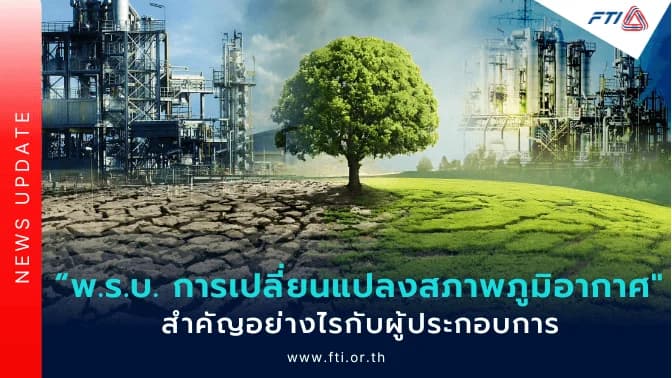

ภาคอุตสาหกรรมยังมีความสำคัญต่อระบบเศรษฐกิจอย่างมาก แต่หากกระบวนการผลิตก่อให้เกิดผลกระทบต่อระบบนิเวศหรือสิ่งแวดล้อม และความเป็นอยู่ที่ดีของชุมชนโดยรอบแล้ว ปัญหาความขัดแย้งและไม่ยอมรับของสังคมและชุมชนก็จะเกิดเพิ่มมากขึ้นเรื่อย ๆ ซึ่งจะส่งผลกระทบต่อการลงทุนและการเติบโตของภาคอุตสาหกรรมอย่างต่อเนื่อง
โจทย์ทุกวันนี้ก็คือ ภาคอุตสาหกรรมยังต้องปรับเปลี่ยนตัวเองเพื่อความอยู่รอดและการอยู่ร่วมกับชุมชนสังคมให้เป็นไปอย่างปกติสุขและสร้างสรรค์ ตลอดจนร่วมกันสร้างคุณค่าให้เกิดขึ้นในรูปแบบของการพัฒนา/ปรับปรุงกระบวนการผลิต และการบริการที่เป็นมิตรต่อสิ่งแวดล้อมได้อย่างไรด้วย
..
การพัฒนาที่ยังไม่ยั่งยืน
ทุกวันนี้ลองมาพิจารณาปัญหาฝุ่น PM 2.5 หรือปรากฏการณ์ก๊าซเรือนกระจกรอบ ๆ ตัวดู หลายคนอาจเห็นว่าเป็นเรื่องไกลตัวจึงไม่สนใจ และไม่รู้สึกเดือดร้อนเท่าไรนัก บางคนอาจตั้งคำถามว่า “มันเกี่ยวอะไรกับเราหรือเปล่า ?”
ขณะนี้ประเทศไทยเสี่ยงต่อการสูญเสียความสามารถในการแข่งขันในเวทีโลก ด้วยผลจากปัจจัยทั้งภายในและภายนอกประเทศที่ทำให้ขีดความสามารถในการแข่งขันของประเทศลดลง (ผลอันดับขีดความสามารถในการแข่งขันโลกสะท้อนความท้าทายศักยภาพธุรกิจไทย) ไม่ว่าจะเป็นความสามารถของภาคการผลิต การค้า การบริการ รวมถึงผู้ประกอบการ และบุคลากรในองค์กร
ดังนั้น การทำความเข้าใจและศึกษาถึงแนวความคิด ตลอดจนหลักการของการพัฒนาอย่างยั่งยืนให้ลึกซึ้ง จึงเป็นเรื่องที่จำเป็นอย่างยิ่งสำหรับภาคส่วนที่เกี่ยวข้องในการนำไปประยุกต์และปฏิบัติตามทิศทางการพัฒนาที่เปลี่ยนไป โดยที่หากการพัฒนามีการคำนึงถึงเศรษฐกิจ สังคม และสิ่งแวดล้อม ไปพร้อม ๆ กันอย่างสมดุลโดยไม่เอียงข้างใดข้างหนึ่งคงจะดีมากทีเดียว
..
จุดเริ่มต้นที่ยั่งยืนสู่การพัฒนาที่จับต้องได้
การประกอบธุรกิจหรือกิจการที่เป็นมิตรกับสิ่งแวดล้อม คือ คำตอบที่จะแก้ปัญหาการอยู่ร่วมกันอย่างปกติสุขระหว่างสถานประกอบการ/โรงงานกับชุมชนและสังคม และเป็นการแสดงออกถึงความรับผิดชอบต่อสังคมของสถานประกอบการ/โรงงานอีกด้วย
อย่างไรก็ตาม ภาครัฐบาลได้มอบกรอบยุทธศาสตร์ ตลอดจนแผนปฏิบัติการการพัฒนาและตัวชี้วัดในเรื่องของการพัฒนาประเทศอย่างยั่งยืนตามแนวคิดของ BCG มาให้แล้ว เราในฐานะผู้ปฏิบัติและเป็นส่วนหนึ่งของการขับเคลื่อนเศรษฐกิจ ก็ควรมีบทบาทในการดูแลรับผิดชอบต่อชุมชนและสังคมให้เกิดความยั่งยืนทั้งระบบนิเวศ (Ecosystem) ด้วย
ปัจจุบันการขับเคลื่อนเพื่อยกระดับคุณภาพสิ่งแวดล้อมและคุณภาพชีวิตของคนในชุมชนและสังคมภายใต้การดำเนินงานของสภาอุตสาหกรรมแห่งประเทศไทย (ส.อ.ท.) แบ่งออกเป็นดังนี้
1. การพัฒนาเมืองอุตสาหกรรมเชิงนิเวศ (Eco Industrial Town) คือ การพัฒนาเชิงพื้นที่ โดยให้มีความเชื่อมโยงของภาคอุตสาหกรรมกับหน่วยงานต่าง ๆ ให้เกิดการสร้างเศรษฐกิจชุมชน อุตสาหกรรมที่ดี พร้อมกับมีการดูแลรักษาสิ่งแวดล้อม และคุณภาพชีวิตที่ดีของชุมชนและสังคม สู่เป้าหมายสุดท้ายให้เกิด “เมืองน่าอยู่ คู่อุตสาหกรรม” ที่ชุมชนและอุตสาหกรรมอยู่ร่วมกันได้ เกิดความไว้วางใจซึ่งกันและกัน ซึ่งปัจจุบันดำเนินการไปแล้ว 39 จังหวัด 54 พื้นที่
มิติการพัฒนาเมืองอุตสาหกรรมเชิงนิเวศ ประกอบด้วย 5 มิติ ได้แก่ กายภาพ เศรษฐกิจ สิ่งแวดล้อม สังคม และการบริหารจัดการ ทั้งนี้ ในการผลักดันการพัฒนาเมืองอุตสาหกรรมเชิงนิเวศนั้น จะต้องมีเมืองต้นแบบ “เมืองน่าอยู่ คู่อุตสาหกรรม” อย่างน้อย 40 แห่ง โดยแบ่งการพัฒนาพื้นที่ออกเป็น 3 ระยะ
ระยะแรก : 15 จังหวัด 18 พื้นที่ ได้แก่ สมุทรปราการ สมุทรสาคร ระยอง ฉะเชิงเทรา ปราจีนบุรี ชลบุรี ปทุมธานี นครปฐม ราชบุรี พระนครศรีอยุธยา สระบุรี นครราชสีมา ขอนแก่น สุราษฎร์ธานี และ สงขลา
ระยะที่ 2 : พื้นที่เขตเศรษฐกิจพิเศษ 4 จังหวัด ได้แก่ มุกดาหาร สระแก้ว ตาก และ ตราด
ระยะที่ 3 : 20 จังหวัด ได้แก่ กาญจนบุรี เพชรบุรี สุพรรณบุรี เชียงราย เชียงใหม่ กำแพงเพชร นครสวรรค์ ชุมพร ลำปาง ลำพูน ชัยภูมิ นครศรีธรรมราช ภูเก็ต พิษณุโลก บุรีรัมย์ อุดรธานี อุบลราชธานี ประจวบคีรีขันธ์ กระบี่ และลพบุรี
ตัวอย่างของกิจกรรมที่มีการขับเคลื่อนเพื่อให้เกิดเป็นโมเดลต้นแบบในช่วงที่ผ่านมา ได้แก่
เมือง BCG – Eco Industrial Town“ ระยอง-ชลบุรี” เพื่อเชื่อมโยงและส่งเสริมกิจกรรมด้านเกษตร ท่องเที่ยว และอุตสาหกรรม
กิจกรรมท่องเที่ยวระยองเชิงนิเวศ เพื่อเชื่อมโยงอุตสาหกรรม การท่องเที่ยว เกษตรกรรม
2. การพัฒนาโรงงานอุตสาหกรรมเชิงนิเวศ (Eco Factory) เป็นส่วนหนึ่งที่ส่งเสริมให้เกิดเมืองอุตสาหกรรมเชิงนิเวศ โดยสถาบันน้ำและสิ่งแวดล้อมเพื่อความยั่งยืน ภายใต้ ส.อ.ท. ดำเนินการผลักดันให้เกิดโรงงานอุตสาหกรรมเชิงนิเวศ (Eco Factory) มาตั้งแต่ปี 2557 เพื่อมุ่งสู่เป้าหมายส่งเสริมและสนับสนุนให้ผู้ประกอบการโรงงานอุตสาหกรรมประเมินสมรรถนะของระบบการจัดการสิ่งแวดล้อม (Environmental Management Systems) ของกิจกรรมองค์กรตลอดวัฏจักรชีวิต (Life Cycle Perspective) ด้วยการเพิ่มประสิทธิภาพการผลิต มีการใช้ทรัพยากรอย่างคุ้มค่าและก่อให้เกิดผลผลิตสีเขียว (Green Productivity) มากที่สุด จนเป็นที่ยอมรับของชุมชนแวดล้อม ทำให้สามารถยกระดับคุณภาพสิ่งแวดล้อมและคุณภาพชีวิตของคนในชุมชนด้วยหลักความร่วมมือเกื้อกูล และพึ่งพาอาศัยซึ่งกันและกัน
โดยในปัจจุบันมีสถานประกอบการที่ได้รับการรับรองมาตรฐานโรงงานอุตสาหกรรมเชิงนิเวศ (Eco Factory) แล้วทั้งหมด 380 แห่ง
..
ยกระดับสถานประกอบการสู่อุตสาหกรรมสีเขียว (Green Industry) กระตุ้นการลงทุนใหม่ สอดรับ BCG-SDGs
โมเดลเศรษฐกิจ BCG เพื่อมุ่งไปสู่เป้าหมายการพัฒนาที่ยั่งยืน (Sustainable Development Goals: SDGs) ควบคู่ไปกับการพัฒนาด้วยการปรับ เปลี่ยน และส่งเสริมให้สถานประกอบการ/โรงงานทั่วประเทศใส่ใจในการดำเนินกิจการที่เป็นมิตรต่อสิ่งแวดล้อม และมุ่งมั่นพัฒนาอย่างต่อเนื่อง โดยการยกระดับไปสู่การรับรองว่าเป็นอุตสาหกรรมสีเขียว (Green Industry) แบ่งออกเป็น 5 ระดับ ได้แก่
ระดับที่ 1 ความมุ่งมั่นสีเขียว (Green Commitment) คือ การแสดงความมุ่งมั่นในรูปแบบของนโยบาย เป้าหมายและแผนงานที่จะลดผลกระทบต่อสิ่งแวดล้อม และมีการสื่อสารภายในองค์กรให้ทราบโดยทั่วกัน
ระดับที่ 2 การปฏิบัติสีเขียว (Green Activity) คือ การดำเนินกิจกรรมตามนโยบาย เป้าหมายและแผนงานที่กำหนดเพื่อลดผลกระทบต่อสิ่งแวดล้อมอย่างเป็นรูปธรรมและสำเร็จตามความมุ่งมั่นที่ตั้งไว้
ระดับที่ 3 ระบบสีเขียว (Green System) คือ การบริหารจัดการสิ่งแวดล้อมอย่างเป็นระบบ มีการติดตาม ประเมินผลและทบทวนเพื่อการพัฒนาอย่างต่อเนื่องหรือการได้รับรางวัลด้านสิ่งแวดล้อมอันเป็นที่ยอมรับ หรือได้รับการรับรองมาตรฐานที่เกี่ยวข้องกับการอนุรักษ์ทรัพยากรและสิ่งแวดล้อมต่างๆ
ระดับที่ 4 วัฒนธรรมสีเขียว (Green Culture) คือ การที่ทุกคนในองค์กรมีจิตสำนึกร่วมกันในการสงวนและรักษาไว้ซึ่งสิ่งแวดล้อมที่ดีและให้ความร่วมมือร่วมใจในทุกด้านของการประกอบกิจการให้เป็นมิตรกับสิ่งแวดล้อม และดำเนินการต่างๆ จนกลายเป็นส่วนหนึ่งของวัฒนธรรมองค์กร
ระดับที่ 5 เครือข่ายสีเขียว (Green Network) คือ การขยายขอบเขตของการเป็นอุตสาหกรรมสีเขียวจากภายในองค์กรเองออกสู่ภายนอกตลอดห่วงโซ่อุปทาน (Supply Chain) โดยสนับสนุนให้คู่ค้าและพันธมิตรเป็นอุตสาหกรรมสีเขียวด้วย
แต่ละระดับจะเป็นตัวชี้วัดสมรรถนะของความเป็นมิตรกับสิ่งแวดล้อมของโรงงานอุตสาหกรรมว่ามีมากน้อยเพียงใด อีกทั้งยังเป็นจุดเริ่มต้นเพื่อยกระดับและผลักดันคุณภาพชีวิตของทุกคนด้วย
..
การพัฒนาเศรษฐกิจอุตสาหกรรมควบคู่กับการลดผลกระทบต่อสิ่งแวดล้อมให้ประสบความสำเร็จได้ จำเป็นต้องอาศัยความร่วมมือจากผู้มีส่วนได้เสียทุกภาคส่วน รวมถึงเวลาและความพร้อมของทุกภาคส่วนด้วย จึงจะเกิดการพัฒนาที่ยั่งยืน
แต่การพัฒนาใด ๆ เพื่อนำไปสู่ความยั่งยืนจะมีความหมาย ขึ้นได้ ก็ต่อเมื่อเราทุกคนมองว่านี่คือเรื่องเดียวกัน!
The industrial sector remains highly significant to the economy. However, if the production processes impact the ecosystem or the environment, as well as the well-being of surrounding communities, issues of conflict and social unacceptance will increasingly arise, thereby affecting investment and continuous growth in the industrial sector.
The challenge today is that the industrial sector must adapt to ensure its survival and coexistence with communities in a harmonious and constructive manner, while collaboratively creating value in the form of environmental-friendly development/improvement of production processes and services.
..
Unsustainable Development
Today, let us consider the issues of PM 2.5 dust or the phenomenon of greenhouse gases that surround us. Many might perceive these issues as distant and therefore do not pay much attention or feel any significant concern. Some may question, “Does it really concern us?”
Currently, Thailand is at risk of losing its competitiveness on the global stage due to both internal and external factors that diminish the country's competitive capabilities (Global Competitiveness Rankings Reflecting Challenges for Thai Businesses). Whether it be the capabilities of the manufacturing sectors, trade, services, and including entrepreneurs and personnel in organizations.
Therefore, understanding and delving deeply into the concepts and principles of sustainable development is essential for all relevant sectors to apply and comply with the changing development directives. If development takes into account the economy, society, and environment simultaneously and in a balanced manner without favoring one side over the other, it would indeed be very beneficial.
..
A Sustainable Starting Point Towards Tangible Development
Operating businesses or enterprises that are environmentally friendly is the solution to maintaining peaceful coexistence between establishments/factories and the community and society. It also reflects corporate social responsibility.
However, the government has provided a strategic framework, as well as plans and performance indicators for developing the country sustainably based on the BCG concept. We, as practitioners and part of the economic driving force, should also play a role in responsibly caring for communities and society to achieve sustainability in the ecosystem.
Currently, the driving force to elevate the quality of the environment and the quality of life for people in communities and society under the operation of the Federation of Thai Industries (FTI) is divided as follows:
1. Development of Eco-Industrial Towns consists of spatial development that connects the industrial sector with various agencies to create a good industrial community economy, while maintaining the environment and the quality of life for the community and society, aimed at achieving “Livable Cities Coexisting with Industry”, where communities and industries can coexist with mutual trust, which is currently implemented in 39 provinces across 54 areas.
The dimensions of Eco-Industrial Town development comprise 5 dimensions: physical, economic, environmental, social, and management. In promoting the development of Eco-Industrial Towns, there must be at least 40 model cities of “Livable Cities Coexisting with Industry”, divided into three phases:
Phase 1: 15 provinces, 18 areas including Samut Prakan, Samut Sakhon, Rayong, Chachoengsao, Prachinburi, Chonburi, Pathum Thani, Nakhon Pathom, Ratchaburi, Phra Nakhon Si Ayutthaya, Saraburi, Nakhon Ratchasima, Khon Kaen, Surat Thani, and Songkhla.
Phase 2: Special economic zone areas in 4 provinces including Mukdahan, Sa Kaeo, Tak, and Trat.
Phase 3: 20 provinces including Kanchanaburi, Phetchaburi, Suphanburi, Chiang Rai, Chiang Mai, Kamphaeng Phet, Nakhon Sawan, Chumphon, Lampang, Lamphun, Chaiyaphum, Nakhon Si Thammarat, Phuket, Phitsanulok, Buriram, Udon Thani, Ubon Ratchathani, Prachuap Khiri Khan, Krabi, and Lopburi.
Examples of activities initiated to serve as model blueprints in recent times include:
The BCG - Eco Industrial Town in “Rayong-Chonburi” aims to connect and promote activities in agriculture, tourism, and industry.
Ecological tourism activities in Rayong that connect industry, tourism, and agriculture.
2. Development of Eco Factories is part of promoting the establishment of Eco-Industrial Towns. The Institute of Water and Environment for Sustainability under FTI has been promoting the establishment of Eco Factories since 2014, aiming to encourage and support industrial factory operators to evaluate the performance of their Environmental Management Systems (EMS) throughout the life cycle perspective by enhancing production efficiency, utilizing resources efficiently, and achieving green productivity as much as possible, thereby earning recognition from the surrounding communities. This allows for the uplifting of environmental quality and quality of life for people in the community through mutual cooperation and interdependence.
Currently, there are a total of 380 establishments that have been certified as Eco Factories.
..
Elevating Establishments to Green Industry Standards, Stimulating New Investments in Alignment with BCG-SDGs
BCG Economic Model aims towards the Sustainable Development Goals (SDGs) alongside development through alteration and promotion for establishments/factories across the nation to focus on environmentally friendly operations and unwavering continuous development, ultimately achieving certification as Green Industry status, categorized into 5 levels:
Level 1: Green Commitment refers to demonstrating commitment through policies, goals, and action plans aimed at reducing environmental impacts, with thorough internal communication within the organization.
Level 2: Green Activity refers to undertaking activities in accordance with the set policies, goals, and action plans to concretely reduce environmental impacts and achieve the commitments established.
Level 3: Green System refers to systematic environmental management, including monitoring, evaluating, and reviewing for continuous development or receiving recognized environmental awards, or certification of standards related to resource conservation and environmental protection.
Level 4: Green Culture refers to the shared consciousness among everyone in the organization to conserve and maintain a good environment and collaborate on all operational aspects to be environmentally friendly, making these initiatives a part of the organizational culture.
Level 5: Green Network refers to extending the scope of being a Green Industry from within the organization to the outside, throughout the supply chain, by supporting partners and collaborators to become Green Industries as well.
Each level serves as an indicator of the environmental friendliness performance of industrial factories. Furthermore, it is also a starting point for elevating and driving the quality of life for everyone.
..
Successfully developing industrial economies alongside minimizing environmental impacts necessitates cooperation from all stakeholders, including time and readiness across all sectors, to achieve sustainable development.
However, any development aiming for sustainability will only hold meaning if we all recognize that this is one and the same issue!