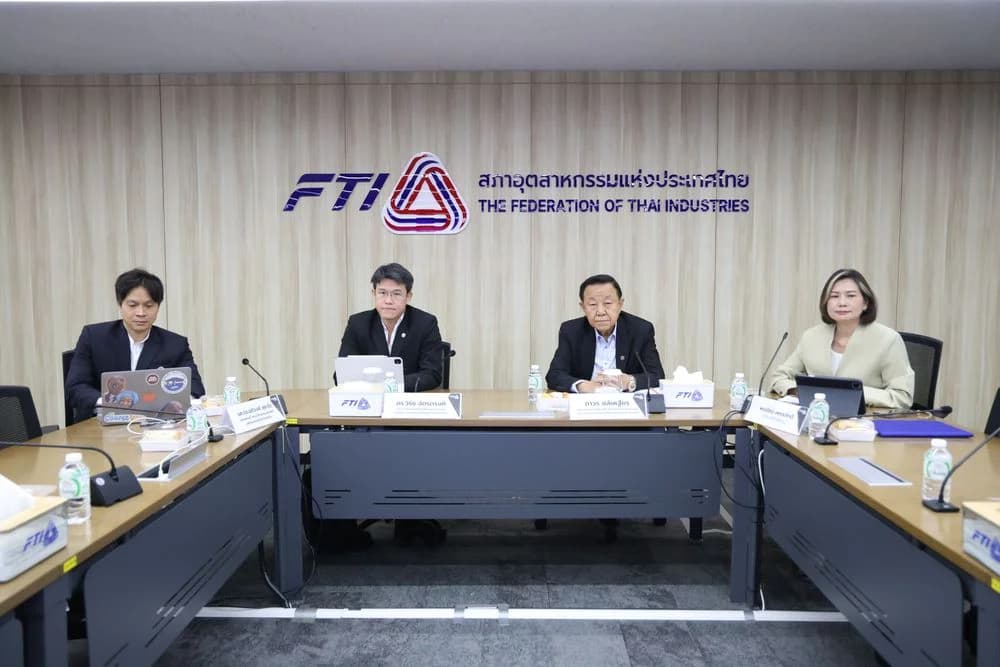

วันอังคารที่ 23 กรกฎาคม 2567 นายเกรียงไกร เธียรนุกุล ประธานสภาอุตสาหกรรมแห่งประเทศไทย (ส.อ.ท.) พร้อมด้วยนายเปรมวิทย์ จรีเวฬุโรจน์ กรรมการ ส.อ.ท. และนางสาวพรรรัตน์ เพชรภักดี ผู้อำนวยการใหญ่ ส.อ.ท. เข้าร่วมการประชุมระดมสมอง เรื่อง “เป้าหมายของระบบวิทยาศาสตร์ วิจัยและนวัตกรรม บทบาทและแนวทางการทำงานร่วมกันของคณะกรรมการ 3 คณะ” จัดโดย สำนักงานคณะกรรมการส่งเสริมวิทยาศาสตร์ วิจัยและนวัตกรรม (สกสว.) ในฐานะฝ่ายเลขานุการของคณะกรรมการส่งเสริมวิทยาศาสตร์ วิจัยและนวัตกรรม (กสว.) คณะกรรมการอำนวยการ สกสว. และคณะกรรมการติดตามและประเมินผล การสนับสนุนวิทยาศาสตร์ การวิจัยและนวัตกรรม ณ ห้องประชุมพญาไท 1-2 โรงแรมอีสติน แกรนด์ พญาไท กรุงเทพฯ
การประชุมครั้งนี้ เกิดจากการเล็งเห็นความสำคัญของการพัฒนาและขับเคลื่อนระบบวิทยาศาสตร์ วิจัยและนวัตกรรม ซึ่งรวมถึงการติดตามประเมินผลการดำเนินงานให้สามารถส่งมอบผลลัพธ์ ผลกระทบที่เป็นรูปธรรม ตอบสนองต่อทิศทาง ความคุ้มค่าของงบประมาณ และการพัฒนาเศรษฐกิจและสังคมของประเทศได้ จึงจำเป็นต้องวางแผนและกำหนดเป้าหมายของระบบ วิทยาศาสตร์ วิจัยและนวัตกรรม โดยการทำงานร่วมกันของคณะกรรมการทั้ง 3 คณะ
ทั้งนี้ นายเกรียงไกร กล่าวในที่ประชุมว่า “ภาคอุตสาหกรรม ได้ทำการศึกษาตัวอย่างการพัฒนาด้านอุตสาหกรรมจากประเทศชั้นนำ เช่น ประเทศจีนและสหรัฐอเมริกา ซึ่งเรายังไม่สามารถแข่งขันกับประเทศชั้นนำได้ เนื่องด้วยบุคลากรและงบประมาณที่มีไม่เพียงพอ อย่างไรก็ตาม ส.อ.ท. มองว่าจุดแข็งของประเทศไทย คือ ความหลากหลายทางชีวภาพ ซึ่งประเทศไทยมีความหลากหลายทางชีวภาพเป็นอันดับต้นๆ ของโลก ฉะนั้นภายใต้กรอบความยั่งยืนนั้น Bio สามารถแตกแขนงไปได้มากมาย โดย ส.อ.ท. มี 8 อุตสาหกรรมนำร่องที่สอดรับกับความหลากหลายทางชีวภาพ เช่น อุตสาหกรรมยา สมุนไพร เครื่องสำอาง เชื้อเพลิงชีวภาพและไบโอพลาสติก เป็นต้น โดยเราเป็นทั้งต้นน้ำ กลางน้ำไปจนถึงปลายน้ำ และในอนาคตเราจะสามารถแข่งขันได้ หากเรามีการพัฒนาด้าน R&D ให้เข้มแข็ง ซึ่งภาคอุตสาหกรรมเอง มีความพร้อมที่จะพัฒนาในส่วนนี้อยู่แล้ว หากได้รับการสนับสนุนจากทางภาครัฐ ก็จะส่งผลให้เกิดการพัฒนาที่รวดเร็วยิ่งขึ้น”
On Tuesday, July 23, 2024, Mr. Kriangkrai Theeranukul, Chairman of the Federation of Thai Industries (FTI), along with Mr. Premwit Jarevelurot, FTI Board Member, and Ms. Phonrat Pechphakdee, Director-General of FTI, participated in a brainstorming meeting on the topic “Goals of the Science, Research and Innovation System and Collaborative Working Approaches of Three Committees,” organized by the Office of the National Science, Research and Innovation Policy Committee (NSRPC) in its capacity as the secretariat of the Science, Research and Innovation Promotion Committee (SRIP) and the Executive Committee of NSRPC, as well as the Monitoring and Evaluation Committee for supporting science, research, and innovation, held at Phayathai 1-2 Meeting Room, Eastin Grand Hotel Phayathai, Bangkok.
This meeting arose from the recognition of the importance of developing and driving the science, research, and innovation system, including monitoring and evaluating operations to deliver tangible results and impacts that respond to budget efficiency and the development of the country's economy and society. Therefore, it is essential to plan and set the goals of the science, research, and innovation system through collaborative work among the three committees.
During the meeting, Mr. Kriangkrai stated, “The industrial sector has studied examples of industrial development from leading countries such as China and the United States, and we have not yet been able to compete with these leading countries due to insufficient personnel and budget. However, FTI views that Thailand’s strength lies in its biodiversity, ranking among the top globally. Thus, within the framework of sustainability, biotechnology can branch out significantly. FTI has eight pilot industries aligned with biodiversity, such as pharmaceuticals, herbal products, cosmetics, biofuels, and bioplastics. We are involved in every stage from upstream to downstream, and in the future, we will be able to compete if we strengthen our R&D capabilities. The industrial sector is already prepared for development in this area, and with support from the government, this will lead to even faster progress.”