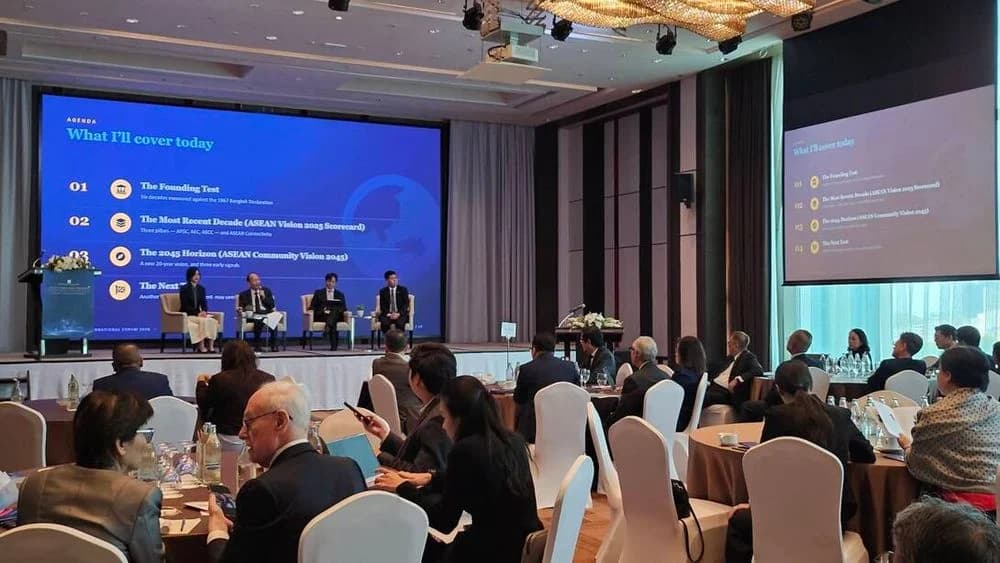

เมื่อวันที่ 8 ตุลาคม 2568 นายเกรียงไกร เธียรนุกุล ประธานสภาอุตสาหกรรมแห่งประเทศไทย (ส.อ.ท.) ได้รับเกียรติเป็นวิทยากรร่วมเสวนาในหัวข้อ “ความพร้อมของกลไกเชิงสถาบันกับความสามารถในการแข่งขันของประเทศ” ภายใต้เวทีสาธารณะด้านหลักนิติธรรม ครั้งที่ 3 จัดโดยสถาบันเพื่อการยุติธรรมแห่งประเทศไทย (TIJ) ร่วมกับเครือข่ายผู้บริหารด้านหลักนิติธรรมและการพัฒนา (Rule of Law and Development Management Network),World Justice Project และ THE STANDARD (เดอะ สแตนดาร์ด) ณ ห้อง Conference Hall ชั้น 2 สถาบันเพื่อการยุติธรรมแห่งประเทศไทย
ภายในงานได้รับเกียรติจากนายอนุทิน ชาญวีรกูล นายกรัฐมนตรี และรัฐมนตรีว่าการกระทรวงมหาดไทย กล่าวปาฐกถาพิเศษในหัวข้อ “หลักนิติธรรม: วาระแห่งชาติเพื่อความสามารถในการแข่งขันของไทย” โดยนายกรัฐมนตรีกล่าวว่า “ผมไม่ใช่นักกฎหมาย แต่เชื่อว่า ‘ความยุติธรรม’ เป็นเสมือน ‘เสาเข็ม’ ที่สำคัญของทุกสังคม และรัฐบาลให้ความสำคัญต่อการรักษาหลักนิติธรรมอย่างเคร่งครัด”
นายกรัฐมนตรีระบุว่า ในคำแถลงนโยบายของรัฐบาล ได้กำหนดให้การกระทำของเจ้าหน้าที่ของรัฐที่บิดเบือนการใช้กฎหมายเพื่อผลทางการเมือง หรือการละเว้นการบังคับใช้กฎหมาย โดยเฉพาะในประเด็นการปราบปรามยาเสพติด บ่อนการพนัน การพนันออนไลน์ อาชญากรรมข้ามชาติ ภัยไซเบอร์ การสร้างข่าวปลอม และการหลอกลวงประชาชนในรูปแบบต่าง ๆ ถือเป็นความผิดวินัยร้ายแรงและต้องดำเนินคดีอาญาอย่างเด็ดขาด รวมทั้งรัฐบาลมุ่งขจัดการทุจริตและประพฤติมิชอบอย่างจริงจังและต่อเนื่อง เพื่อยกระดับความเชื่อมั่นของประชาชนและนานาประเทศ
นายกรัฐมนตรีกล่าวเพิ่มเติมว่า รัฐบาลมีแผนดำเนินงานด้านหลักนิติธรรม แบ่งออกเป็น 3 วาระสำคัญ ได้แก่
1. การจัดทำ Roadmap ด้านหลักนิติธรรมเพื่อเตรียมสู่การเป็นสมาชิก OECD
2. การปลดล็อกการคอร์รัปชันและปฏิรูประบบกฎหมายที่เป็นอุปสรรคต่อการพัฒนา
3. การสร้างความโปร่งใสและส่งเสริมการมีส่วนร่วมของสังคม มุ่งสู่ รัฐบาลเปิด (Open Government) โดยใช้เทคโนโลยีดิจิทัลให้ประชาชนสามารถติดตาม ตรวจสอบ และสะท้อนความคิดเห็นต่อการทำงานของภาครัฐได้อย่างต่อเนื่อง พร้อมทั้งดำเนินการจริงจังในการปราบปรามธุรกิจผิดกฎหมาย อาทิ ยาเสพติด บ่อน การพนันออนไลน์ และอาชญากรรมข้ามชาติ
เวทีเสวนา “ความพร้อมของกลไกเชิงสถาบันกับความสามารถในการแข่งขันของประเทศ”การเสวนามีผู้ร่วมแลกเปลี่ยนความคิดเห็น ได้แก่ นายเกรียงไกร เธียรนุกุล ประธานสภาอุตสาหกรรมแห่งประเทศไทย (ส.อ.ท.) ศาสตราจารย์พิเศษ กิติพงศ์ อุรพีพัฒนพงศ์ ประธานกรรมการ ตลาดหลักทรัพย์แห่งประเทศไทย ดร. พจน์ อร่ามวัฒนานนท์ ประธานกรรมการ หอการค้าไทยและสภาหอการค้าแห่งประเทศไทย นายผยง ศรีวณิช ประธานสมาคมธนาคารไทย และ ดร. มานะ นิมิตรมงคล ประธานองค์กรต่อต้านคอร์รัปชัน (ประเทศไทย)
เวทีนี้มีวัตถุประสงค์เพื่อวิเคราะห์ความท้าทายเชิงปฏิบัติการ และประเมินศักยภาพในการปฏิรูปโครงสร้างเชิงสถาบันของประเทศไทย อันจะนำไปสู่การสร้างระบบนิเวศทางธุรกิจที่มีเสถียรภาพและเอื้อต่อการลงทุนอย่างยั่งยืน
ทั้งนี้ การเสวนามุ่งเน้นเรื่องที่สำคัญ ดังนี้
1. การปฏิรูปกฎหมายและกฎระเบียบ : การเสริมสร้างความเชื่อมั่นของนักลงทุน ผ่านกรอบกฎหมายที่มีความชัดเจนและเอื้อต่อการประกอบธุรกิจ
2. การเสริมสร้างขีดความสามารถของสถาบัน การยกระดับกระบวนการยุติธรรม และการระงับข้อพิพาทให้มีประสิทธิผล เพื่อเป็นรากฐานสำคัญของระบบเศรษฐกิจ และสังคม
3. การส่งเสริมธรรมาภิบาลและต่อต้านการทุจริต ยุทธศาสตร์การสร้างระบบนิเวศ ทางธุรกิจที่โปร่งใสและมีการแข่งขันอย่างเป็นธรรม
4. การส่งเสริมหุ้นส่วนภาครัฐและเอกชน (PPP): การผนึกกำลังเพื่อขับเคลื่อนการปฏิรูปเชิงโครงสร้างอย่างยั่งยืน
นายเกรียงไกร เธียรนุกุล ประธานสภาอุตสาหกรรมแห่งประเทศไทย กล่าวว่า ความพร้อมของกลไกเชิงสถาบันมีความสัมพันธ์โดยตรงกับความสามารถในการแข่งขันของประเทศ โดยประเทศไทยกำลังเผชิญกับ “วิกฤตซ้อนวิกฤต” จากหลายปัจจัย ได้แก่
1. มาตรการทางภาษีของสหรัฐฯ และสงครามการค้า
2. ปัญหาสินค้าทุ่มตลาดและการสวมสิทธิ์ส่งออก
3. ความขัดแย้งทางภูมิรัฐศาสตร์ที่ส่งผลต่อต้นทุนการผลิตและการดำเนินธุรกิจ
4. ข้อพิพาทพื้นที่ชายแดนไทย–กัมพูชา
5. ภาระหนี้ครัวเรือนและหนี้ภาคธุรกิจ
6. ค่าเงินบาทแข็งค่า
7. ผลกระทบจากการเปลี่ยนแปลงสภาพภูมิอากาศ
8. เสถียรภาพทางการเมือง
พร้อมทั้งชี้ให้เห็นปัญหาเชิงโครงสร้างที่ต้องเร่งแก้ไข เช่น สังคมสูงวัย (Aging Society) การติดกับดักรายได้ปานกลาง จุดอ่อนของระบบการศึกษา งบประมาณไม่สมดุล คอร์รัปชันในระบบราชการ และกฎหมายที่ล้าสมัย
สภาอุตสาหกรรมแห่งประเทศไทย (ส.อ.ท.) มุ่งขับเคลื่อนการพัฒนาเศรษฐกิจไทยอย่างยั่งยืน
โดยยึดหลักธรรมาภิบาล ความโปร่งใส และการมีส่วนร่วมของทุกภาคส่วน เพื่อยกระดับขีดความสามารถในการแข่งขันของประเทศในระยะยาว
On October 8, 2025, Mr. Kriangkrai Theeranukul, Chairman of the Federation of Thai Industries (FTI), was honored as a speaker in the forum titled 'The Preparedness of Institutional Mechanisms for National Competitiveness' at the Third Public Forum on Rule of Law, organized by the Thailand Institute of Justice (TIJ) in collaboration with the Rule of Law and Development Management Network, World Justice Project, and THE STANDARD at the Conference Hall, 2nd floor, Thailand Institute of Justice.
The event featured a special speech by Mr. Anutin Charnvirakul, Prime Minister and Minister of Interior, on the topic 'Rule of Law: A National Agenda for Thailand's Competitiveness'. The Prime Minister stated, 'I am not a lawyer, but I believe that 'Justice' is like a crucial 'pillar' of every society, and the government places great importance on strictly maintaining the rule of law.'
The Prime Minister indicated that the government's policy statement defines the actions of state officials who distort the use of law for political gain or neglect the enforcement of laws, particularly concerning drug suppression, gambling, online gambling, transnational crime, cyber threats, fake news creation, and various forms of public deception as serious disciplinary offenses warranting stringent criminal prosecution. The government is also committed to combating corruption and misconduct seriously and continuously to enhance public and international confidence.
Additionally, the Prime Minister mentioned that the government has a plan concerning the rule of law, divided into three important agendas:
1. Developing a roadmap for the rule of law in preparation for membership in the OECD.
2. Unlocking corruption and reforming legal systems that hinder development.
3. Promoting transparency and encouraging societal participation towards an Open Government, using digital technology to allow citizens to continuously track, monitor, and reflect their opinions on government operations while earnestly cracking down on illegal businesses such as drug trafficking, gambling, and transnational crime.
The forum “The Preparedness of Institutional Mechanisms for National Competitiveness” featured participants including Mr. Kriangkrai Theeranukul, Chairman of the Federation of Thai Industries (FTI), Professor Emeritus Kittipong Uraphiphatthanapong, Chairman of the Stock Exchange of Thailand, Dr. Pot Aramwatananon, Chairman of the Thai Chamber of Commerce and the Federation of Thai Chambers of Commerce, Mr. Payong Sriwanna, Chairman of the Thai Bankers' Association, and Dr. Mana Nimittmongkol, Chairman of the Anti-Corruption Organization of Thailand.
This forum aimed to analyze practical challenges and assess the potential for reforming Thailand's institutional structure, leading to the creation of a stable business ecosystem conducive to sustainable investment.
The discussions focused on key issues, including:
1. Legal and regulatory reform: Building investor confidence through clear legal frameworks conducive to business operations.
2. Enhancing institutional capacity: Elevating the justice process and dispute resolution to be effective foundations of the economy and society.
3. Promoting governance and combating corruption: Strategies for creating a transparent and competitively fair business ecosystem.
4. Promoting Public-Private Partnerships (PPP): Collaborative efforts for sustainable structural reforms.
Mr. Kriangkrai Theeranukul, Chairman of the Federation of Thai Industries, stated that the readiness of institutional mechanisms is directly related to the country's competitiveness, as Thailand is facing a 'crisis within a crisis' from various factors, including:
1. U.S. tax measures and trade wars.
2. The issue of dumping products and export rights infringements.
3. Geopolitical tensions affecting production costs and business operations.
4. Border disputes between Thailand and Cambodia.
5. Household and business debt burdens.
6. Strengthening currency.
7. The impact of climate change.
8. Political stability.
He also pointed out structural problems requiring urgent attention, including an aging society, the middle-income trap, weaknesses in the education system, imbalanced budgets, corruption in the public sector, and outdated laws.
The Federation of Thai Industries (FTI) aims to drive the sustainable development of the Thai economy
by adhering to principles of governance, transparency, and participation from all sectors to enhance the country's competitive capabilities in the long run.