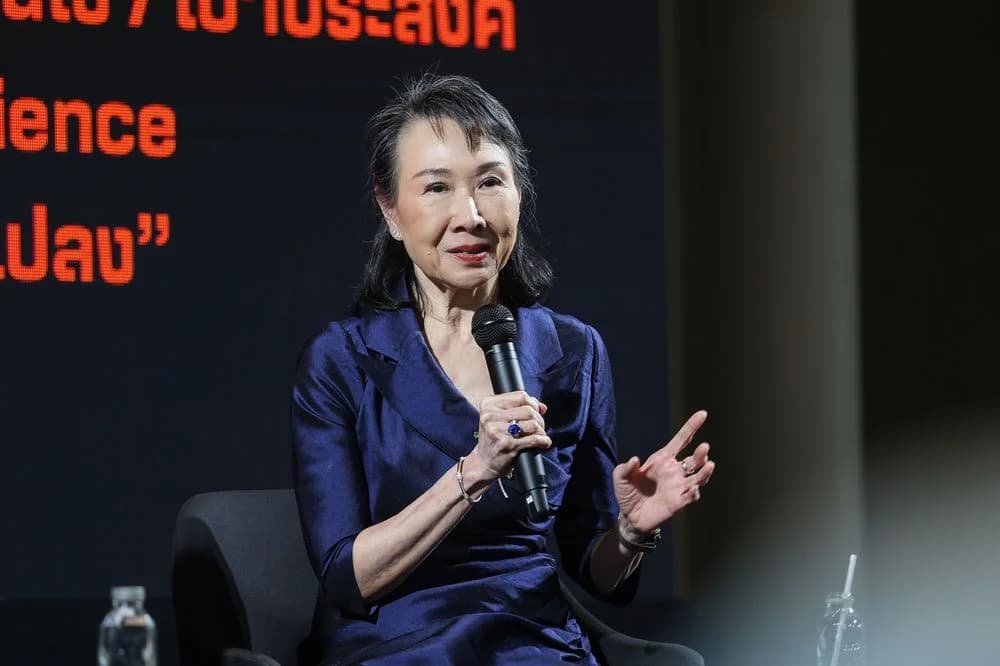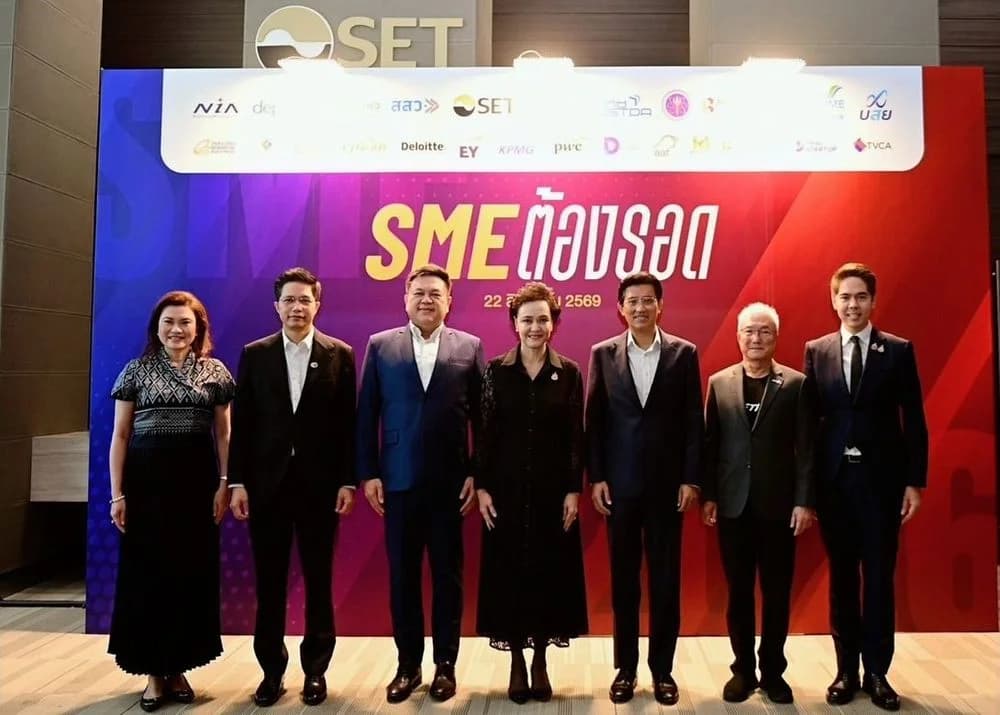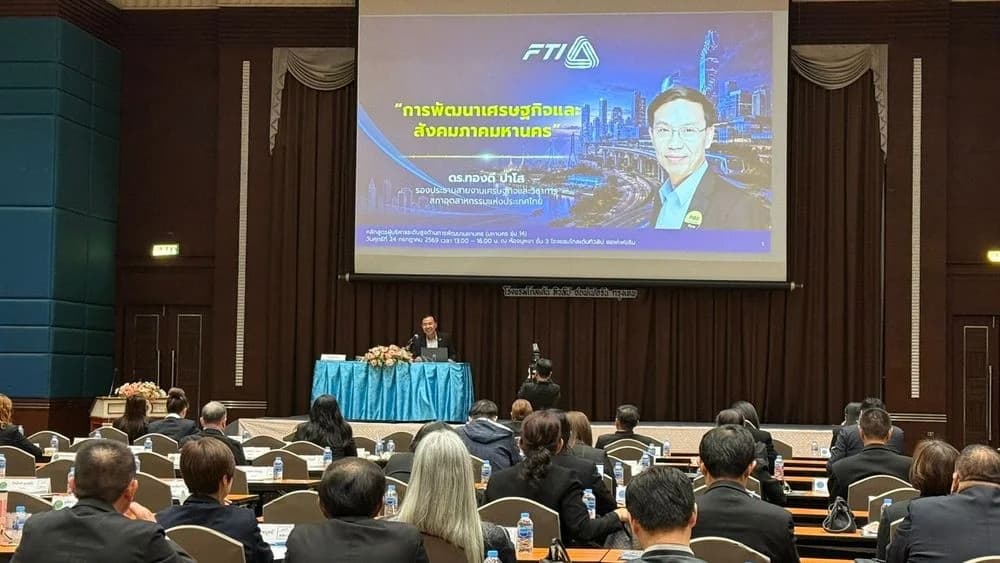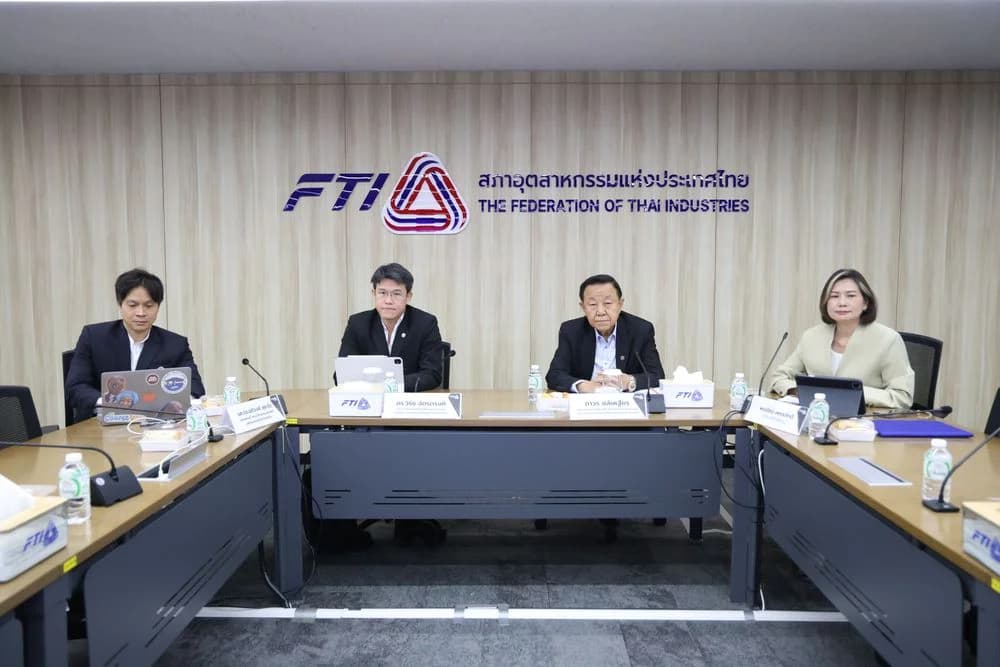
เมื่อวันพุธที่ 20 สิงหาคม 2568 นายวิวรรธน์ เหมมณฑารพ รองประธานสภาอุตสาหกรรมแห่งประเทศไทย (ส.อ.ท.) ได้รับเกียรติเป็นวิทยากรบรรยายในงานเสวนา Morning Talk ครั้งที่ 3 ซึ่งจัดโดยสำนักงานเศรษฐกิจอุตสาหกรรม (สศอ.) กระทรวงอุตสาหกรรม ร่วมกับมหาวิทยาลัยหอการค้าไทย ในหัวข้อ “เจาะลึกโครงสร้างอุตสาหกรรม ทางรอดในสมรภูมิการค้าโลก” ณ ห้องคริสตัล 2-4 ชั้น 3 โรงแรมเซ็นจูรี่ พาร์ค กรุงเทพฯ
การบรรยายดังกล่าว นายวิวรรธน์ ได้นำเสนอภาพรวมของเศรษฐกิจไทยในช่วงครึ่งแรกของปี 2568 ซึ่ง ขยายตัวที่ 3.0% ส่งผลให้สำนักงานสภาพัฒนาการเศรษฐกิจและสังคมแห่งชาติ (สศช.) ปรับประมาณการทั้งปีเพิ่มขึ้นเป็น 2.0% จากเดิม 1.8% สอดคล้องกับคณะกรรมการร่วม 3 สถาบัน (กกร.) ได้ปรับประมาณการทั้งปีเพิ่มขึ้นเป็น 1.8-2.2% อย่างไรก็ตาม ยังมีปัจจัยเสี่ยงที่ต้องเฝ้าระวัง โดยเฉพาะมาตรการภาษีของสหรัฐฯ ที่แม้ไทยจะถูกจัดเก็บ Reciprocal Tariff ในอัตรา 19% แต่ยังไม่มีความชัดเจนเกี่ยวกับการจัดเก็บภาษีกรณี Transshipment ที่ 40% รวมไปถึงข้อตกลงระหว่างไทย-สหรัฐฯ ที่ยังไม่แน่นอนอีกด้วย นอกจากนี้ยังมีปัญหาสินค้าทุ่มตลาดจากจีน และการสวมสิทธิ์ส่งออกที่กดดันความสามารถแข่งขันของผู้ประกอบการไทย
ทั้งนี้ แม้ภาพรวมเศรษฐกิจและอุตสาหกรรมไทยจะเผชิญความท้าทาย แต่ยังเป็นโอกาสสำคัญในการเร่งยกระดับภาคการผลิตให้ก้าวสู่เศรษฐกิจใหม่ ผ่านการลงทุนด้านดิจิทัล ปัญญาประดิษฐ์ (AI) และนวัตกรรม รวมถึงการขับเคลื่อนเศรษฐกิจสีเขียวตามแนวทาง BCG Model ครอบคลุม Bio Economy, Circular Economy และ Green Economy เพื่อบรรลุเป้าหมายการปล่อยก๊าซเรือนกระจกสุทธิเป็นศูนย์ (Net Zero Emissions) ภายในปี 2608 ซึ่งภาคอุตสาหกรรมจำเป็นต้องเตรียมความพร้อมด้วยการเพิ่มประสิทธิภาพการผลิตและการนำเทคโนโลยีมาใช้ เพื่อสร้างความสามารถในการแข่งขันในตลาดโลกอย่างยั่งยืน
พร้อมกันนี้ นายวิวรรธน์ ได้เสนอข้อแนะเชิงนโยบายต่อภาครัฐ ได้แก่ การเร่งปรับโครงสร้างอุตสาหกรรม เสริมศักยภาพด้านเทคโนโลยีและนวัตกรรม ปรับปรุงกฎหมายและกฎระเบียบเพื่อลดอุปสรรคทางการค้า ตรวจเข้มสินค้าสวมสิทธิ์ ผลักดันการใช้ Local Content หรือ Made in Thailand (MiT) ตลอดจนการเร่งเจรจาเขตการค้าเสรี (FTA) ใหม่ การกระจายตลาดส่งออก และการส่งเสริมโมเดลการพัฒนาตามแนวคิด BCG Model เพื่อยกระดับขีดความสามารถในการแข่งขันของประเทศในระยะยาว
On Wednesday, August 20, 2025, Mr. Wiwat Hemmatarap, Vice Chairman of the Federation of Thai Industries (FTI), had the honor of being a keynote speaker at the third Morning Talk seminar organized by the Office of Industrial Economics (OIE), Ministry of Industry, in collaboration with the University of the Thai Chamber of Commerce, under the topic “In-Depth Analysis of Industry Structure – A Pathway in Global Trade Battle” at Crystal Room 2-4, 3rd Floor, Century Park Hotel, Bangkok.
During the lecture, Mr. Wiwat presented an overview of the Thai economy for the first half of 2025, which grew by 3.0%, resulting in the National Economic and Social Development Council (NESDC) adjusting its full-year forecast to 2.0% from the previous 1.8%. This adjustment aligns with the joint committee of three institutions (JSCC) raising its full-year forecast to 1.8-2.2%. However, there remain risk factors that need to be monitored, especially regarding U.S. tax measures. Although Thailand is assessed a Reciprocal Tariff at a rate of 19%, there is still uncertainty regarding the imposition of a 40% tax on Transshipment cases, along with the uncertain Thailand-U.S. agreements. Additionally, issues of dumping from China and the misuse of export rights put pressure on the competitiveness of Thai operators.
Despite the challenges faced by the overall Thai economy and industry, there are significant opportunities to accelerate the upgrading of the manufacturing sector towards a new economy through investments in digital technology, artificial intelligence (AI), and innovation. Furthermore, driving a green economy in line with the BCG Model, encompassing Bio Economy, Circular Economy, and Green Economy, aims to achieve net zero greenhouse gas emissions by 2065. The industrial sector must be prepared by enhancing production efficiency and adopting technology to create sustainable competitiveness in the global market.
In addition, Mr. Wiwat offered policy recommendations to the government, including accelerating industrial restructuring, enhancing technological and innovation capabilities, improving laws and regulations to reduce trade barriers, tightening controls on goods misuse, promoting the use of Local Content or Made in Thailand (MiT), and expediting negotiations for new free trade agreements (FTAs), diversifying export markets, and promoting the BCG Model development to enhance the country's long-term competitiveness.