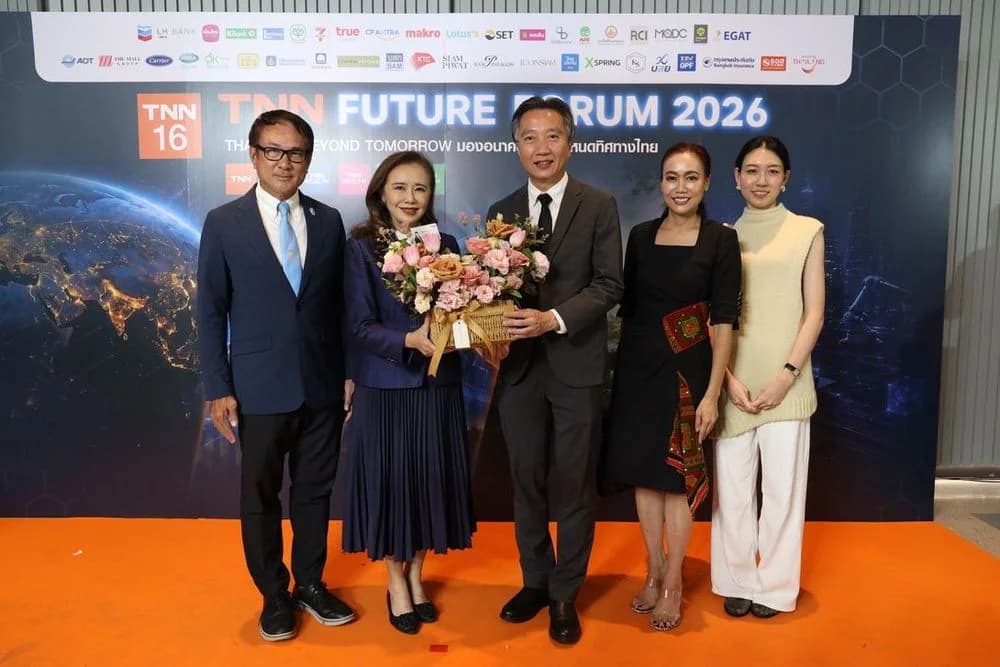

วันศุกร์ที่ 1 สิงหาคม 2568 นายพิภพ โชควัฒนา กรรมการบริหาร และรองประธานสายงานเศรษฐกิจและวิชาการ สภาอุตสาหกรรมแห่งประเทศไทย (ส.อ.ท.) ร่วมมอบกระเช้าแสดงความยินดี เนื่องในโอกาสครบรอบ 79 ปี "หนังสือพิมพ์บางกอกโพสต์" ทั้งนี้ นายพิภพ ได้ร่วมบรรยายในหัวข้อ “Positioning Thailand in the New Global Economy Trade, Investment and Strategic Resilience” ณ ห้อง World Ballroom ชั้น 23 โรงแรมเซ็นทารา แกรนด์ แอท เซ็นทรัลเวิลด์
ในการสัมมนา นายพิภพได้เสนอแนวทางการปรับตัวของภาคธุรกิจไทย เพื่อเพิ่มขีดความสามารถในการแข่งขันในปี 2568 ด้วย 3 แนวทางสำคัญ ได้แก่
1) การเพิ่มประสิทธิภาพการผลิต เช่น ยกระดับอุตสาหกรรมไทยสู่อุตสาหกรรม 4.0 (Industry 4.0) และการผลิตอัจฉริยะ (Smart Manufacturing) การนำปัญญาประดิษฐ์ (AI: Artificial Intelligence) และหุ่นยนต์มาใช้ รวมถึงพัฒนาทักษะแรงงาน
2) การบริหารความเสี่ยง เช่น กระจายตลาดสินค้าเพื่อลดการพึ่งพาตลาดเดียว สร้างความมั่นคงของห่วงโซ่อุปทาน และเพิ่มความปลอดภัยทางไซเบอร์
3) การพัฒนาอย่างยั่งยืน เช่น เปลี่ยนผ่านด้านพลังงานไปสู่พลังงานหมุนเวียน ใช้เทคโนโลยีเพื่อรับมือกับการเปลี่ยนแปลงสภาพภูมิอากาศ และดำเนินธุรกิจตามแนวทาง ESG (Environmental, Social, and Governance) และ BCG (Bio-Circular-Green Economy)
ทั้งนี้ ส.อ.ท. ผลักดันผู้ประกอบการ SMEs ให้สามารถแข่งขันในตลาดสากล ตามนโยบาย 4GO ได้แก่
1) GO Digital & AI — ขับเคลื่อนอุตสาหกรรมด้วยเทคโนโลยีดิจิทัลและปัญญาประดิษฐ์
2) GO Innovation — เน้นนวัตกรรมเป็นหัวใจหลักในการพัฒนา SMEs
3) GO Green — มุ่งสู่อุตสาหกรรมสีเขียวและเป้าหมายการปล่อยก๊าซเรือนกระจกสุทธิเป็นศูนย์ หรือ Net Zero
4) GO Global — ส่งเสริมสินค้าไทยให้แข่งขันได้ในตลาดโลก
นอกจากนี้ นายพิภพยังให้ข้อเสนอว่า ประเทศไทยควรพัฒนาตัวเองให้เป็นศูนย์กลางการผลิตและนวัตกรรมของภูมิภาคอาเซียน ด้วยแนวทาง ดังนี้
1) ปรับโครงสร้างอุตสาหกรรม ยกระดับเทคโนโลยีและนวัตกรรม
2) ปฏิรูปกฎระเบียบ ลดอุปสรรคทางการค้า
3) ใช้กฎหมายควบคุมการลักลอบสินค้าผ่านแดน
4) ส่งเสริมการใช้วัตถุดิบภายในประเทศ
5) เร่งเจรจาข้อตกลงการค้าเสรี (FTA: Free Trade Agreement) และขยายตลาดส่งออก
6) ผลักดัน เศรษฐกิจ BCG (Bio-Circular-Green Economy) อย่างต่อเนื่อง
สุดท้าย ปัจจัยที่จะทำให้ไทยก้าวขึ้นเป็นผู้นำอาเซียนในปี 2578 ได้แก่ การสร้างระบบนิเวศ AI (AI Ecosystem) โดยให้ภาครัฐ ภาคเอกชน และสถาบันการศึกษาร่วมมือกัน การปฏิรูปการศึกษาและเพิ่มทักษะแรงงาน รวมถึงการใช้ประโยชน์จากความหลากหลายทางชีวภาพของไทยเพื่อต่อยอดโมเดล BCG อีกทั้งยังต้องส่งเสริมความร่วมมือระดับอาเซียน เช่น กำหนดมาตรฐานการรับรองคาร์บอนเครดิต (Carbon Credit) ในภูมิภาค สนับสนุนการใช้สกุลเงินท้องถิ่น และพัฒนาไทยให้เป็นศูนย์กลางด้านโลจิสติกส์ของภูมิภาค เช่น ศูนย์กลางการบิน เป็นต้น
On Friday, August 1, 2025, Mr. Pipob Jockvatanavan, Executive Director and Vice Chairman of the Economics and Academic Division of the Federation of Thai Industries (FTI), presented a congratulatory bouquet on the occasion of the 79th anniversary of the "Bangkok Post" newspaper. Additionally, Mr. Pipob delivered a lecture on the topic “Positioning Thailand in the New Global Economy: Trade, Investment, and Strategic Resilience” at the World Ballroom on the 23rd floor of the Centara Grand at Central World.
During the seminar, Mr. Pipob proposed strategies for the adaptation of the Thai business sector to enhance competitiveness in 2025 through three key approaches, including:
1) Improving production efficiency, such as elevating Thai industries to Industry 4.0 and Smart Manufacturing, incorporating Artificial Intelligence (AI) and robotics, as well as developing workforce skills.
2) Managing risks, such as diversifying market products to reduce dependence on a single market, ensuring supply chain security, and enhancing cybersecurity.
3) Promoting sustainability, including transitioning energy use towards renewable sources, employing technology to address climate change, and conducting business according to ESG (Environmental, Social, and Governance) principles and BCG (Bio-Circular-Green Economy).
Furthermore, the FTI encourages SMEs to compete in the global market under the 4GO policy, which includes:
1) GO Digital & AI — driving the industry with digital technology and artificial intelligence.
2) GO Innovation — emphasizing innovation as the core of SME development.
3) GO Green — aiming for green industry and achieving net zero greenhouse gas emissions.
4) GO Global — promoting Thai products to remain competitive in the global market.
Additionally, Mr. Pipob suggested that Thailand should develop itself as a manufacturing and innovation hub for the ASEAN region through the following strategies:
1) Restructuring industries to elevate technology and innovation.
2) Reforming regulations to reduce trade barriers.
3) Utilizing laws to control cross-border smuggling.
4) Promoting the use of domestic raw materials.
5) Accelerating negotiations on Free Trade Agreements (FTA) and expanding export markets.
6) Continuously promoting the BCG economy.
Lastly, factors that will contribute to Thailand becoming a leader in ASEAN by 2035 include creating an AI ecosystem through collaboration between the public sector, private sector, and educational institutions, reforming education and enhancing workforce skills, and leveraging Thailand's biodiversity to advance the BCG model. There is also a need to promote ASEAN-level collaboration, such as establishing standards for carbon credit certification in the region, supporting the use of local currencies, and developing Thailand as a regional logistics hub, such as an aviation center.