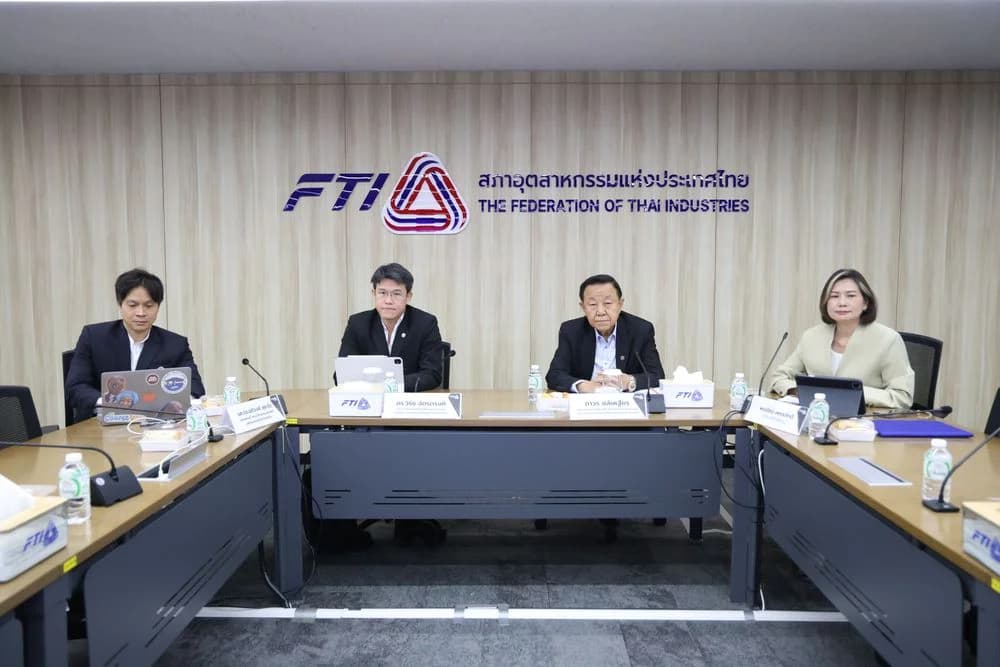

วันที่ 12 มิถุนายน 2568 นายเกรียงไกร เธียรนุกุล ประธานสภาอุตสาหกรรมแห่งประเทศไทย (ส.อ.ท.) พร้อมด้วย ม.ล.ปีกทอง ทองใหญ่ รองประธาน ส.อ.ท. และประธานสายงานเศรษฐกิจและวิชาการ ร่วมเปิดงานสัมมนา Thailand Economic Watch Second Half 2025 : ส่องเศรษฐกิจและอุตสาหกรรมไทยครึ่งปีหลัง 2568 โดยมีวัตถุประสงค์เพื่อให้สมาชิก ส.อ.ท. ได้รับทราบมุมมองต่อทิศทางเศรษฐกิจโลกและเศรษฐกิจไทยตลอดจนแนวโน้มของอุตสาหกรรมรายสาขาในครึ่งปีหลัง 2568 เพื่อประโยชน์ในการวางแผนธุรกิจและเตรียมความพร้อมรับมือกับความท้าทายและโอกาสในอนาคต โดยได้รับเกียรติจาก ดร.พิพัฒน์ เหลืองนฤมิตชัย กรรมการผู้จัดการ หัวหน้านักเศรษฐศาสตร์ กลุ่มธุรกิจการเงินเกียรตินาคินภัทร มาบรรยายแนวโน้มเศรษฐกิจโลกและเศรษฐกิจไทยครึ่งปีหลัง 2568 พร้อมทั้งยังได้รับเกียรติจากผู้แทนจากศูนย์วิจัยกสิกรไทย (KResearch) และศูนย์วิจัย Krungthai COMPASS ร่วมบรรยายแนวโน้มอุตสาหกรรมรายสาขาสำคัญๆ ในครึ่งปีหลังนี้ อาทิ อุตสาหกรรมปิโตรเคมี ยานยนต์และชิ้นส่วนยานยนต์ เซมิคอนดักเตอร์ และเครื่องใช้ไฟฟ้า ณ ห้องประชุม Passion 802 ชั้น 8 ส.อ.ท. และออนไลน์ผ่านระบบ ZOOM
ดร.พิพัฒน์ กล่าวว่า นโยบายปรับขึ้นภาษีนำเข้าของสหรัฐฯ และผลกระทบจากสงครามการค้า จะเป็นปัจจัยหลักที่กดดันเศรษฐกิจโลกในช่วงครึ้งปีหลังนี้ ขณะที่เศรษฐกิจไทยยังเผชิญกับปัจจัยเสี่ยงรอบด้าน อาทิ 1) ภาคการท่องเที่ยวที่ส่งสัญญาชะลอตัว 2) การค้ากับสหรัฐฯ ที่ยังไม่มีความแน่นอนและความเสี่ยงจาก Reciprocal Tariffs 3) ภาระหนี้ครัวเรือนที่กดดันกำลังซื้อของประชาชน ซึ่ง ดร.พิพัฒน์นิยามสถานการณ์ของประเทศไทยในช่วงนี้ว่า กำลังเผชิญกับพายุใหญ่ทางเศรษฐกิจ หรือ Perfect Storm ซึ่งในระยะสั้นจะต้องเร่งแก้ไขให้เครื่องยนต์เศรษฐกิจด้านการท่องเที่ยว
ด้านศูนย์วิจัยกสิกรไทย และศูนย์วิจัยธนาคารกรุงไทย มองแนวโน้ม 4 อุตสาหกรรมในช่วงครึ่งปีหลังนี้ ไปในทิศทางใกล้เคียงกัน โดยมีปัจจัยเสี่ยงหลักๆ มาจากมาตรการภาษีของสหรัฐฯ และปัญหา Over Supply ของสินค้าจีนที่เข้ามาแย่งส่วนแบ่งตลาดในประเทศและภูมิภาค โดยเฉพาะในกลุ่มยานยนต์ เครื่องใช้ไฟฟ้า และปิโตรเคมี ส่วนอุตสาหกรรมเซมิคอนดักเตอร์ยังคงเผชิญกับความไม่แน่นอนจากนโยบายภาษีของสหรัฐฯ รวมทั้งประเทศคู่แข่งของไทยที่มีการขยายการลงทุนเพิ่มขึ้น
On June 12, 2025, Mr. Kriangkrai Theeranukul, Chairman of the Federation of Thai Industries (FTI), along with M.L. Pikthong Thongyai, FTI Vice Chairman and Chairman of the Economic and Academic Committee, presided over the opening of the seminar titled Thailand Economic Watch Second Half 2025: An Insight into the Thai Economy and Industry in the Second Half of 2025. The seminar aimed to provide FTI members with insights into the global economic outlook and the Thai economy, as well as trends in key industrial sectors for the second half of 2025, to assist in business planning and preparedness to tackle future challenges and opportunities. Honored speakers included Dr. Pipat Leuangnaruemitcharoen, Managing Director and Chief Economist of the Kiatnakin Phatra Financial Group, who discussed the global and Thai economic outlook for the second half of 2025. Representatives from KResearch and Krungthai COMPASS also provided insights into trends in key industrial sectors during this period, including petrochemicals, automotive and automotive parts, semiconductors, and electrical appliances, at the Passion 802 Meeting Room on the 8th floor of FTI and online via ZOOM.
Dr. Pipat stated that the policy of increasing import tariffs by the United States and the impacts of the trade war will be primary factors pressuring the global economy in the latter half of this year, while the Thai economy remains susceptible to multiple risk factors, including: 1) The tourism sector showing signs of slowdown; 2) Uncertainties in trade with the United States and risks from reciprocal tariffs; 3) Household debt burden affecting the purchasing power of citizens. Dr. Pipat characterized Thailand's current situation as facing a major economic storm or Perfect Storm, emphasizing the urgent need to revitalize the tourism sector as a short-term solution.
Both KResearch and Krungthai Bank's research center view the trends of four industries during the second half of this year as heading in a similar direction, with primary risk factors stemming from U.S. tax measures and the over-supply of Chinese goods competing for market share domestically and regionally, particularly in the automotive, electrical appliances, and petrochemicals sectors. The semiconductor industry continues to face uncertainties from U.S. tax policies, as well as increasing investments from Thailand's competitors.