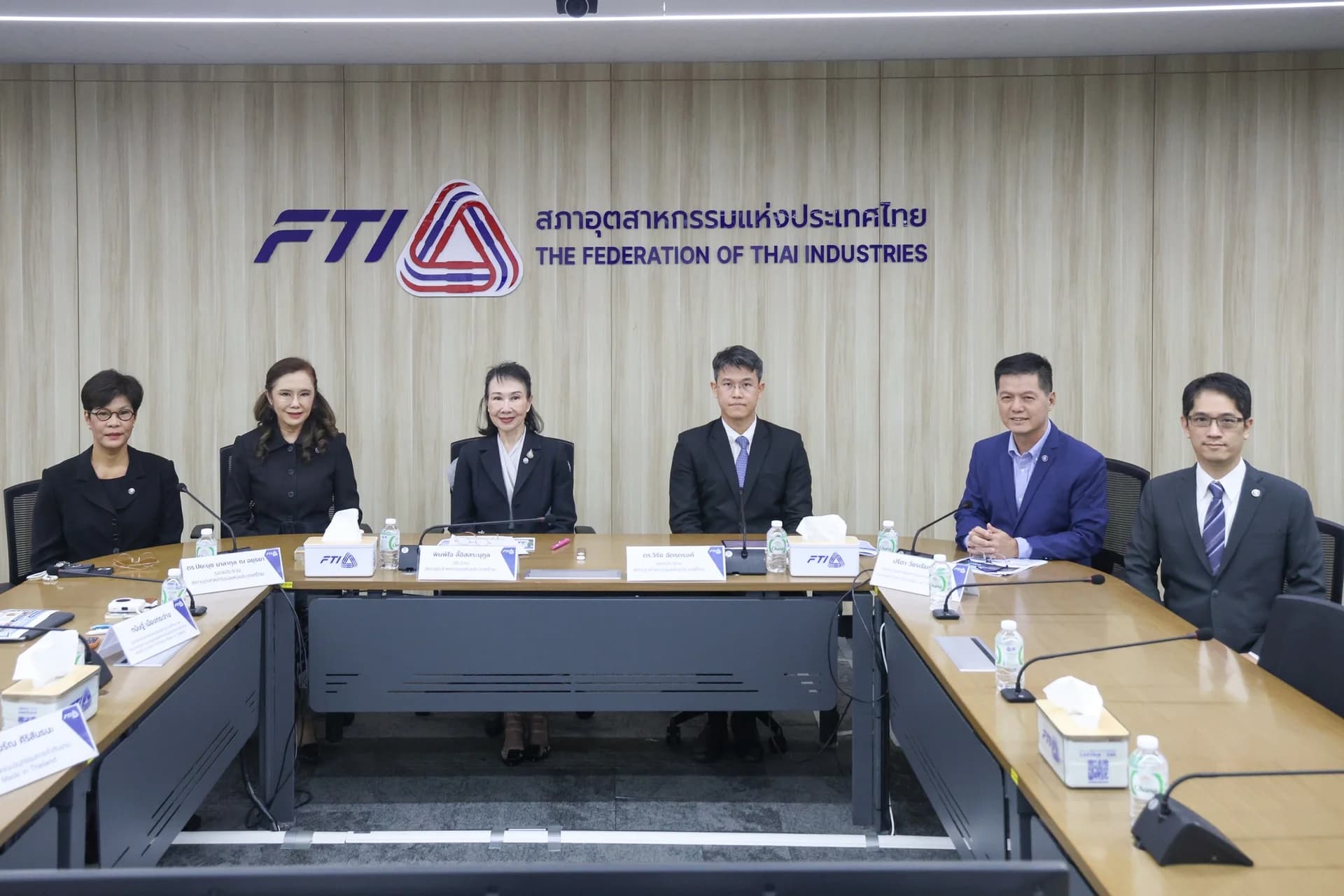

วันพุธที่ 4 ธันวาคม 2567 นายสนั่น อังอุบลกุล ประธานสภาหอการค้าแห่งประเทศไทย เป็นประธานการประชุมคณะกรรมการร่วมภาคเอกชน 3 สถาบัน (กกร.) โดยมีนายทวี ปิยะพัฒนา รองประธานอาวุโสสภาอุตสาหกรรมแห่งประเทศไทย (ส.อ.ท.) และดร.พชรพจน์ นันทรามาศ ผู้แทนสมาคมธนาคารไทย ร่วมในการแถลงข่าว
เศรษฐกิจโลกปี 2568 เผชิญความเสี่ยงจากมาตรการกีดกันทางการค้า ภายหลังจากที่นายโดนัลด์ ทรัมป์ชนะการเลือกตั้งประธานาธิบดีสหรัฐฯ และประกาศจะใช้มาตรการเก็บภาษีนำเข้าเป็นนโยบายทางการค้า ทำให้ประเมินว่าเศรษฐกิจโลกในปี 2568 จะอยู่ท่ามกลางความไม่แน่นอน โดยมีโอกาสเติบโตได้ต่ำกว่า 3% ส่วนเศรษฐกิจจีนมีโอกาสเติบโตได้เพียง 4.0-4.5% ขณะที่อาจกระทบการเติบโตของประเทศในอาเซียนได้มากทั้งจากการส่งออกไปจีนที่จะลดลง การส่งออกโดยภาพรวมที่จะลดลงเนื่องจากถูกทดแทนด้วยสินค้าจีน และการลงทุนภาคเอกชนที่ชะลอตัว
คาดว่ามาตรการทางด้านภาษีจะเริ่มเกิดขึ้นในช่วงกลางปี 2568 เป็นต้นไป นโยบาย Trump 2.0 จะไม่จำกัดเฉพาะสินค้าจากจีนเท่านั้น แต่จะเป็นการเก็บภาษีนำเข้ากับสินค้าจากทุกประเทศ โดยอาจจะขึ้นอัตราภาษีนำเข้าจากจีนเป็น 60% และจากประเทศอื่นๆ เป็น 10-20% รวมถึงจะใช้การเก็บภาษีเป็นนโยบายในการต่อรองกับคู่ค้า เช่น เม็กซิโก แคนาดา และกลุ่ม BRICS ซึ่งการขึ้นภาษีกับจีนอาจเกิดขึ้นได้เร็ว โดยเฉพาะกับสินค้าที่สหรัฐฯ เคยเรียกเก็บภาษีเพิ่มขึ้นในช่วง Trump 1.0
เศรษฐกิจไทยปี 2567 คาดว่าจะขยายตัวได้ 2.8% กมีปัจจัยสนับสนุนจากการส่งออกที่ดีกว่าที่คาด มาตรการกระตุ้นเศรษฐกิจ และการเร่งเบิกจ่ายงบประมาณของภาครัฐ โดยคาดว่าจะโตได้ราว 4% ในไตรมาสที่ 4 ขณะที่ปี 2568 ประเมินว่าเศรษฐกิจไทยมีโอกาสขยายตัวได้ท่ามกลางความไม่แน่นอน โดยมีแรงส่งจากมาตรการกระตุ้นเศรษฐกิจต่อเนื่อง และมาตรการภาครัฐทั้งระยะสั้น ระยะกลาง และระยะยาว ที่กำลังจะทยอยออกมา อาทิ การช่วยเหลือลูกหนี้รายย่อยและกลุ่มผู้ประกอบการ SME การปรับกฎหมายเกี่ยวกับการเช่าที่ดินระยะยาว 99 ปีเพื่อดึงดูดการลงทุน และการลงทุนโครงสร้างพื้นฐาน อย่างไรก็ดี ในช่วงครึ่งปีหลังมีความเสี่ยงจากมาตรการขึ้นภาษีนำเข้าของสหรัฐฯ โดยเฉพาะสินค้าส่งออกหลัก อาทิ อิเล็กทรอนิกส์และเครื่องใช้ไฟฟ้า ยานยนต์ เม็ดพลาสติก และยางล้อ ที่ประชุม กกร. จึงขอเสนอให้ภาครัฐและภาคเอกชนร่วมกันเตรียมความพร้อมรับมือเจรจาในประเด็นที่เกี่ยวข้องกับภาษีนำเข้าและส่งออกกับสหรัฐที่จะเกิดขึ้นในปีหน้า นอกจากนี้ กกร.ขอชื่นชมภาครัฐที่สามารถเจรจาความตกลงการค้าเสรีภายใต้ FTA-EFTA ระหว่างประเทศไทยและสมาคมการค้าเสรีแห่งยุโรป ประกอบด้วย สวิตเซอร์แลนด์ ลิกเตนสไตน์ ไอซ์แลนด์ และนอร์เวย์ ซึ่งจะเป็นประโยชน์ต่อการค้าของประเทศไทยในอนาคต
กรอบประมาณการเศรษฐกิจปี 2567 ของ กกร.
(ณ ต.ค. 67) ปี 2567
GDP 2.2 ถึง 2.7
ส่งออก 1.5 ถึง 2.5
เงินเฟ้อ 0.5 ถึง 1.0
(ณ พ.ย. 67) ปี 2567
GDP 2.6 ถึง 2.8
ส่งออก 2.5 ถึง 2.9
เงินเฟ้อ 0.5 ถึง 1.0
(ณ ธ.ค. 67) ปี 2567
GDP 2.8
ส่งออก 4.0
เงินเฟ้อ 0.5
สำหรับสถานการณ์น้ำท่วมที่ของประเทศไทยในปีนี้ ที่เกิดขึ้นในพื้นที่ภาคเหนือและภาคตะวันออกเฉียงเหนือในช่วงเดือนกันยายนที่ผ่านมา มหาวิทยาลัยหอการค้าไทย ได้ประเมินความเสียหายไว้ประมาณ 75,000 ล้านบาท หรือ คิดเป็น 0.5% ของ GDP ส่วนสถานการณ์น้ำท่วมภาคใต้ ถือว่าเป็นหนึ่งในภัยพิบัติที่เกิดขึ้นรวดเร็วและรุนแรงเช่นกัน เบื้องต้น พบว่า หากสถานการณ์คลี่คลายได้เร็ว น่าจะมีมูลค่าความเสียหายประมาณ 5,000 – 10,000 ล้านบาท หรือประมาณ 0.03 –0.06% ของ GDP โดยพื้นที่ภาคการเกษตรได้รับผลกระทบมากที่สุด รวมถึงย่านการค้าสำคัญของ จ.สงขลา ทั้งนี้ หากรวมความเสียหายของน้ำท่วมภาคเหนือ ภาคตะวันออกเฉียงเหนือ และภาคใต้ น่าจะมีความเสียหายราว 80,000 – 85,000 ล้านบาท หรือประมาณ 0.6% ของ GDP
On Wednesday, December 4, 2024, Mr. Sanan Angubolkul, Chairman of the Thai Chamber of Commerce, presided over a meeting of the Joint Private Sector Committee of Three Institutions (JCC). He was joined by Mr. Thavee Piyaphatana, Senior Vice Chairman of the Federation of Thai Industries (FTI), and Dr. Pacharapon Nantaramas, representative of the Thai Bankers' Association, during the press conference.
The global economy in 2025 is expected to face risks from trade barriers following Mr. Donald Trump's victory in the United States presidential election and his announcement to implement import tariffs as a trade policy. This leads to an assessment that the global economy in 2025 will be amidst uncertainties, with a potential growth rate below 3%. Meanwhile, China's economy is predicted to grow only by 4.0-4.5%, which could significantly affect the growth of ASEAN countries due to reduced exports to China, an overall decline in exports being replaced by Chinese goods, and a slowdown in private sector investments.
It is anticipated that tax measures will begin to take effect around mid-2025 and that Trump 2.0 policies will not be limited to Chinese products alone, as there may be import tariffs imposed on goods from all countries. Tariffs on Chinese imports could rise to 60%, while those on other nations may range from 10-20%. Additionally, tax collection may be used as a bargaining tool with trading partners such as Mexico, Canada, and the BRICS group, with increases in tariffs on China potentially happening swiftly, especially for products that the U.S. had previously raised tariffs on during Trump 1.0.
For the Thai economy in 2024, a growth rate of 2.8% is expected, supported by better-than-expected exports, economic stimulus measures, and the acceleration of government budget disbursement. The anticipated growth for the fourth quarter is around 4%. Projections for 2025 suggest that the Thai economy has the potential to expand amidst uncertainties, spurred by ongoing economic stimulus measures and various short-term, medium-term, and long-term government initiatives to be rolled out, such as assistance for small-scale debtors and SMEs, amendments to regulations regarding long-term land leases of 99 years to attract investments, and infrastructure investments. However, there are risks in the latter half of the year from U.S. import tariff measures, particularly for primary export products such as electronics, electrical appliances, automotive, plastic pellets, and tires. The JCC therefore recommends that both the government and private sector prepare adequately to negotiate related issues concerning imports and exports with the U.S. anticipated for the upcoming year. Furthermore, the JCC commends the government for successfully negotiating the free trade agreement under FTA-EFTA between Thailand and the European Free Trade Association, consisting of Switzerland, Liechtenstein, Iceland, and Norway, which will benefit Thailand's trade in the future.
Economic projections by the JCC for the year 2024
(As of October 2024) Year 2024
GDP 2.2 to 2.7
Exports 1.5 to 2.5
Inflation 0.5 to 1.0
(As of November 2024) Year 2024
GDP 2.6 to 2.8
Exports 2.5 to 2.9
Inflation 0.5 to 1.0
(As of December 2024) Year 2024
GDP 2.8
Exports 4.0
Inflation 0.5
Regarding the flooding situation in Thailand this year, which occurred in the northern and northeastern regions during September, the University of the Thai Chamber of Commerce estimated damages to be approximately 75 billion baht, or about 0.5% of GDP. The flooding situation in the southern region is also considered one of the rapid and severe disasters. Initially, it is estimated that if the situation resolves quickly, damages could range from 5 billion to 10 billion baht, or about 0.03 to 0.06% of GDP, with the agricultural sector being the most affected, including significant trade areas in Songkhla Province. Collectively, the damages from flooding in the northern, northeastern, and southern regions could amount to around 80 billion to 85 billion baht or approximately 0.6% of GDP.