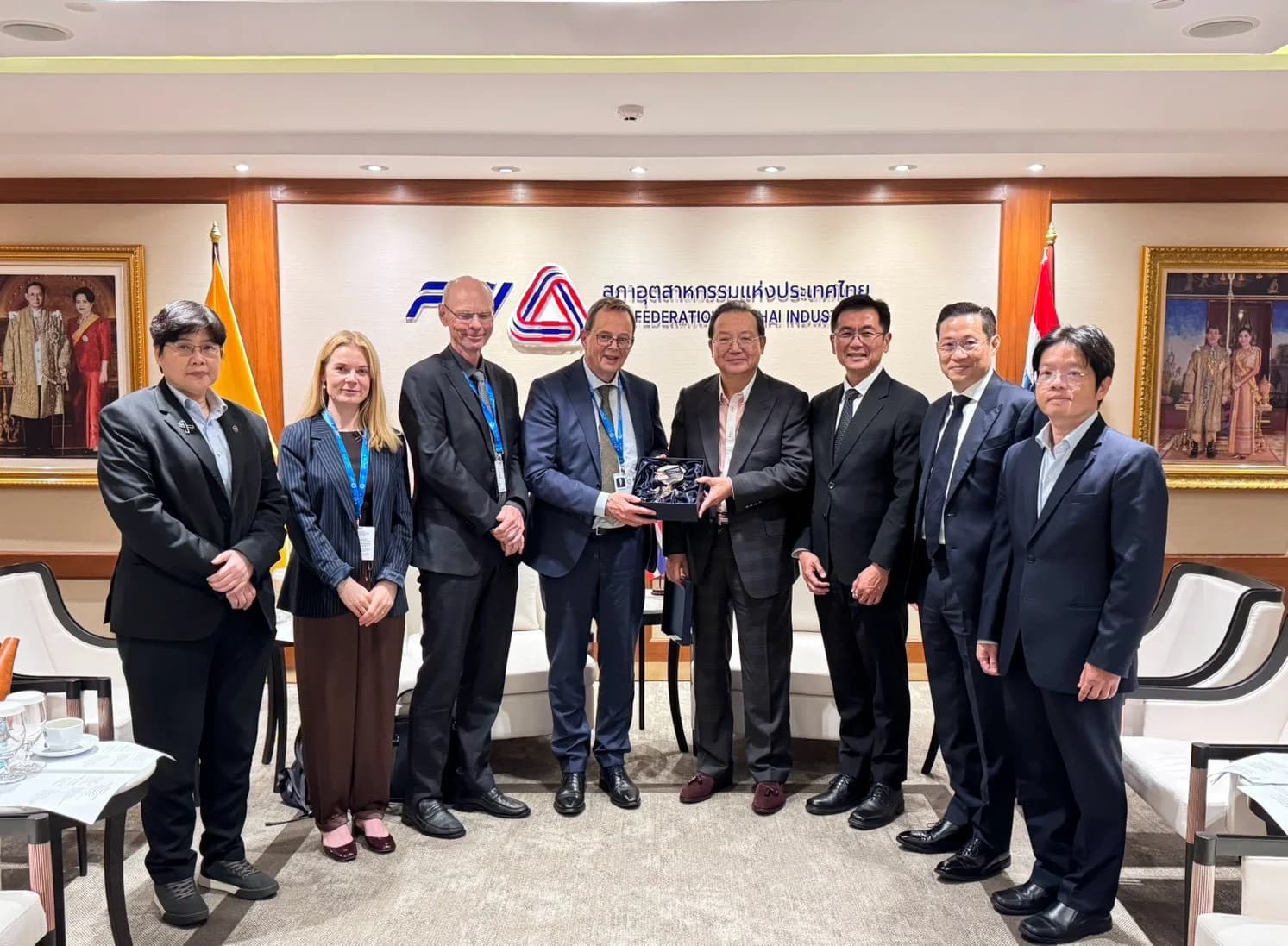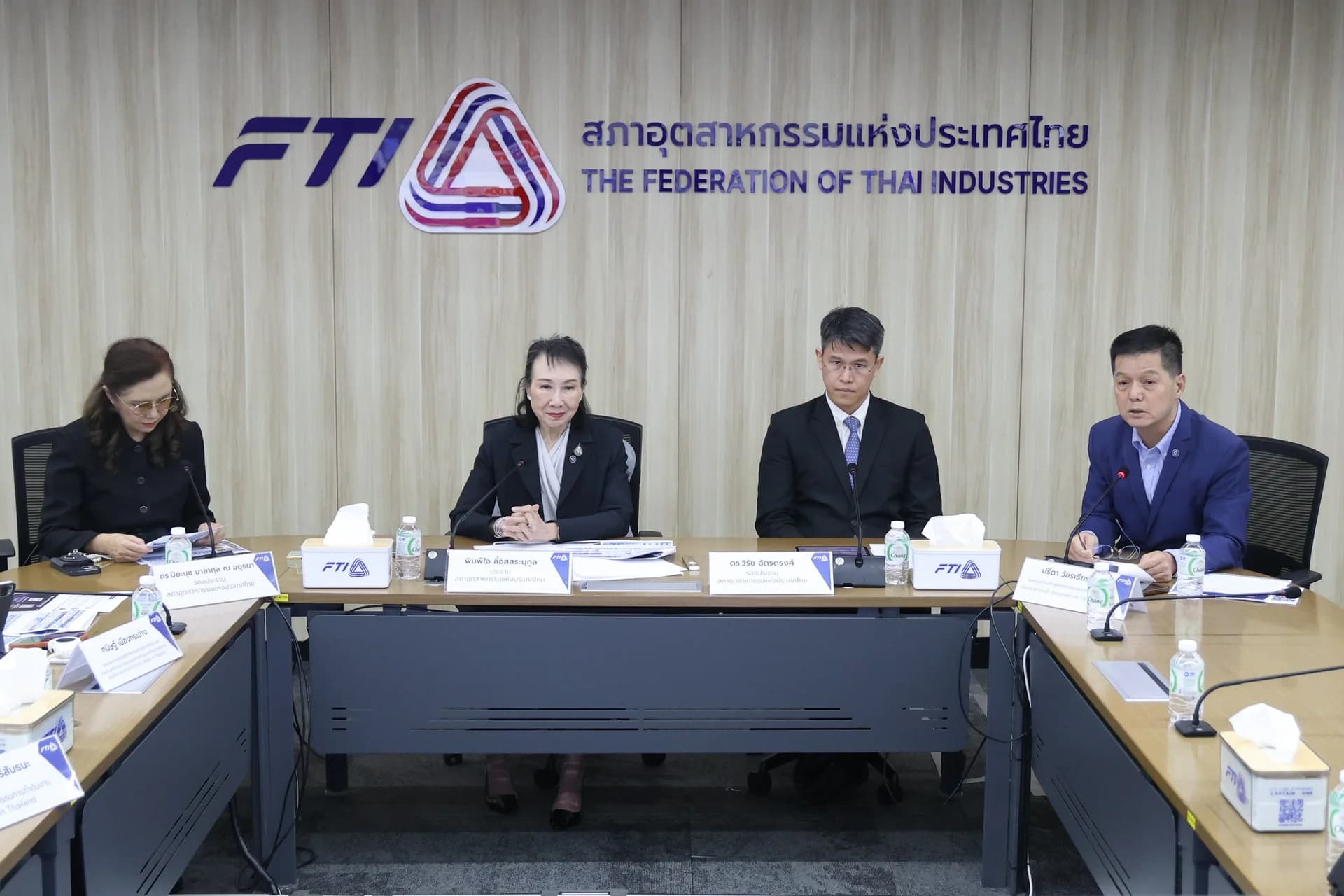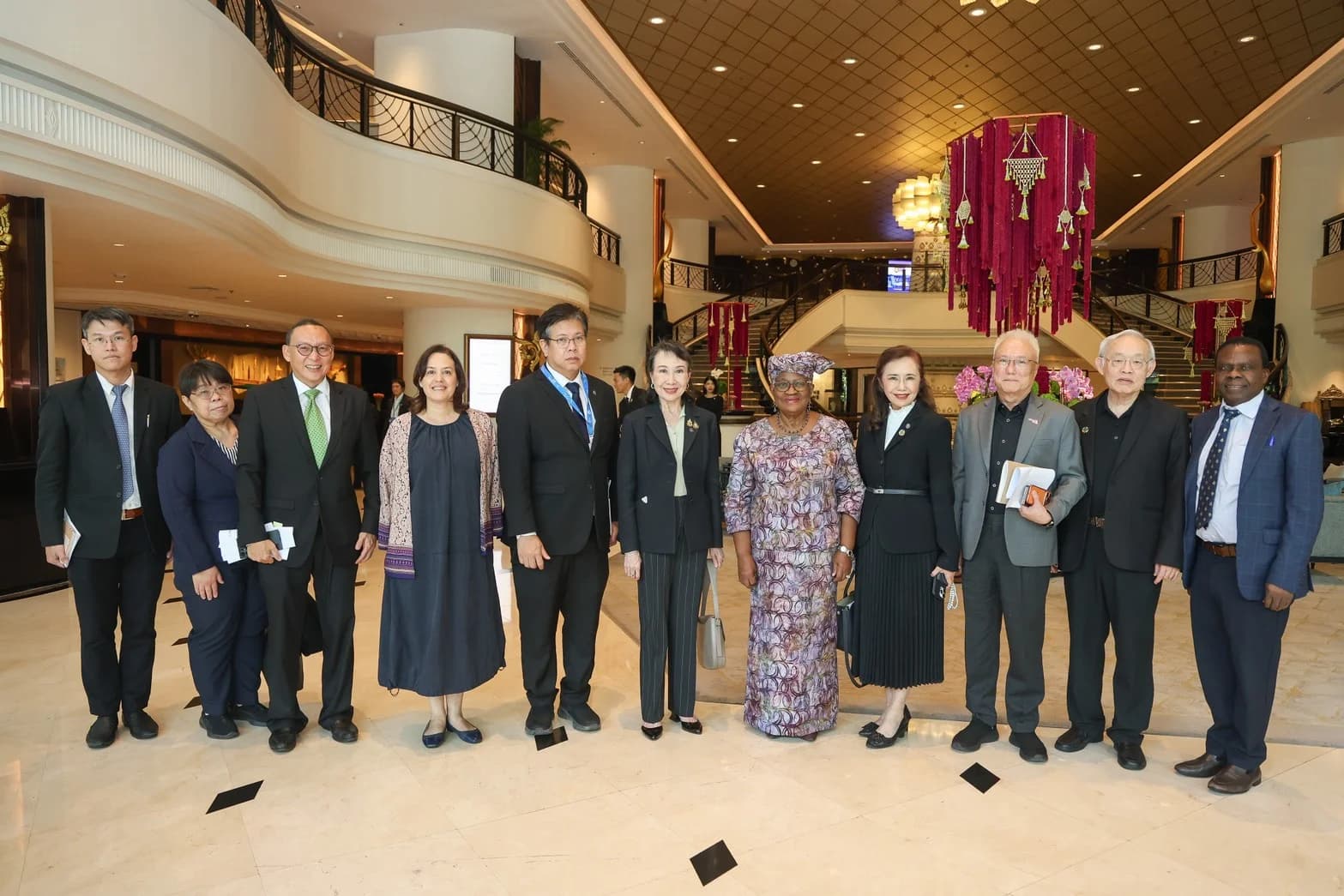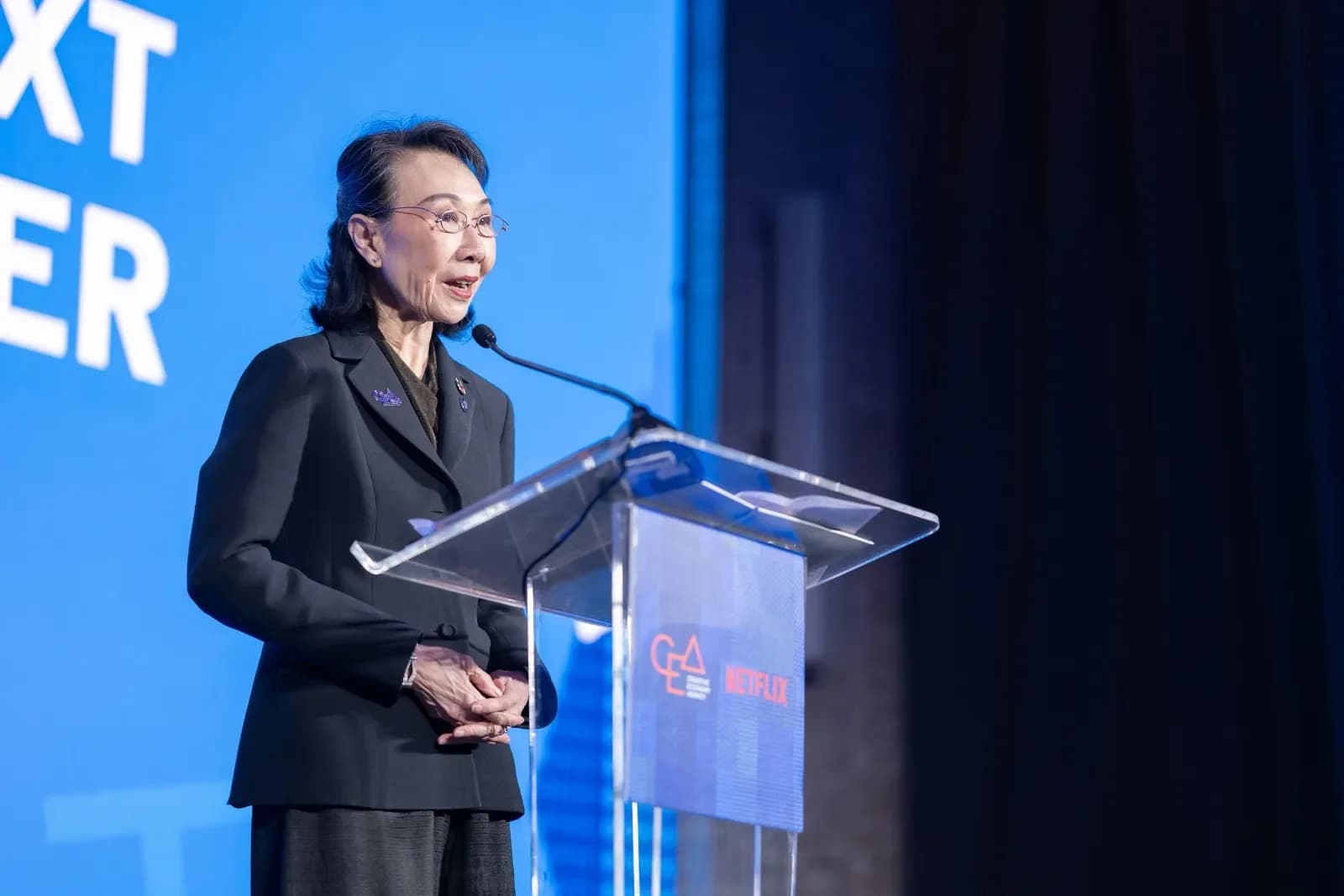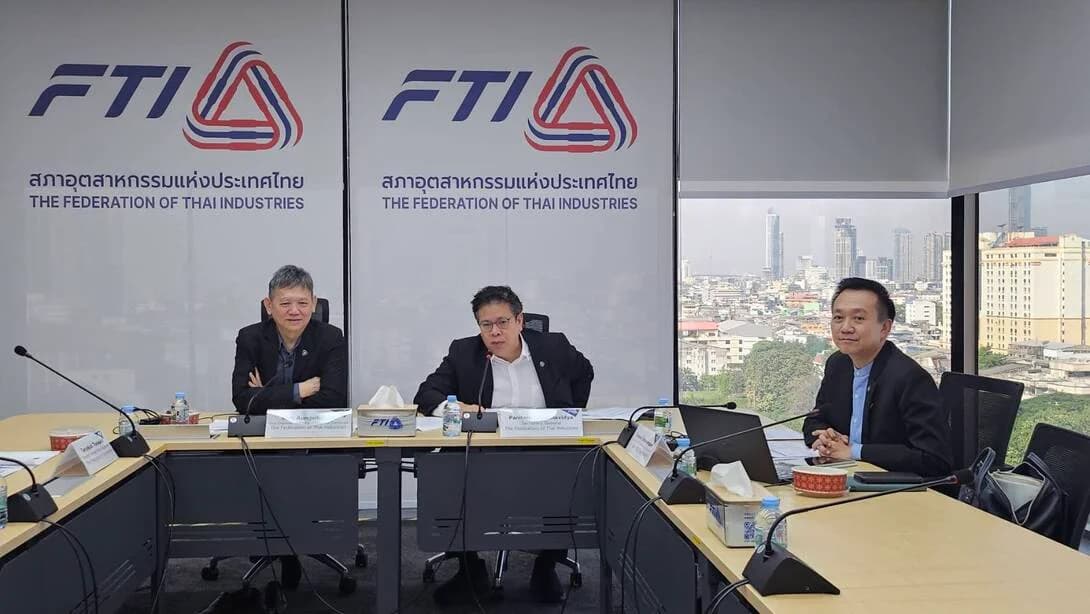
วันนี้ (วันอังคารที่ 12 พฤษภาคม 2569) นางพิมพ์ใจ ลี้อิสสระนุกูล ประธานสภาอุตสาหกรรมแห่งประเทศไทย (ส.อ.ท.) พร้อมคณะผู้บริหาร เข้าพบนายอนุทิน ชาญวีรกูล นายกรัฐมนตรีและรัฐมนตรีว่าการกระทรวงมหาดไทย ณ ห้องประชุมชั้น 1 ตึกภักดีบดินทร์ ทำเนียบรัฐบาล เพื่อหารือแนวทางพัฒนาเศรษฐกิจและอุตสาหกรรม ท่ามกลางความท้าทายจากเศรษฐกิจโลก หวังพลิกโฉมให้กับอุตสาหกรรมไทย ด้วยยุทธศาสตร์ “5I” พร้อมดัน Made in Thailand (MiT) - ช่วย SME เข้าถึงทุน – หนุนพลังงานสะอาด – ปฏิรูปกฎหมาย – เร่งลงทุนโครงสร้างพื้นฐาน เผยรับทุกข้อเสนอ เดินหน้าร่วมยกระดับอุตสาหกรรมไทย
นางพิมพ์ใจ ลี้อิสสระนุกูล ประธานสภาอุตสาหกรรมแห่งประเทศไทย (ส.อ.ท.) กล่าวว่า ปัจจุบัน ส.อ.ท. มีสมาชิกกว่า 16,000 ราย ครอบคลุม 48 กลุ่มอุตสาหกรรมและ 76 สภาอุตสาหกรรมจังหวัดทั่วประเทศ โดยกว่าร้อยละ 90 เป็นผู้ประกอบการ SME ซึ่งถือเป็นกลไกสำคัญของเศรษฐกิจไทย คิดเป็นสัดส่วนกว่าร้อยละ 30 ของ GDP หรือราว 5.7 ล้านล้านบาท
ทั้งนี้ ส.อ.ท. เดินหน้าขับเคลื่อนองค์กรภายใต้วิสัยทัศน์ “The New Chapter of Thai Industry: Empowering Growth with 5-I” เพื่อยกระดับขีดความสามารถการแข่งขันของอุตสาหกรรมไทย และเตรียมความพร้อมรองรับเศรษฐกิจโลกยุคใหม่ ผ่าน 5 ยุทธศาสตร์สำคัญ ได้แก่
1. Intelligent Industry (I1) ขับเคลื่อนสู่อุตสาหกรรมอัจฉริยะด้วย Digital และ AI
2. Innovation & Creative Industry (I2) ผลักดันนวัตกรรมและอุตสาหกรรมสร้างสรรค์เพื่อเพิ่มมูลค่า
3. International Alliance & Network (I3) ขยายความร่วมมือและเครือข่ายทางธุรกิจระดับสากล
4. Industrial Infrastructure Reform (I4) ยกระดับโครงสร้างพื้นฐานอุตสาหกรรมเพื่อการแข่งขัน
5. Inclusive & Sustainable Growth (I5) ส่งเสริมการเติบโตที่สมดุล ครอบคลุม และยั่งยืน
ในการหารือครั้งนี้ ส.อ.ท. เสนอ 6 แนวทางสำคัญเพื่อเร่งขับเคลื่อนเศรษฐกิจไทย ได้แก่ การส่งเสริมสินค้า Made in Thailand (MiT) การช่วยเหลือ SME เข้าถึงแหล่งทุน การเสริมความมั่นคงด้านพลังงาน การปฏิรูปกฎหมายและกฎระเบียบ การเร่งลงทุนโครงสร้างพื้นฐาน และการยกระดับการบริหารจัดการกากอุตสาหกรรมของประเทศ รวมทั้งเสนอรื้อฟื้นการประชุมคณะกรรมการร่วมภาครัฐและเอกชนเพื่อแก้ไขปัญหาทางเศรษฐกิจ (กรอ.)
[ ดัน Made in Thailand ใช้งบรัฐกระตุ้นเศรษฐกิจไทย ]
นางกนิษฐ์ เมืองกระจ่าง รองประธานสภาอุตสาหกรรมแห่งประเทศไทย (ส.อ.ท.) เสนอให้ภาครัฐใช้งบประมาณจัดซื้อจัดจ้างเป็นกลไกสำคัญในการกระตุ้นเศรษฐกิจไทย ผ่านการผลักดันสินค้า Made in Thailand (MiT) พร้อมเสนอให้ผลักดันการจัดซื้อสินค้า MiT ให้ได้ไม่น้อยกว่าร้อยละ 40 ของวงเงินเป้าหมาย 200,000 ล้านบาท ภายในปี 2570 เพื่อให้เม็ดเงินจากภาครัฐหมุนเวียนเข้าสู่ภาคการผลิตไทยโดยตรง กระจายรายได้สู่ SME และรักษาการจ้างงานในประเทศ
พร้อมกันนี้ ยังเสนอจัดตั้ง “คณะทำงานร่วม ส.อ.ท. และกระทรวงอุตสาหกรรม” เพื่อเชื่อมโยงแผนจัดซื้อภาครัฐกับกำลังการผลิตภาคเอกชน (Demand-Supply Matching) ขับเคลื่อนและยกระดับ MiT ให้มีมาตรฐานและทันสมัย รวมถึงเร่งขยายฐานข้อมูลสินค้า MiT โดยเฉพาะกลุ่มวัสดุก่อสร้าง เครื่องจักร และอุปกรณ์ไฟฟ้า เพื่อรองรับโครงการลงทุนภาครัฐในอนาคต
[ เปิด “FTI SME Funding Connect” ช่วย SME ฝ่าวิกฤตเข้าถึงทุน ]
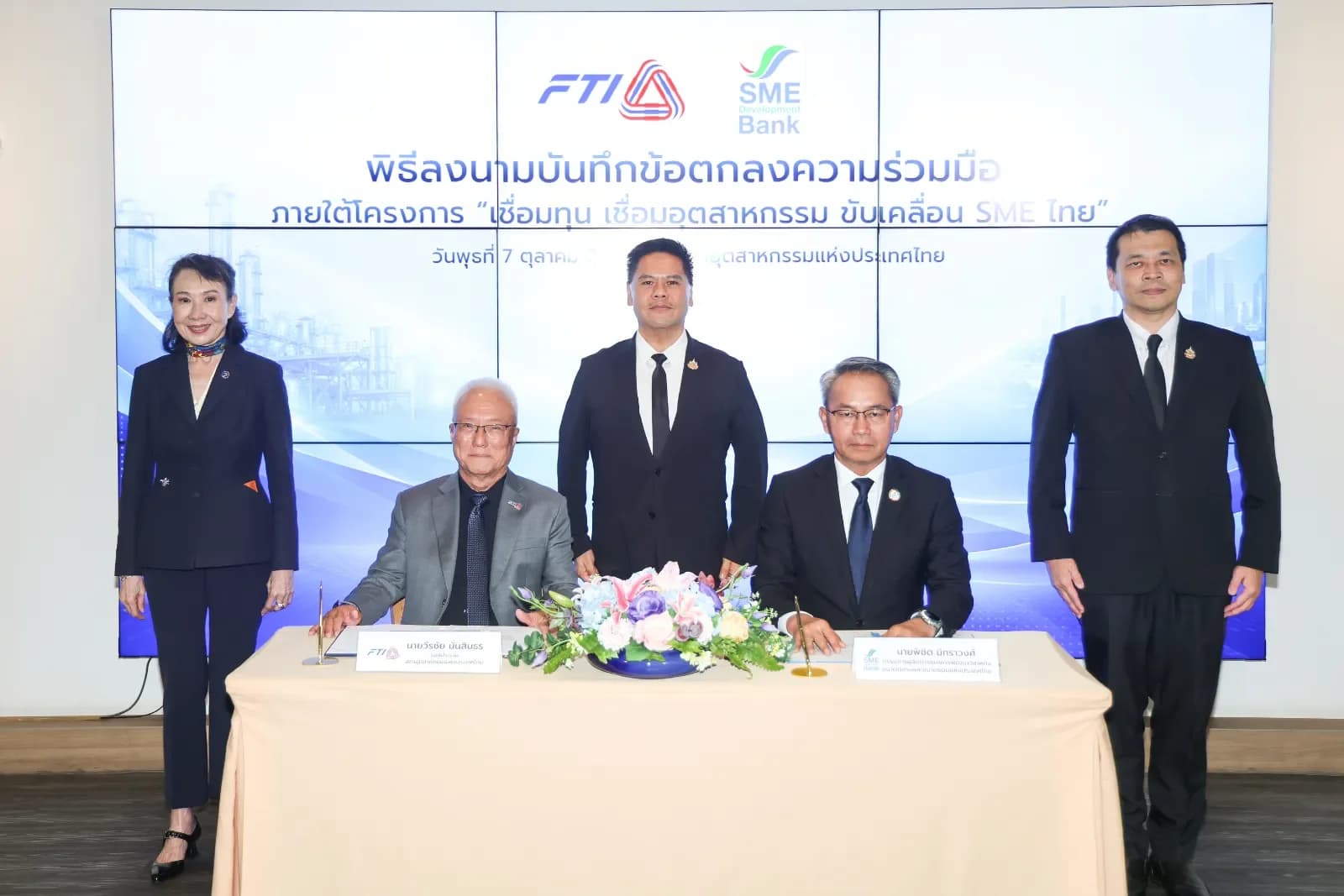
ด้าน นายวีรชัย มั่นสินธร รองประธานสภาอุตสาหกรรมแห่งประเทศไทย (ส.อ.ท.) กล่าวว่า เสนอจัดตั้ง “FTI SME Funding Connect” ซึ่งทำหน้าที่เป็นศูนย์กลางเชื่อมโยง SME กับแหล่งทุนที่เหมาะสม ทั้งสินเชื่อ เงินค้ำประกัน เงินสมทบ เงินร่วมลงทุน และโครงการสนับสนุนจากภาครัฐ พร้อมผลักดันการปฏิรูประบบสินเชื่อ SME เพื่อแก้ปัญหาการเข้าถึงทุนอย่างเป็นระบบ และช่วยให้ SME ไทยสามารถฟื้นตัวและแข่งขันได้ในระยะยาว
พร้อมกันนี้ ส.อ.ท. ยังเสนอ “ปฏิรูประบบสินเชื่อ SME” ผ่าน 7 มาตรการสำคัญ ได้แก่
• ตั้ง War Room “SME Credit” โดยใช้ Dashboard ติดตามการปล่อยสินเชื่อแบบเรียลไทม์
• กำหนดแนวทางให้ธนาคารแจ้งเหตุผลปฏิเสธสินเชื่อแก่ SME ภายใน 15 วัน
• ยกระดับบรรษัทประกันสินเชื่ออุตสาหกรรมขนาดย่อม (บสย.) สู่ระบบค้ำประกันสินเชื่อแห่งชาติ
• ปลดล็อกหลักประกันรูปแบบใหม่ เช่น IP, Software และ Technology
• จัดทำฐานข้อมูลเครดิต SME แห่งชาติ
• จัดตั้งบริษัทบริหารหนี้เสียเฉพาะ SME หรือ T-SAMCO
• สร้างระบบ “หมอหนี้ SME” โดยเป็นที่ปรึกษาเชิงลึก เพื่อช่วยฟื้นฟูกิจการควบคู่การแก้หนี้
[ หนุนพลังงานสะอาด เปิดทาง Direct PPA ]
นายมงคล เฮงโรจนโสภณ รองประธานสภาอุตสาหกรรมแห่งประเทศไทย (ส.อ.ท.) เสนอให้เปิดการซื้อขายไฟฟ้าสะอาดโดยตรง (Direct PPA) ภายในปี 2569 เพื่อเปิดโอกาสให้ภาคเอกชนและอุตสาหกรรมเข้าถึงพลังงานหมุนเวียนได้โดยตรงอย่างเป็นธรรมและโปร่งใส พร้อมกำหนดหลักเกณฑ์และค่าบริการโครงข่ายที่เหมาะสม เพื่อรองรับความต้องการใช้พลังงานสะอาดของภาคอุตสาหกรรม ท่ามกลางแรงกดดันจากมาตรการสิ่งแวดล้อมการค้าโลก
ในส่วนพลังงานชีวภาพ ส.อ.ท. เสนอให้ผลักดันเอทานอลเป็น Strategic Fuel ของประเทศ รวมทั้งส่งเสริมไบโอดีเซลและ Renewable Fuel ในภาคขนส่ง เพื่อลดการนำเข้าพลังงาน สร้างมูลค่าเพิ่มภาคเกษตร และสนับสนุนเศรษฐกิจสีเขียว
นอกจากนี้ ยังเสนอปรับโครงสร้างอัตราค่าไฟฟ้าให้สอดคล้องกับพฤติกรรมการใช้ไฟฟ้าที่เปลี่ยนแปลงไป รวมถึงเร่งลงทุน Smart Grid และระบบกักเก็บพลังงาน BESS เพื่อเสริมความมั่นคงด้านพลังงาน พร้อมรองรับการใช้พลังงานหมุนเวียนที่เพิ่มขึ้นของประเทศในระยะยาว โดยตั้งเป้าให้ไทยเป็นศูนย์กลางพลังงานชีวภาพของอาเซียน (ASEAN Bioenergy Hub) และฐานการผลิตสีเขียวและอุตสาหกรรมมูลค่าสูง (Green Manufacturing Base) อันนำไปสู่การมีเศรษฐกิจแข่งขันได้ในโลกคาร์บอนต่ำ เติบโตอย่างยั่งยืนและเป็นธรรม
[ ปฏิรูปกฎหมาย ลดอุปสรรคธุรกิจ – รองรับเศรษฐกิจใหม่ ]
ด้าน นายรัฐไกร ลิ้มศิริตระกูล รองประธานสภาอุตสาหกรรมแห่งประเทศไทย (ส.อ.ท.) ระบุว่า ประเทศไทยมีกฎหมายจำนวนมาก ทั้ง พ.ร.บ. และ พ.ร.ก. เกือบ 1,400 ฉบับ กฎหมายลำดับรองกว่า 100,000 ฉบับ และใบอนุญาตกว่า 2,115 ประเภท จนกลายเป็นภาระต่อต้นทุนและการดำเนินธุรกิจ
ส.อ.ท. จึงเสนอให้ “การปฏิรูปกฎหมาย” เป็นวาระแห่งชาติ ภายใน 3 ปี ซึ่งเป็นการสนับสนุนนโยบายรัฐบาลที่ตั้งเป้าหมายการเข้าเป็นสมาชิก OECD โดยสมบูรณ์ ในปี 2571 ด้วย พร้อมตั้งคณะทำงานร่วมรัฐ-เอกชน และพิจารณานำเครื่องมือที่มีประสิทธิภาพและเหมาะสมมาปรับใช้ในการปฏิรูปกฎหมาย เพื่อลดกฎหมายที่ล้าสมัยและซ้ำซ้อน
พร้อมกันนี้ ยังเสนอปลดล็อกข้อจำกัดด้านพลังงานสะอาด ลดขั้นตอนติดตั้งโซลาร์เซลล์ (Solar Cell) รวมใบอนุญาตที่ซ้ำซ้อน และจัดตั้ง One Stop Service หรือใช้ระบบใบอนุญาตหลัก (Super License) เพื่ออำนวยความสะดวกแก่ภาคธุรกิจ
[ เร่งลงทุนระบบราง – แก้ Missing Link – ยกระดับโลจิสติกส์ไทย ]
นายปณิธาน ปวโรฬารวิทยา เลขาธิการสภาอุตสาหกรรมแห่งประเทศไทย (ส.อ.ท.) กล่าวว่า ส.อ.ท. เสนอเร่งพัฒนาระบบรางและโครงข่ายโลจิสติกส์ เพื่อเพิ่มสัดส่วนการขนส่งทางราง ลดต้นทุนโลจิสติกส์ และเชื่อมโยงเศรษฐกิจไทยกับภูมิภาค โดยชี้ว่าการขนส่งทางรางจะช่วยลดต้นทุนการขนส่งสินค้าปริมาณมาก ลดการใช้พลังงาน ลดการปล่อยก๊าซเรือนกระจก และเพิ่มประสิทธิภาพด้านเวลาและความปลอดภัย เมื่อเทียบกับการขนส่งทางถนน
นอกจากนี้ พร้อมผลักดันการแก้ปัญหา Missing Link ของระบบขนส่ง เพื่อรองรับการขนส่งต่อเนื่องหลายรูปแบบ โดยเสนอเร่งรัดโครงการสะพานรถไฟข้ามแม่น้ำโขงแห่งใหม่ เส้นทางหนองคาย–เวียงจันทน์ เพื่อรองรับการเชื่อมต่อรถไฟไทย–ลาว–จีน พร้อมเสนอเร่งก่อสร้างเส้นทางรถไฟสายสุพรรณบุรี–นครหลวง–บ้านภาชี เพื่อเชื่อมระบบเรือ–ราง นอกจากนี้ ยังเสนอพัฒนาเส้นทางรถไฟเชื่อมจังหวัดชุมพรไปยังท่าเรือระนอง เพื่อเพิ่มศักยภาพเศรษฐกิจฝั่งอันดามัน และเชื่อมโยงการค้ากับจีน อินเดีย และภูมิภาคเอเชียใต้
ขณะเดียวกัน ยังเสนอเร่งพัฒนาโครงสร้างพื้นฐานด้านน้ำในพื้นที่ EEC เพื่อรองรับการลงทุนในอุตสาหกรรมยุทธศาสตร์ อาทิ EV เซมิคอนดักเตอร์ อิเล็กทรอนิกส์อัจฉริยะ และ Data Center รวมถึงสนับสนุน Digital Smart Logistics เพื่อยกระดับศักยภาพภาคอุตสาหกรรมไทย
[ ดัน Circular Economy ยกระดับจัดการกากอุตสาหกรรม ]
นางพิมพ์ใจ ลี้อิสสระนุกูล ประธานสภาอุตสาหกรรมแห่งประเทศไทย (ส.อ.ท.) กล่าวเพิ่มเติมว่า กระทรวงอุตสาหกรรมได้ให้การส่งเสริมและสนับสนุนการยกระดับการบริหารจัดการกากอุตสาหกรรมอย่างต่อเนื่อง โดย ส.อ.ท. ร่วมกับกระทรวงอุตสาหกรรม เสนอพิจารณา (ร่าง) พ.ร.บ.การจัดการกากอุตสาหกรรมให้สอดคล้องกับการปฏิบัติจริง และผลักดัน Circular Economy และ End-of-Waste ให้เกิดผลเป็นรูปธรรม รวมทั้งการนำ AI มาประยุกต์ใช้ในระบบอนุญาตนำกากออกนอกโรงงานแบบอัตโนมัติ (Automatic E-License) โดย ส.อ.ท. ยินดีร่วมมือกับกระทรวงอุตสาหกรรม เพื่อสนับสนุนการนำระบบ AI มาใช้ในการบริหารจัดการ ซึ่งจะเป็นกลไกสำคัญที่ช่วยส่งเสริมอุตสาหกรรมสู่ความยั่งยืน
[ รื้อฟื้น “กรอ.” กลไกร่วมรัฐ-เอกชนแก้เศรษฐกิจ ]
ส.อ.ท. เสนอให้รื้อฟื้นให้มีการจัดประชุมคณะกรรมการร่วมภาครัฐและเอกชนเพื่อแก้ไขปัญหาทางเศรษฐกิจ (กรอ.) ในระดับส่วนกลาง เพื่อเปิดโอกาสให้ภาครัฐและภาคเอกชนได้แลกเปลี่ยนความคิดเห็นอย่างตรงไปตรงมา สะท้อนปัญหาและข้อเสนอแนะจากภาคเศรษฐกิจจริง ที่ผ่านมาการจัดประชุม กรอ. จะเหลือเพียงรูปแบบ กรอ.ภูมิภาค และนับตั้งแต่ปี 2558 ยังไม่ได้มีการจัดประชุม กรอ. ส่วนกลาง จึงเชื่อมั่นว่า หากรื้อฟื้นให้มีการจัดประชุม กรอ. ก็จะเป็นพลังที่สนับสนุนรัฐบาลในการดำเนินนโยบายต่อไป
“ขอขอบคุณและชื่นชมในการจัดโอกาสให้ได้เข้าพบท่านนายกรัฐมนตรี รวมถึงคณะผู้บริหารทุกท่าน เพื่อนำเสนอ แลกเปลี่ยนความคิดเห็น โดยจะร่วมกันขับเคลื่อนและก้าวผ่านสภาวะเศรษฐกิจในปัจจุบันไปด้วยกัน” นางพิมพ์ใจ กล่าวทิ้งท้าย
ด้าน นายอนุทิน ชาญวีรกูล นายกรัฐมนตรีและรัฐมนตรีว่าการกระทรวงมหาดไทย กล่าวว่า ก่อนอื่นขอแสดงความยินดีกับการรับตำแหน่งประธาน ส.อ.ท. และดีใจที่เห็นผู้บริหาร ส.อ.ท. ในวาระนี้ มีความเข้าใจภาคอุตสาหกรรมเป็นอย่างดี เข้าใจในระบบการผลิต การจัดการด้านการตลาด และการคมนาคมขนส่ง เชื่อมั่นว่าภายใต้การนำของท่านประธานวาระนี้ ประกอบกับการสนับสนุนของภาครัฐ จะสามารถทำให้ทิศทางการสร้างเศรษฐกิจ สร้างความมั่นคง สร้างรายได้ให้ประชาชน โดยเฉพาะผู้ใช้แรงงานได้ในระยะยาว
โดยเฉพาะประเด็นเรื่อง SME ที่ส.อ.ท. ได้นำเสนอ ค่อนข้างตรงจุดกับการดำเนินงานของภาครัฐที่กำลังเดินหน้า ซึ่งจะสามารถทำงานร่วมกันได้อย่างมีประสิทธิภาพ เพราะภาครัฐให้ความสำคัญกับ SME เป็นอย่างมาก ไม่ใช่แค่เพียงปัญหาเข้าถึงแหล่งเงินทุนไม่ได้ แต่ยังรวมถึงปัญหาด้านคุณภาพสินค้าและผลิตภัณฑ์ที่ขาดความเสถียร
ในด้านโลจิสติกส์ รัฐบาลพร้อมเดินหน้าสนับสนุนโครงการ 3 Missing Links เพื่อยกระดับโครงข่ายระบบรางของไทย เพิ่มประสิทธิภาพการขนส่ง และเชื่อมโยงเศรษฐกิจไทยสู่ภูมิภาค ตามข้อเสนอของ ส.อ.ท. ซึ่งมีความสอดคล้องกับแนวคิดโครงการแลนด์บริดจ์ (Land Bridge) ที่รัฐบาลกำลังผลักดันอยู่ในปัจจุบัน
“วันนี้ รัฐบาลพร้อมเดินหน้า และต้องการความร่วมมือ แรงสนับสนุนจากภาคเอกชนอย่างสภาอุตสาหกรรมแห่งประเทศไทย เพื่อพัฒนาเศรษฐกิจของประเทศให้ยั่งยืนต่อไป” นายอนุทิน กล่าวทิ้งท้าย
นายเอกนิติ นิติทัณฑ์ประภาศ รองนายกรัฐมนตรี และรัฐมนตรีว่าการกระทรวงการคลัง กล่าวเพิ่มเติมว่า รัฐบาลมีความตั้งใจที่จะฟื้นฟูเศรษฐกิจอย่างต่อเนื่อง โดยได้ดำเนินมาตรการต่าง ๆ ซึ่งโครงการ MiT ก็อยู่ในแนวทางดังกล่าวเช่นกัน ทั้งนี้ จำเป็นต้องกำหนดกรอบการดำเนินงานที่ชัดเจน และสามารถวัดผลได้อย่างเป็นรูปธรรม โดยมอบหมายให้สภาอุตสาหกรรมแห่งประเทศไทย (ส.อ.ท.) ผนึกกำลังร่วมกับคณะกรรมการร่วมภาคเอกชน 3 สถาบัน (กกร.) ในการขับเคลื่อน เพื่อให้เกิดการหมุนเวียนในระบบเศรษฐกิจจริง และเป็นพลังสำคัญในการกระตุ้นเศรษฐกิจของประเทศ นอกจากนี้ ในด้านการจัดซื้อจัดจ้างภาครัฐ เช่น ระบบ PromptBiz ขณะนี้ได้มีการเตรียมความพร้อมไว้แล้ว เพื่อผลักดันให้เกิดขึ้นอย่างเป็นรูปธรรม
สำหรับประเด็นการเปลี่ยนผ่านด้านพลังงาน รัฐบาลเห็นว่าจำเป็นต้องเร่งดำเนินการทันที ทั้งในมิติของการเยียวยาและการฟื้นฟู รวมถึงการผลักดันเรื่องคาร์บอนเครดิต ซึ่งขณะนี้ได้เดินหน้าดำเนินการอย่างเต็มที่
ด้านแรงงาน นายจุลพันธ์ อมรวิวัฒน์ รัฐมนตรีว่าการกระทรวงแรงงาน กล่าวว่าในส่วนของทุนมนุษย์ ถือเป็นเรื่องสำคัญอย่างยิ่ง เพราะโลกกำลังเปลี่ยนแปลงอย่างรวดเร็ว การพัฒนาคนจึงเป็นสิ่งจำเป็น หากกฎหมายไทยและคนไทยไม่สามารถปรับตัวได้ ก็อาจไม่ทันต่อการเปลี่ยนแปลงของโลก โดยรัฐบาลมีงบประมาณสำหรับการพัฒนาทักษะแรงงานอยู่แล้ว แต่จำเป็นต้องเริ่มจาก “Demand Side” หรือความต้องการของภาคอุตสาหกรรม โดยต้องการหารือร่วมกับภาคเอกชน เพื่อเปิดโอกาสให้มีส่วนร่วมในการสะท้อนปัญหา และร่วมออกแบบหลักสูตรการอบรม ว่าควรมีเนื้อหาและทักษะใด เพื่อให้สอดคล้องกับความต้องการของภาคอุตสาหกรรมอย่างแท้จริง
ทั้งนี้ นางพิมพ์ใจ ได้มอบหนังสือข้อเสนอแนวทางการส่งเสริมเศรษฐกิจและอุตสาหกรรมไทย ซึ่งจัดทำโดยสภาอุตสาหกรรมแห่งประเทศไทย (ส.อ.ท.) ให้แก่ท่านนายกรัฐมนตรีและคณะ เพื่อใช้เป็นข้อมูลประกอบการกำหนดนโยบาย และผลักดันมาตรการสนับสนุนภาคเศรษฐกิจและอุตสาหกรรมของไทยให้สามารถเติบโตได้อย่างยั่งยืนและแข่งขันได้ในระดับสากล
................................................................................
เผยแพร่โดย ฝ่ายสื่อสารองค์กร สภาอุตสาหกรรมแห่งประเทศไทย (โทร. 0-2345-1051)
Today (Tuesday, May 12, 2026), Mrs. Pimjai Leeissaranukul, President of the Federation of Thai Industries (FTI), accompanied by the executive committee, met with Mr. Anutin Charnvirakul, Prime Minister and Minister of Interior, at the Phakdi Bodintham Meeting Room, Government House, to discuss ways to develop the economy and industry amidst the challenges of the global economy, aiming to transform the Thai industry with the "5I" strategy while promoting Made in Thailand (MiT) - assisting SMEs in accessing capital - supporting clean energy - reforming laws - accelerating infrastructure investment, revealing acceptance of all proposals to collaborate in elevating the Thai industry
Mrs. Pimjai Leeissaranukul, President of the Federation of Thai Industries (FTI), stated that currently, FTI has over 16,000 members covering 48 industrial groups and 76 provincial industrial councils across the country, with more than 90 percent being SME operators, which play a crucial role in the Thai economy, accounting for more than 30 percent of GDP or approximately 5.7 trillion baht.
FTI is moving forward with its operations under the vision “The New Chapter of Thai Industry: Empowering Growth with 5-I” to enhance the competitive capacity of the Thai industry and prepare for the new global economy through five key strategies, including:
1. Intelligent Industry (I1) driving towards an intelligent industry using Digital and AI
2. Innovation & Creative Industry (I2) promoting innovation and creative industries to increase value
3. International Alliance & Network (I3) expanding collaboration and international business networks
4. Industrial Infrastructure Reform (I4) enhancing industrial infrastructure for competitiveness
5. Inclusive & Sustainable Growth (I5) promoting balanced, inclusive, and sustainable growth
In this discussion, FTI proposed six key approaches to accelerate the Thai economy, including promoting Made in Thailand (MiT), assisting SMEs in accessing funding sources, enhancing energy security, reforming laws and regulations, accelerating infrastructure investment, and upgrading the management of industrial waste in the country, as well as proposing to revive the joint government-private committee to address economic issues (AER).
[Promote Made in Thailand Using State Budget to Stimulate the Thai Economy]
Mrs. Kanit Meungkrajang, Vice President of the Federation of Thai Industries (FTI), proposed that the government use its procurement budget as a key mechanism to stimulate the Thai economy through the promotion of Made in Thailand (MiT) products, also recommending that the procurement of MiT products be pushed for at least 40 percent of the target budget of 200 billion baht by 2027, so that government funds circulate directly into the Thai manufacturing sector, distributing income to SMEs and maintaining employment in the country.
In addition, it was proposed to establish a “Joint Working Group of FTI and the Ministry of Industry” to connect the government procurement plans with the production capacity of the private sector (Demand-Supply Matching), driving and upgrading MiT to meet current standards and modernize, as well as accelerating the expansion of the MiT product database, especially for construction materials, machinery, and electrical equipment to support future government investment projects.
[Launch “FTI SME Funding Connect” to Help SMEs Navigate Crisis and Access Capital]
Mr. Weerachai Munsinthorn, Vice President of the Federation of Thai Industries (FTI), stated that he proposed to establish “FTI SME Funding Connect”, which will serve as a hub connecting SMEs with appropriate funding sources, including loans, guarantees, co-investment funds, and government support projects, while driving the reform of the SME credit system to address access to funding systematically and help Thai SMEs recover and compete in the long term.
Additionally, FTI also proposed a “SME Credit Reform” through seven key measures, including:
• Establishing a War Room for “SME Credit” using a Dashboard to track loan disbursement in real-time
• Requiring banks to notify SMEs the reasons for loan rejections within 15 days
• Upgrading the Small Industry Credit Guarantee Corporation (SCGC) to a national credit guarantee system
• Unlocking new types of guarantees, such as Intellectual Property, Software, and Technology
• Establishing a national SME credit database
• Setting up a company to manage bad debts specifically for SMEs or T-SAMCO
• Creating a “SME Debt Doctor” system to provide in-depth consulting to aid business recovery alongside debt resolution
[Support Clean Energy by Opening Up Direct PPA]
Mr. Mongkol Hengrojanosophon, Vice President of the Federation of Thai Industries (FTI), proposed to open up direct clean electricity trading (Direct PPA) within 2026 to enable the private sector and industries to access renewable energy directly in a fair and transparent manner, along with establishing appropriate criteria and network service fees to accommodate the industrial demand for clean energy amidst pressures from global trade environmental measures.
Regarding bioenergy, FTI proposed to promote ethanol as a Strategic Fuel for the country and support the use of biodiesel and Renewable Fuels in the transportation sector to reduce energy imports, create added value in agriculture, and support a green economy.
Furthermore, it was suggested to adjust electricity tariff structures to align with the changing electricity usage patterns, as well as accelerate investments in Smart Grid and Battery Energy Storage Systems (BESS) to enhance energy security and accommodate the increasing use of renewable energy in the long run, aiming to make Thailand the ASEAN Bioenergy Hub and a base for green manufacturing and high value industries, leading to a competitive economy in a low-carbon world, growing sustainably and equitably.
[Reform Laws to Reduce Business Barriers - Support the New Economy]
Mr. Rattaka Limsiritrakul, Vice President of the Federation of Thai Industries (FTI), stated that Thailand has a significant number of laws, including nearly 1,400 acts and royal decrees, more than 100,000 secondary laws, and over 2,115 types of licenses, which have become a burden on costs and business operations.
Therefore, FTI proposes that “law reform” be a national agenda within three years, supporting government policies aimed at complete OECD membership by 2028, establishing a joint working committee of public and private sectors, and considering implementing effective and appropriate tools for law reform to eliminate outdated and redundant laws.
Additionally, it was suggested to unlock limitations regarding clean energy, reduce steps for solar cell installation, eliminate overlapping licenses, and establish a One-Stop Service or a Super License system to facilitate the business sector.
[Accelerate Investment in Rail Systems – Address Missing Links – Enhance Thai Logistics]
Mr. Panithan Pawarojlarwit, Secretary-General of the Federation of Thai Industries (FTI), stated that FTI proposed to expedite the development of rail systems and logistics networks to increase the proportion of rail transportation, reduce logistics costs, and connect the Thai economy with the region, emphasizing that rail transport would help reduce bulk goods transportation costs, decrease energy consumption, reduce greenhouse gas emissions, and increase efficiency in terms of time and safety compared to road transport.
Moreover, they are pushing to resolve the Missing Links issues in the transport system to accommodate intermodal transport, proposing to accelerate the construction of a new railway bridge across the Mekong River connecting Nong Khai – Vientiane to facilitate the connection of Thai-Laos-China rail, and to expedite the construction of the Suphanburi-Nakhon Luang-Ban Phachi railway route to connect the water-rail systems. Additionally, they proposed developing a railway line connecting Chumphon to Ranong Port to enhance the economic potential of the Andaman coast and link trade with China, India, and South Asian regions.
At the same time, they proposed to enhance water infrastructure in the EEC area to support investment in strategic industries such as EVs, semiconductors, smart electronics, and data centers, as well as support Digital Smart Logistics to elevate the capabilities of the Thai industrial sector.
[Promote Circular Economy to Enhance Industrial Waste Management]
Mrs. Pimjai Leeissaranukul, President of the Federation of Thai Industries (FTI), further stated that the Ministry of Industry has continuously promoted and supported the improvement of industrial waste management. FTI, together with the Ministry of Industry, proposed the consideration of a draft Industrial Waste Management Act to align with actual practices, and promote Circular Economy and End-of-Waste to achieve tangible results, including the application of AI in the automated external waste permit system (Automatic E-License). FTI is ready to collaborate with the Ministry of Industry to support the application of AI in management, which will be a crucial mechanism to promote sustainability in the industry.
[Revitalize the AER Mechanism as a Government-Private Collaboration to Solve Economic Issues]
FTI proposed to revitalize the joint government-private committee to address economic issues (AER) at the central level, to open opportunities for both public and private sectors to exchange opinions candidly, reflecting problems and recommendations from the real economic sector. In the past, the AER meetings have only been held regionally, and since 2015, there have been no AER meetings at the central level. Therefore, it is believed that if revitalized to hold AER meetings, it will provide support for the government in moving forward with its policies.
“I would like to thank and commend the opportunity to meet with the Prime Minister and all executives to present and exchange opinions, as we will work together to navigate through the current economic situation,” Mrs. Pimjai concluded.
Mr. Anutin Charnvirakul, Prime Minister and Minister of Interior, stated that he would like to first congratulate the assumption of office of the President of FTI, and is glad to see the FTI executives in this tenure having a strong understanding of the industry, production systems, and logistics management. He believes that under the leadership of the current president, along with the support from the government, the direction of building the economy, ensuring security, and creating income for the people, especially laborers, can be achieved in the long term.
Especially on the SME issue that FTI has presented, it aligns closely with the government's ongoing operations, which will be able to work efficiently together, as the government places great importance on SMEs, not just the issue of accessing capital but also including the issue of product quality and stability.
In logistics, the government is ready to support the 3 Missing Links project to enhance the rail system network of Thailand, improving transport efficiency, and connecting the Thai economy to the region in accordance with FTI's proposal, which aligns with the concept of the Land Bridge project that the government is currently promoting.
“Today, the government is ready to move forward and needs cooperation and support from the private sector, such as the Federation of Thai Industries, to develop the country’s economy sustainably,” Mr. Anutin concluded.
Mr. Aekniti Nitithanprapas, Deputy Prime Minister and Minister of Finance, added that the government aims to continuously revive the economy by implementing various measures, with the MiT project being one of them. It is essential to set a clear operational framework that can be quantitatively measured, assigning the Federation of Thai Industries (FTI) to collaborate with the Joint Private Sector Committee of three institutes (ECRI) to drive this forward, to create a circulation in the real economic system and be a key force in stimulating the country’s economy. Additionally, in terms of public procurement, such as the PromptBiz system, preparations are in place to push for tangible outcomes.
Regarding the energy transition issue, the government believes it is necessary to accelerate immediate actions in both the dimensions of relief and recovery, including advancing carbon credit issues, which are currently being actively pursued.
In terms of labor, Mr. Chulapan Amornvivat, Minister of Labor, stated that human capital is extremely important because the world is changing rapidly. Therefore, developing people is essential. If Thai laws and people cannot adapt, they may not keep up with the changes in the world. The government already has a budget for skills development for workers but must start from the demand side or the industry's needs, desiring discussions with the private sector to allow participation in reflecting issues and jointly designing training courses with relevant content and skills to genuinely meet the needs of the industry.
Furthermore, Mrs. Pimjai presented a proposal document outlining economic and industrial promotion strategies compiled by the Federation of Thai Industries (FTI) to the Prime Minister and his team to use as supporting information for policy formulation and to advance measures to support the Thai economy and industry towards sustainable growth and competitiveness at the international level.
................................................................................
Published by the Corporate Communications Department, Federation of Thai Industries (Tel. 0-2345-1051)