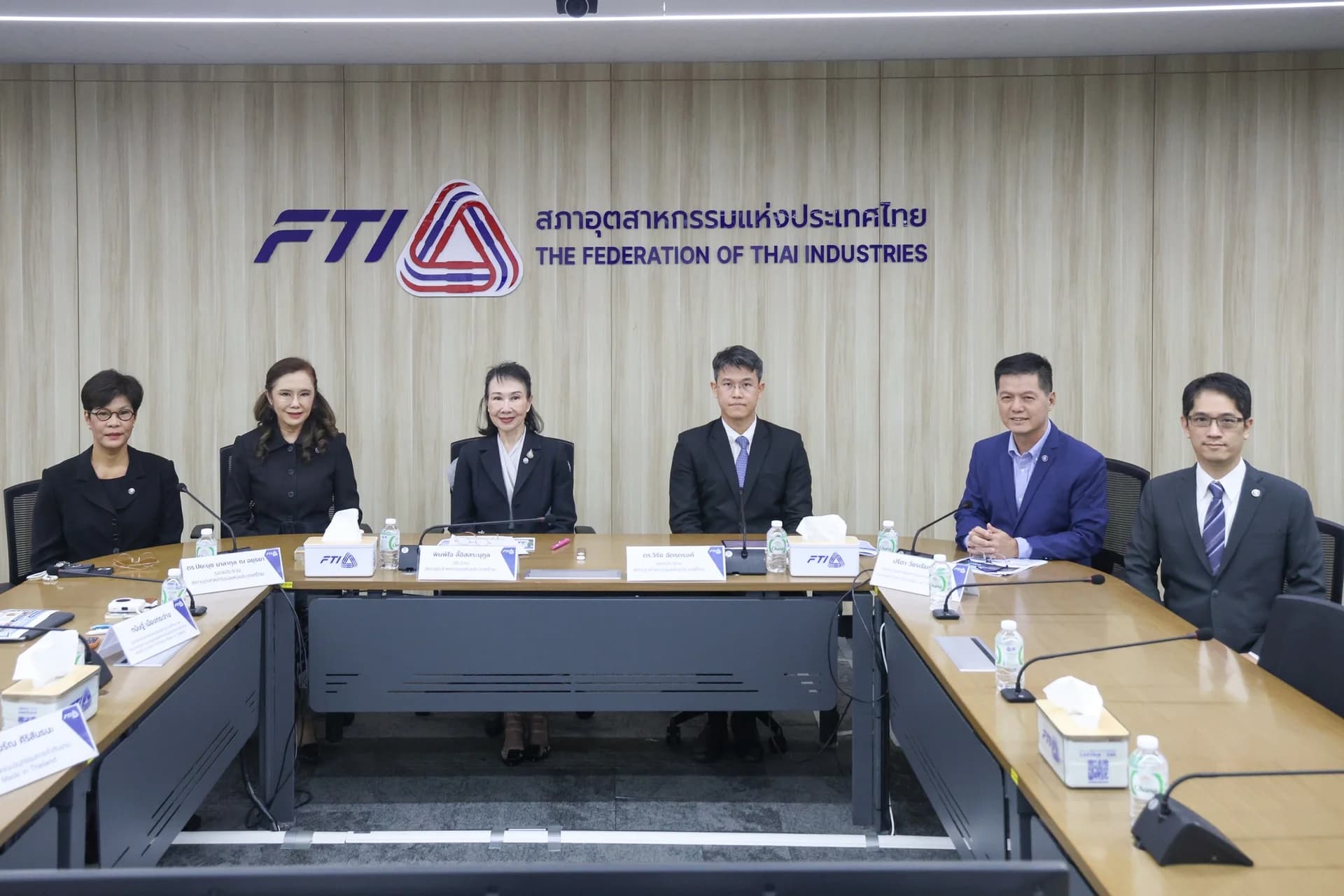

นายนาวา จันทนสุรคน รองประธานสภาอุตสาหกรรมแห่งประเทศไทย (ส.อ.ท.) พร้อมด้วย นางบัญชุสา พุทธพรมงคล กรรมการ ส.อ.ท. และรองประธานสายงานเศรษฐกิจและวิชาการ ส.อ.ท. ร่วมเปิดเผยผลการสำรวจดัชนีความเชื่อมั่นภาคอุตสาหกรรม ประจำเดือนมีนาคม 2569 อยู่ที่ระดับ 88.6 ปรับตัวลดลงจากระดับ 90.0 ในเดือนกุมภาพันธ์ 2569
ทั้งนี้ การปรับตัวลดลงของดัชนีดังกล่าวมีสาเหตุจากหลายปัจจัย โดยเฉพาะสถานการณ์ความขัดแย้งระหว่างสหรัฐอเมริกา อิสราเอล และอิหร่าน รวมถึงการปิดช่องแคบฮอร์มุซ ซึ่งส่งผลให้ราคาพลังงานและค่าขนส่งปรับตัวสูงขึ้น และกดดันต้นทุนการผลิตของภาคอุตสาหกรรม นอกจากนี้ ยังส่งผลกระทบต่อการส่งออกไปยังภูมิภาคตะวันออกกลาง โดยเฉพาะในกลุ่มยานยนต์ เครื่องปรับอากาศ และผลิตภัณฑ์ไม้
ขณะเดียวกัน ราคาน้ำมันดีเซลปรับตัวเพิ่มขึ้นแตะระดับ 40.74 บาทต่อลิตร ณ วันที่ 31 มีนาคม 2569 เพิ่มขึ้น 36.07% เมื่อเทียบกับเดือนก่อนหน้า ส่งผลให้ต้นทุนในภาคขนส่ง ภาคเกษตร และภาคอุตสาหกรรมเพิ่มสูงขึ้น อีกทั้งยังเกิดปัญหาการขาดแคลนน้ำมันในสถานีบริการบางพื้นที่ ซึ่งกระทบต่อกิจกรรมทางเศรษฐกิจในพื้นที่
นอกจากนี้ ภาคอุตสาหกรรมยังเผชิญภาวะขาดแคลนวัตถุดิบ (Supply Shock) เช่น เม็ดพลาสติก เคมีภัณฑ์ บรรจุภัณฑ์ และอะลูมิเนียม ส่งผลให้ต้นทุนการผลิตสินค้าเพิ่มสูงขึ้น และกดดันให้ผู้ประกอบการต้องพิจารณาปรับราคาสินค้า อีกทั้งยังทำให้กระบวนการขนส่งเกิดความล่าช้า
พร้อมกันนี้ ค่าระวางเรือปรับตัวสูงขึ้นจากสถานการณ์ความตึงเครียดในตะวันออกกลาง โดยเฉพาะค่าเบี้ยประกันความเสี่ยงและค่าธรรมเนียมส่วนเพิ่ม (Surcharge) รวมถึงปัญหาสินค้าตกค้างที่ไม่สามารถขนส่งไปยังประเทศในอ่าวเปอร์เซียได้ ซึ่งล้วนส่งผลกระทบต่อภาระต้นทุนของผู้ประกอบการ
อย่างไรก็ตาม ในเดือนมีนาคมที่ผ่านมา ยังมีปัจจัยสนับสนุนบางประการ ได้แก่ มาตรการยกเว้นภาษีเงินได้สำหรับค่าซื้ออุปกรณ์และค่าติดตั้งระบบพลังงานแสงอาทิตย์ (โซลาร์เซลล์) ซึ่งมีผลบังคับใช้ตั้งแต่วันที่ 3 มีนาคม 2569 ถึง 31 ธันวาคม 2571 โดยมาตรการดังกล่าวมีส่วนช่วยกระตุ้นอุปสงค์ในกลุ่มสินค้าโซลาร์เซลล์และระบบกักเก็บพลังงาน (Energy Storage System)
นอกจากนี้ การจัดงานแสดงสินค้าและกิจกรรมส่งเสริมการขาย เช่น Bangkok International Motor Show 2026 ระหว่างวันที่ 25 มีนาคม – 5 เมษายน 2569 และมหกรรมบ้านและคอนโด ครั้งที่ 49 ระหว่างวันที่ 19–22 มีนาคม 2569 คาดว่าจะช่วยกระตุ้นกำลังซื้อในอุตสาหกรรมยานยนต์ วัสดุก่อสร้าง และธุรกิจที่เกี่ยวเนื่อง
ขณะเดียวกัน มาตรการเพิ่มสัดส่วนการผสมไบโอดีเซล B7 และการกำหนดราคาน้ำมัน E20 ให้ต่ำกว่า E10 ประมาณ 5 บาทต่อลิตร ยังมีส่วนช่วยสนับสนุนห่วงโซ่อุปทานเชื้อเพลิงชีวภาพ อีกทั้ง ค่าเงินบาทอ่อนค่าลง 5.55% เมื่อเทียบระหว่างวันที่ 27 กุมภาพันธ์ กับวันที่ 31 มีนาคม 2569 มาอยู่ที่ระดับ 32.99 บาทต่อดอลลาร์สหรัฐ จากการแข็งค่าของเงินดอลลาร์สหรัฐและสถานการณ์ความตึงเครียดในตะวันออกกลาง ซึ่งส่งผลดีต่อภาคการส่งออกของไทย
จากผลการสำรวจผู้ประกอบการจำนวน 1,311 ราย ครอบคลุม 48 กลุ่มอุตสาหกรรมของสภาอุตสาหกรรมแห่งประเทศไทย (ส.อ.ท.) ในเดือนมีนาคม 2569 พบว่าปัจจัยที่ผู้ประกอบการมีความกังวลเพิ่มขึ้น ได้แก่ ราคาพลังงาน 71.9% เศรษฐกิจโลก 69.8% เศรษฐกิจภายในประเทศ 57.7% และอัตราดอกเบี้ยเงินกู้ 21.4% ส่วนปัจจัยที่ผู้ประกอบการมีความกังวลลดลง ได้แก่ อัตราแลกเปลี่ยน (โดยเฉพาะในมุมมองของผู้ส่งออก) 43.8% นโยบายภาครัฐ 33.6% การเข้าถึงสินเชื่อ 24.8%
ขณะที่ ดัชนีความเชื่อมั่นภาคอุตสาหกรรมคาดการณ์ในช่วง 3 เดือนข้างหน้า อยู่ที่ระดับ 95.9 ปรับตัวลดลงจากระดับ 97.4 ในเดือนกุมภาพันธ์ 2569 โดยมีปัจจัยกดดันจากหลายประเด็นสำคัญ ทั้งผู้ประกอบการยังคงมีความกังวลต่อสถานการณ์ความขัดแย้งระหว่างสหรัฐอเมริกา อิสราเอล และอิหร่าน ที่มีแนวโน้มยืดเยื้อ กดดันห่วงโซ่อุปทานและโลจิสติกส์ กระทบภาคการผลิตและภาคการท่องเที่ยวของไทย
นอกจากนี้ ค่าไฟฟ้าผันแปรอัตโนมัติ (ค่าไฟฟ้า Ft) ในงวดเดือนพฤษภาคม–สิงหาคม 2569 มีแนวโน้มปรับเพิ่มขึ้นแตะระดับประมาณ 4 บาทต่อหน่วย จากทิศทางราคาพลังงานที่ปรับตัวสูงขึ้น ส่งผลให้ต้นทุนด้านพลังงานของภาคอุตสาหกรรมมีแนวโน้มเพิ่มสูงขึ้นตามไปด้วย
ขณะเดียวกัน การชะลอตัวของอุปสงค์จากประเทศคู่ค้าในแถบอ่าวเปอร์เซีย โดยเฉพาะสหรัฐอาหรับเอมิเรตส์ (UAE) และซาอุดีอาระเบีย อาจสร้างแรงกดดันต่อการส่งออกของไทย โดยเฉพาะสินค้าในกลุ่มยานยนต์ อาหาร เครื่องปรับอากาศ เครื่องประดับ และผลิตภัณฑ์ไม้
อย่างไรก็ตาม ภาครัฐอยู่ระหว่างเตรียมออกมาตรการเพื่อบรรเทาผลกระทบจากวิกฤตพลังงานในลักษณะ มาตรการเฉพาะกลุ่ม (Targeted Policy) เพื่อช่วยลดภาระต้นทุนของภาคธุรกิจและรักษาเสถียรภาพของภาคการผลิตในระยะต่อไป
ข้อเสนอแนะต่อภาครัฐ
1. เสนอให้ภาครัฐพิจารณาปรับลดภาษีสรรพสามิตน้ำมันเชื้อเพลิง ควบคู่กับการใช้กลไกกองทุนน้ำมันเชื้อเพลิงเพื่อพยุงราคาน้ำมันดีเซล รวมถึงการกำกับดูแลไม่ให้มีการกักตุนน้ำมันหรือฉวยโอกาสขึ้นราคาเพื่อบรรเทาผลกระทบต่อต้นทุนของภาคอุตสาหกรรมโดยเฉพาะ SMEs และภาคขนส่ง
2. ขอให้ภาครัฐเร่งส่งเสริมมาตรการประหยัดพลังงานและสนับสนุนการรวมกลุ่มขนส่ง (Pool Logistics) รวมทั้งการบริหารจัดการเที่ยววิ่งขากลับ (Backhauling Management) เพื่อลดการวิ่งรถเที่ยวเปล่าซึ่งจะช่วยลดต้นทุนขนส่ง
3. เสนอให้ภาครัฐพิจารณาระงับการส่งออกเศษเหล็ก เศษอะลูมิเนียม และเศษกระดาษ เพื่อรักษาปริมาณวัตถุดิบไว้ใช้ภายในประเทศ พร้อมเร่งพัฒนาระบบฐานข้อมูลวัตถุดิบในประเทศและแหล่งวัตถุดิบทางเลือก เช่น เม็ดพลาสติก โดยจัดทำเป็น Dashboard เพื่อใช้เป็นข้อมูลในการบริหารจัดการวัตถุดิบและลดผลกระทบจาก Supply Shock
ทั้งนี้ ส.อ.ท. ได้ทำการรวบรวมข้อมูลผลการสำรวจดัชนีความเชื่อมั่นภาคอุตสาหกรรมและข้อมูลตัวชี้วัดทางเศรษฐกิจและอุตสาหกรรมจากหน่วยงานต่างๆ ย้อนหลัง 3 ปี จัดทำเป็น Dashboard เผยแพร่ในเว็บไซต์ศูนย์ข้อมูลภาคเศรษฐกิจและอุตสาหกรรม Industry Data Space (iDS) ของ ส.อ.ท. เพื่ออำนวยความสะดวกให้แก่ผู้ประกอบการและบุคคลทั่วไปให้สามารถเข้าถึงข้อมูลที่เป็นประโยชน์ในการดำเนินธุรกิจ โดยสามารถเข้าไปใช้บริการข้อมูลดังกล่าวได้ที่ https://fti.or.th/ids ส.อ.ท. มุ่ง “เสริมสร้างความเข้มแข็งให้อุตสาหกรรมไทย เพื่อประเทศไทยที่เข้มแข็งกว่าเดิม (Strengthen Thai Industries for Stronger Thailand)”
......................................................................................................
เผยแพร่โดย ฝ่ายสื่อสารองค์กร สภาอุตสาหกรรมแห่งประเทศไทย (โทร. 0-2345-1051)
จัดทำข้อมูลโดย ฝ่ายเศรษฐกิจและวิชาการ สภาอุตสาหกรรมแห่งประเทศไทย (โทร. 0-2345-1111)
Mr. Nava Chanthanasurakhan, Vice President of the Federation of Thai Industries (FTI), together with Ms. Banchusa Putthapromkhong, FTI Board Member and Vice President of the Economic and Academic Division of FTI, disclosed the results of the Industrial Confidence Index survey for March 2026, which stood at 88.6, a decrease from the level of 90.0 in February 2026.
The decline in this index is attributed to several factors, particularly the ongoing conflict between the United States, Israel, and Iran, as well as the closure of the Strait of Hormuz, which resulted in rising energy prices and transportation costs, thereby putting pressure on the cost of production in the industrial sector. Additionally, this situation has negatively impacted exports to the Middle East, especially in the automotive, air conditioning, and wood product sectors.
Meanwhile, the price of diesel has risen to 40.74 baht per liter as of March 31, 2026, increasing by 36.07% compared to the previous month, leading to higher costs in the transportation, agriculture, and industrial sectors. Furthermore, there have been reports of diesel shortages at some service stations, impacting economic activities in those areas.
Moreover, the industrial sector is facing a supply shock regarding raw materials such as plastic pellets, chemicals, packaging materials, and aluminum, which has increased production costs and pressured operators to consider adjusting product prices. This situation has also resulted in delays in transportation processes.
At the same time, shipping rates have increased due to the tense situation in the Middle East, specifically the risk insurance premiums and additional surcharge fees, along with issues of stranded goods that cannot be transported to the Persian Gulf countries, all of which have impacted the cost burden on operators.
However, in March 2026, there were some supportive factors, including the implementation of income tax exemption measures for the purchase and installation of solar energy systems, which are effective from March 3, 2026, to December 31, 2028. These measures are helping to stimulate demand in the solar energy products and energy storage systems.
Additionally, the organization of trade shows and promotional events, such as the Bangkok International Motor Show 2026 from March 25 to April 5, 2026, and the 49th Home and Condo Expo from March 19 to 22, 2026, is expected to help stimulate purchasing power in the automotive, construction materials, and related industries.
At the same time, measures to increase the proportion of biodiesel B7 and set the price of E20 fuel lower than E10 by about 5 baht per liter are expected to support the supply chain for biofuels. Additionally, the Thai baht has weakened by 5.55% from February 27 to March 31, 2026, coming to a level of 32.99 baht per US dollar, influenced by the strengthening of the US dollar and the tensions in the Middle East, which have positive implications for Thailand's export sector.
From a survey of 1,311 operators covering 48 industrial sectors of the Federation of Thai Industries (FTI) in March 2026, it was found that the factors causing increased concern among operators included energy prices at 71.9%, the global economy at 69.8%, the domestic economy at 57.7%, and loan interest rates at 21.4%. Meanwhile, factors causing reduced concern included the exchange rate (particularly from the exporters' perspective) at 43.8%, government policies at 33.6%, and access to credit at 24.8%.
In addition, the Industrial Confidence Index outlook for the next three months is projected to be at a level of 95.9, decreasing from 97.4 in February 2026, with pressure factors encompassing various key issues, including ongoing concerns over the conflict between the United States, Israel, and Iran, which appears likely to persist, putting pressure on supply chains and logistics that adversely affect production and tourism in Thailand.
Moreover, the automatic adjustment of electricity rates (Ft) for the period from May to August 2026 is likely to increase, approaching approximately 4 baht per unit, due to rising energy prices, which will subsequently drive up energy costs for the industrial sector.
At the same time, the slowdown in demand from trading partners in the Persian Gulf, particularly the United Arab Emirates (UAE) and Saudi Arabia, may exert additional pressure on Thailand's exports, especially in the automotive, food, air conditioning, jewelry, and wood product sectors.
Nevertheless, the government is in the process of preparing measures to mitigate the impact of the energy crisis in a targeted manner to help reduce the cost burden on businesses and maintain stability in the production sector moving forwards.
Recommendations to the government:
1. Propose that the government consider reducing the excise tax on fuel, along with utilizing the oil fund mechanism to stabilize diesel prices, and monitoring to prevent stockpiling or unjustified price hikes to alleviate the impact on the cost of the industrial sector, particularly SMEs and transportation.
2. Request that the government accelerate energy-saving measures and support transport pooling (Pool Logistics), along with managing backhaul trips to reduce empty runs, which will help lower shipping costs.
3. Suggest that the government consider suspending the export of scrap iron, scrap aluminum, and scrap paper to retain raw material volumes for domestic use, while expediting the development of a raw material database in the country and alternative raw material sources, such as plastic pellets, by creating a dashboard to manage raw materials and mitigate the impacts of supply shocks.
The FTI has compiled data from the Industrial Confidence Index survey and economic and industrial indicators from various agencies over the past three years, creating a dashboard published on the website of the Industry Data Space (iDS) of the Federation of Thai Industries (FTI) to facilitate access for operators and the general public to useful information for business operations, accessible at https://fti.or.th/ids. The FTI aims to “Strengthen Thai Industries for a Stronger Thailand.”
......................................................................................................
Published by: Corporate Communications Division, Federation of Thai Industries (Tel: 0-2345-1051)
Data compiled by: Economic and Academic Division, Federation of Thai Industries (Tel: 0-2345-1111)