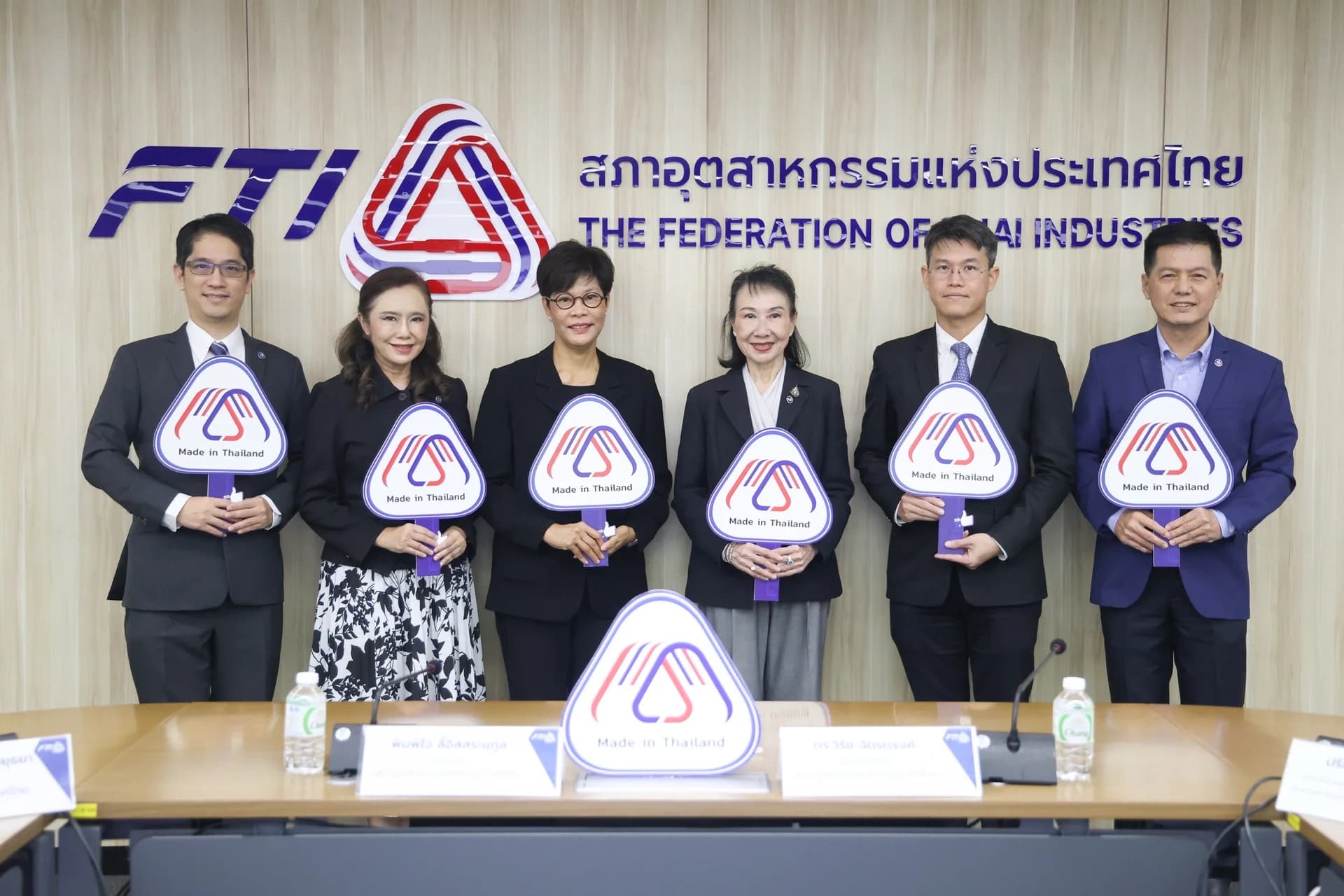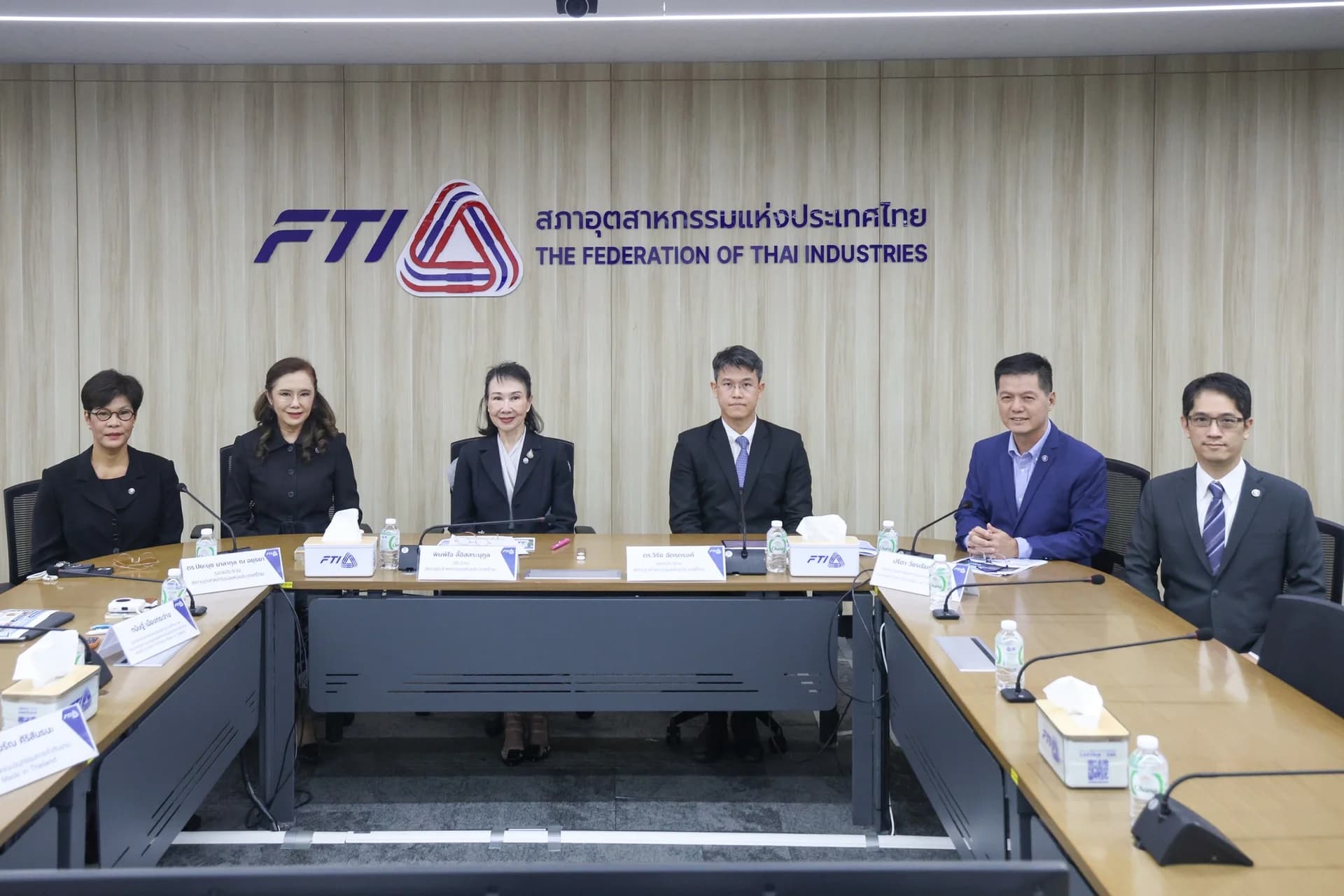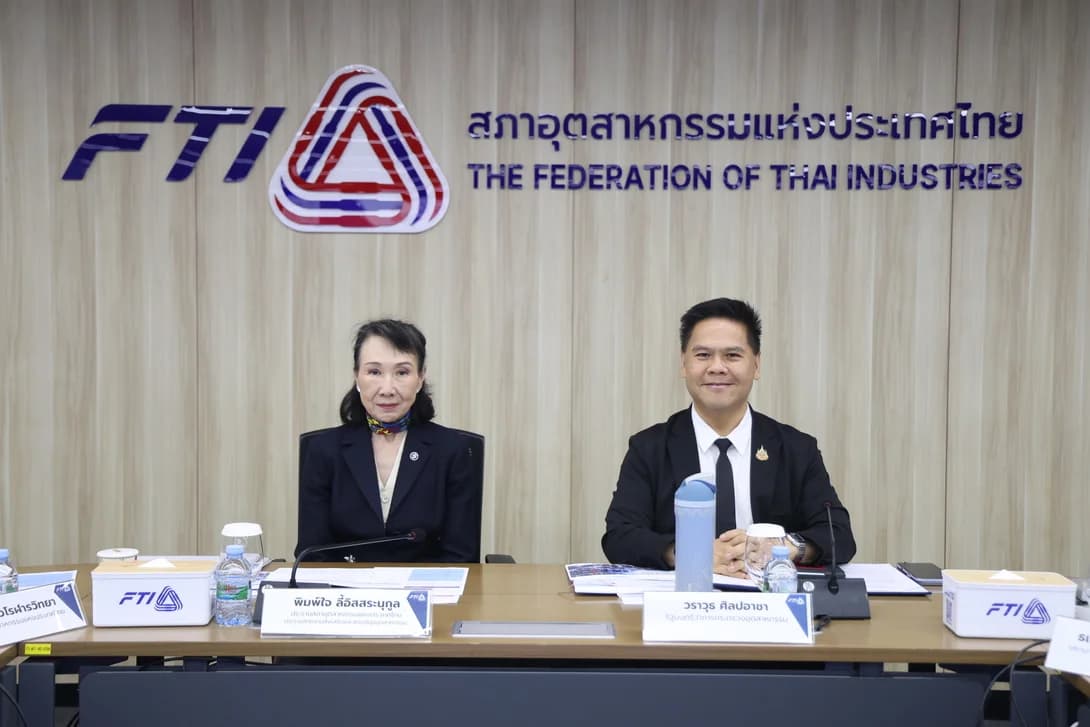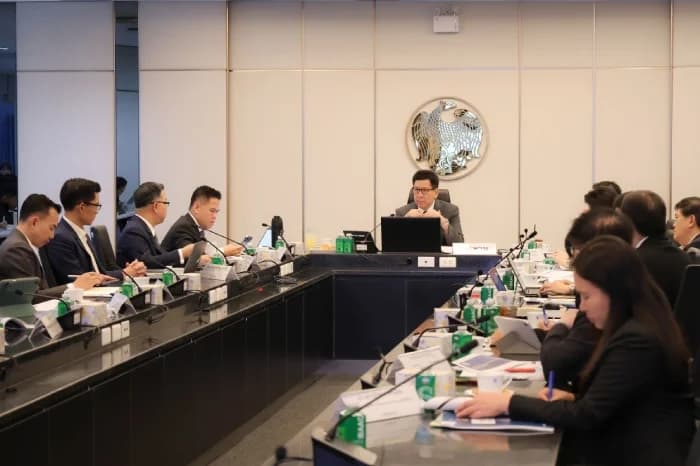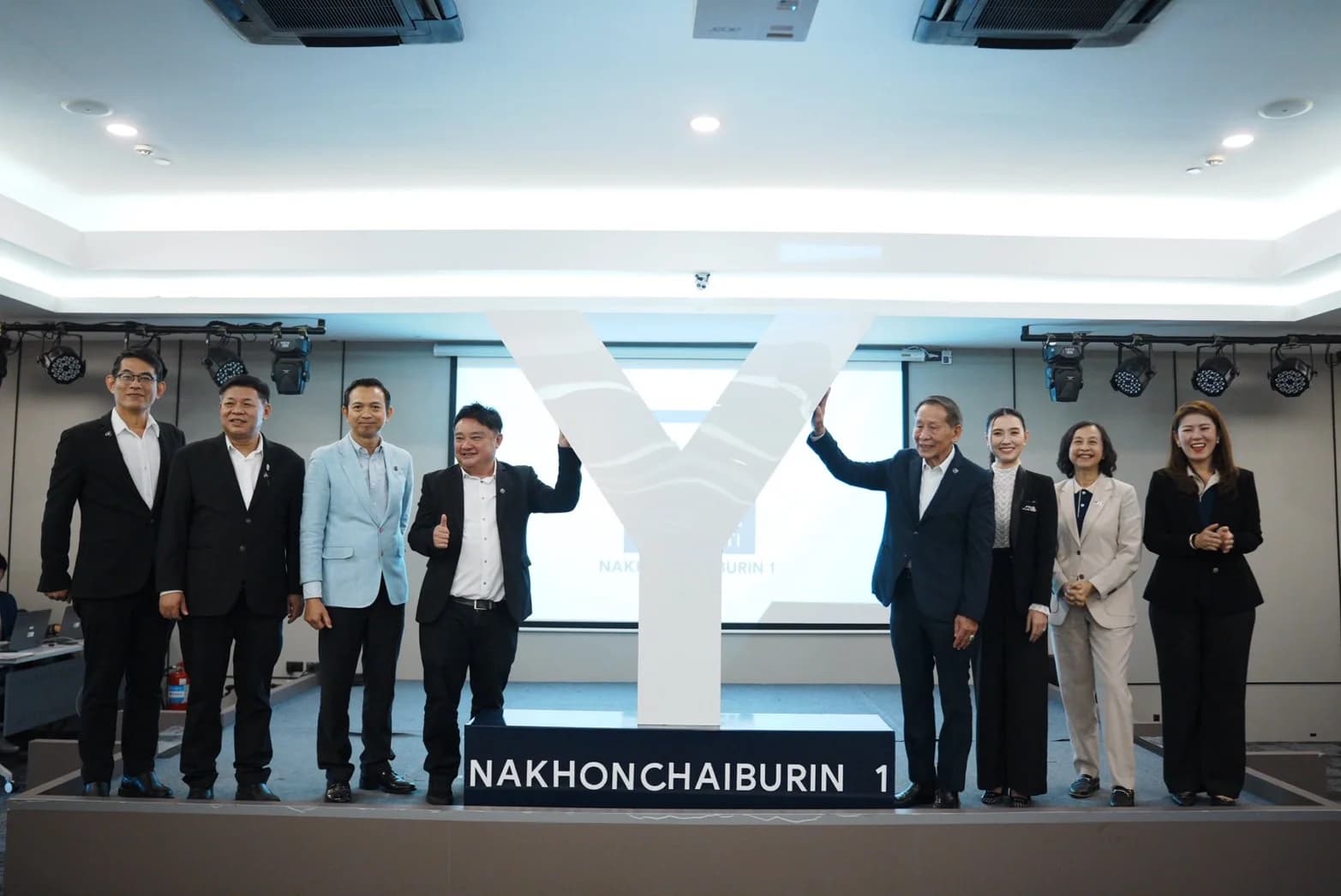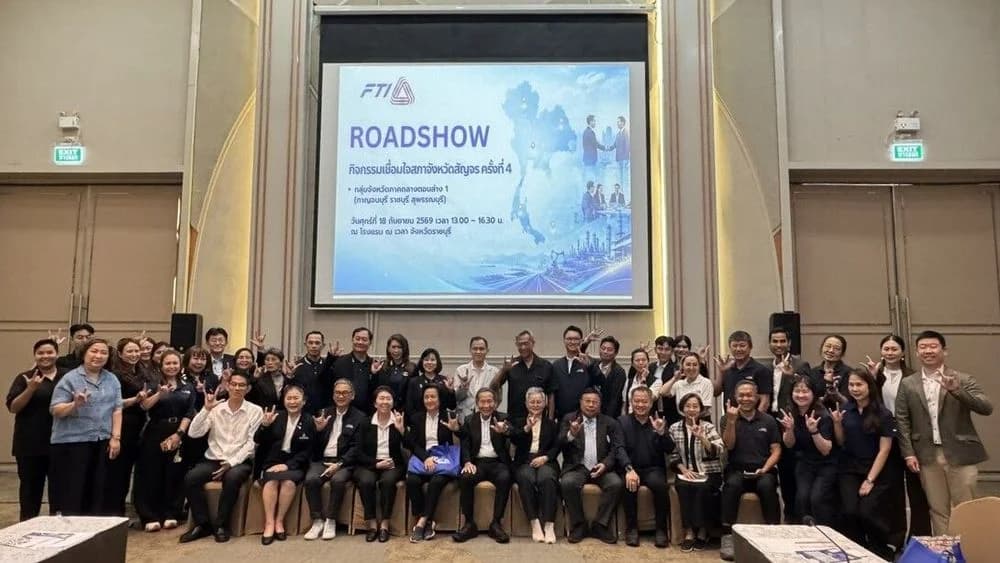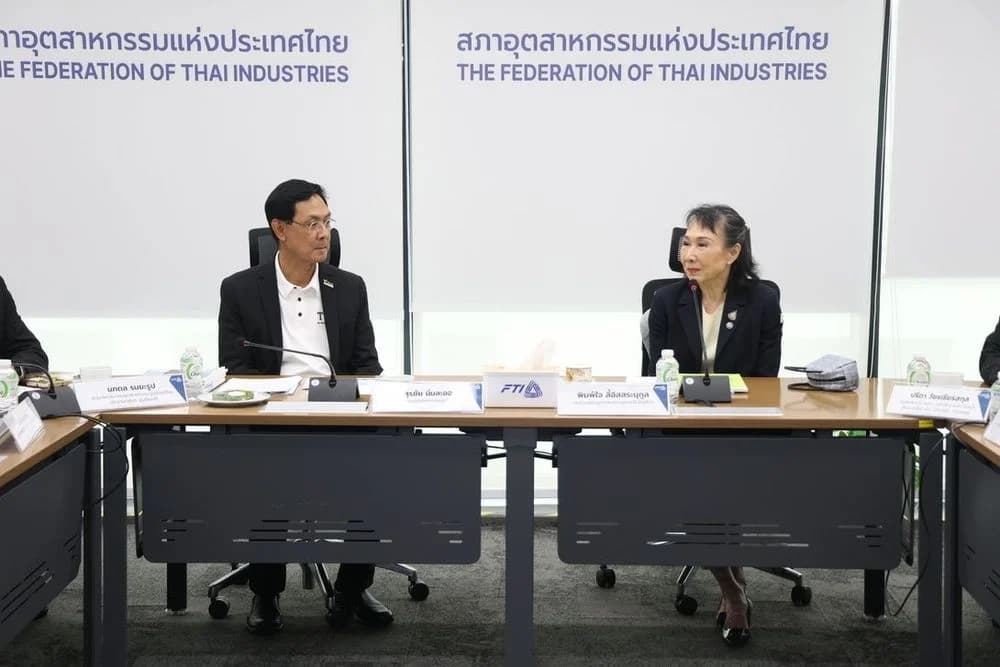

เมื่อวันที่ 8 ธันวาคม 2568 นายเกรียงไกร เธียรนุกุล ประธานสภาอุตสาหกรรมแห่งประเทศไทย (ส.อ.ท.) พร้อมด้วยคณะผู้บริหาร ส.อ.ท. ให้การต้อนรับคณะผู้บริหารพรรคไทยก้าวใหม่ นำโดยศาสตราจารย์ ดร.สุชัชวีร์ สุวรรณสวัสดิ์ เพื่อประชุมหารือแลกเปลี่ยนแนวทางการขับเคลื่อนอุตสาหกรรมไทย ณ ห้อง Passion (802) ชั้น 8 ส.อ.ท.
นายเกรียงไกร เธียรนุกุล ประธานสภาอุตสาหกรรมแห่งประเทศไทย (ส.อ.ท.) กล่าวว่า เศรษฐกิจไทยในวันนี้ เปรียบได้กับ “รถที่ติดหล่ม” ต้องใช้แรงมหาศาลในการดึงขึ้นมา ซึ่งสะท้อนถึงความจำเป็นในการเร่งเครื่องนโยบายจากภาครัฐ ดังนั้น รัฐบาลจึงได้ประกาศนโยบาย “Quick Big Win” เพื่อฟื้นฟูเศรษฐกิจ เพิ่มรายได้ ลดรายจ่าย แก้หนี้ เพิ่มสภาพคล่อง และฟื้นการท่องเที่ยวให้กลับมาเป็นแรงขับเคลื่อนสำคัญอีกครั้ง
พร้อมกันนี้ นายเกรียงไกร ได้นำเสนอความท้าทายของภาคอุตสาหกรรมไทย เช่น 1) มาตรการทางภาษีของสหรัฐฯ 2) ปัญหาสินค้าทุ่มตลาด/สวมสิทธิ์ส่งออก 3) ความขัดแย้งทางภูมิรัฐศาสตร์ 4) ข้อพิพาทพื้นที่ชายแดน 5) หนี้ครัวเรือนและหนี้ธุรกิจ 6) ค่าเงินบาทแข็งค่า 7) ผลกระทบจากปัญหาสภาพภูมิอากาศ 8) ธุรกิจสีเทาและอาชญากรรมไซเบอร์ ตลอดจนปัญหาเชิงโครงสร้างทั้งสังคมผู้สูงอายุ กับดักรายได้ปานกลาง ระบบการศึกษา การเมือง งบประมาณไม่สมดุล คอร์รัปชันและกฎหมายล้าสมัย
ขณะเดียวกัน นายเกรียงไกร ได้เสนอยุทธศาสตร์สำคัญในการยกระดับผู้ประกอบการไทยสู่มาตรฐานสากล ผ่านแนวทาง 4GO ประกอบด้วย
1) Go Digital & AI ยกระดับอุตสาหกรรมด้วยเทคโนโลยีดิจิทัลและ AI
2) Go Innovation สร้างผู้ประกอบการ “จิ๋วแต่แจ๋ว” ด้วยนวัตกรรม
3) Go Global พัฒนาสินค้าและบริการไทย เพื่อขยายโอกาสสู่ตลาดโลก
4) Go Green ขับเคลื่อนองค์กรสู่การพัฒนาอย่างยั่งยืนและปรับตัวสู่เป้าหมายการปล่อยก๊าซเรือนกระจกสุทธิให้เป็นศูนย์ (Net Zero) ภายในปี 2050
แนวทาง 4GO อยู่ภายใต้นโยบาย ONE FTI ของ ส.อ.ท. ซึ่งช่วยยกระดับผู้ประกอบการไทยให้สามารถแข่งขันได้ เพื่อพัฒนาประเทศไทยให้เข้มแข็งกว่าเดิม โดยให้ความสำคัญกับการบูรณาการความร่วมมือระหว่างภาครัฐ ภาคเอกชนและภาคประชาสังคม
เพื่อขับเคลื่อนและเสริมสร้างความเข้มแข็งให้ภาคอุตสาหกรรมไทย นายเกรียงไกร ยังได้ระบุเป้าหมายการพัฒนาประเทศใน 3 ด้าน ประกอบด้วย เป้าหมายที่ 1 เพิ่มขีดความสามารถในการแข่งขันของประเทศไทย (Competitiveness) มีผลประเมินการจัดอันดับ IMD TOP 20 อันดับแรก (ปี 2025 ประเทศไทยยังอยู่อันดับที่ 30) เป้าหมายที่ 2 ขับเคลื่อนการเติบโตทางเศรษฐกิจ (Driving GDP Growth) ให้ขยายตัวได้ในระดับ 5% และเป้าหมายที่ 3 การพัฒนาที่ยั่งยืน (Sustainable Development Goals: SDGs) เพื่อบรรลุเป้าหมายการลดการปล่อยก๊าซเรือนกระจกให้เป็นศูนย์ภายในปี 2050 เร็วกว่าเดิม 15 ปี จากเป้าหมายเดิมคือปี 2065
ทั้งนี้ ได้แบ่งข้อเสนอแนวทางการพัฒนาอุตสาหกรรมไทย ออกเป็น 8 ด้าน ได้แก่
1. การปรับปรุงกฎหมาย กฎระเบียบ เพื่อส่งเสริมความยากง่ายในการประกอบธุรกิจ (Ease of Doing Business) และเพิ่มการเติบโตทางเศรษฐกิจ โดยยกระดับการปฏิรูปกฎหมายเป็นวาระแห่งชาติด้วยวิธี Omnibus Laws และ Regulatory Guillotine ปรับปรุงกฎหมายระดับรองที่สามารถดำเนินการได้ทันที รวมทั้งผลักดันร่าง พ.ร.บ.อำนวยความสะดวก ยกระดับการให้บริการภาครัฐ
2. การพัฒนาบุคลากร เพิ่มผลิตภาพแรงงาน และแก้ไขปัญหาขาดแคลนแรงงานทั้งระบบ โดยปรับอัตราค่าจ้างขั้นต่ำควรเป็นไปตามอำนาจหน้าที่ของคณะกรรมการค่าจ้างไตรภาคี พิจารณาให้สอดคล้องตามปัจจัยทางเศรษฐกิจของแต่ละพื้นที่ การเพิ่มผลิตภาพแรงงาน (Labour Productivity) รวมทั้งส่งเสริมการจ่ายค่าจ้างตามมาตรฐานฝีมือแรงงาน (Pay by Skills)
3. การบริหารจัดการด้านพลังงานทั้งระบบ รองรับการเปลี่ยนผ่านพลังงาน (Energy Transition) โดยเร่งทบทวนและผลักดันแผนพลังงานชาติ (NEP) ฉบับใหม่ ทบทวนโครงสร้างพลังงาน เพื่อลดต้นทุนพลังงาน/ไฟฟ้า และสร้างความร่วมมือระหว่างภาครัฐและเอกชนเพื่อให้แก้ไขปัญหาพลังงาน
4. การส่งเสริมการส่งออก การค้า และสนับสนุนการลงทุนในอุตสาหกรรมเป้าหมาย S-Curve โดยเร่งสร้างกลไกและแผนในการขับเคลื่อนอุตสาหกรรม S-Curve เร่งรัดการเจรจาความตกลงการค้าเสรี (FTA) เพิ่มสิทธิประโยชน์สำหรับสินค้า Made in Thailand (MiT) รวมทั้งปกป้องสินค้าไทยโดยการควบคุมสินค้านำเข้าที่ไม่ได้คุณภาพ
5. การยกระดับอุตสาหกรรมด้วยเทคโนโลยี นวัตกรรม และดิจิทัล โดยสนับสนุนการลงทุนพัฒนาไปสู่ Digital Transformation 4.0 ส่งเสริมการขับเคลื่อนโจทย์นวัตกรรมรายกลุ่มอุตสาหกรรม เชื่อมโยงสถาบันการศึกษา รวมทั้งเพิ่มประสิทธิภาพการผลิตด้วยเทคโนโลยีเกษตรแม่นยำ สนับสนุนอุตสาหกรรมต่อเนื่อง
6. การพัฒนาอุตสาหกรรมอย่างยั่งยืน (BCG & ESG) การบริหารจัดการทรัพยากรนํ้า และการมุ่งสู่เป้าหมาย Net Zero โดยบูรณาการการบริหารจัดการน้ำอย่างยั่งยืน เตรียมความพร้อมในการรับมือมาตรการ Climate Change รวมทั้งนำกากอุตสาหกรรมไปใช้ประโยชน์ เป็นวัสดุหมุนเวียน (Circular Materials) การใช้ประโยชน์ใหม่ (Waste symbiosis)
7. การส่งเสริมและพัฒนาศักยภาพของผู้ประกอบการ SMEs โดยผลักดัน SME ให้เข้าถึงการจัดซื้อจัดจ้างภาครัฐ และขยายสิทธิประโยชน์ให้ครอบคลุม SME Size M ดำเนินโครงการสินเชื่อดอกเบี้ยต่ำ (Soft loan) และจัดทำมาตรการช่วยเหลือลูกหนี้ค้ำประกันสินเชื่อ
8. การพัฒนาโครงสร้างพื้นฐานด้าน Logistics และพื้นที่สำหรับอุตสาหกรรม โดยทบทวนการกำหนดเขตเศรษฐกิจพิเศษและระเบียงเศรษฐกิจพิเศษ เพื่อให้สอดคล้องกับการเปลี่ยนแปลงในปัจจุบัน พัฒนาโครงสร้างพื้นฐานด้านโลจิสติกส์ เพิ่มขีดความสามารถการส่งออก นำเข้าไทย รวมทั้งอำนวยความสะดวกด้านโลจิสติกส์ ส่งเสริมการค้าชายแดนผ่านแดนของไทย
ด้านศาสตราจารย์ ดร.สุชัชวีร์ สุวรรณสวัสดิ์ หัวหน้าพรรคไทยก้าวใหม่ กล่าวถึงนโยบายขับเคลื่อนเศรษฐกิจและอุตสาหกรรมของพรรคไทยก้าวใหม่ว่า
“ตนขอเป็นผู้แทนทีมผู้บริหารของพรรคไทยก้าวใหม่ ขอขอบคุณสภาอุตสาหกรรมแห่งประเทศไทย ภายใต้การนำของคุณเกรียงไกร เธียรนุกุล ที่ให้โอกาสพรรคไทยก้าวใหม่ได้เข้ารับฟังความคิดเห็นและข้อเสนอแนวทางการพัฒนาอุตสาหกรรมไทยในครั้งนี้ ซึ่งต้องยอมรับว่าสภาอุตสาหกรรมฯ ถือเป็นเสาหลักที่แท้จริงของประเทศไทยในช่วงวิกฤติขณะนี้
ทั้งนี้ ข้อเสนอแนวทางการพัฒนาอุตสาหกรรมไทยจากสภาอุตสาหกรรมฯ มีความสอดคล้องกับแนวนโยบายของพรรคไทยก้าวใหม่ ซึ่งพรรคพร้อมสนับสนุนและผลักดันสินค้าไทย Made in Thailand (MiT) ตลอดจนระบบระเบียบการจัดซื้อจัดจ้างภาครัฐ และโครงการพี่ช่วยน้อง
อย่างไรก็ตาม วันนี้ประเทศไทยเจอวิกฤติหลายด้าน โดยเฉพาะอย่างยิ่งปัญหาคอร์รัปชันที่เป็นปัญหาใหญ่ของประเทศ ซึ่งพรรคไทยก้าวใหม่ขอเป็นอุปกรณ์ในการต่อสู้กับปัญหาคอร์รัปชัน โดยจะนำความคิดเห็นและข้อเสนอแนวทางต่าง ๆ จากผู้บริหารสภาอุตสาหกรรมฯ อาทิ การพัฒนาทักษะแรงงาน การยกระดับอุตสาหกรรมด้วยเทคโนโลยีดิจิทัลและ AI เป็นต้น ที่มอบให้ในวันนี้ไปใช้ให้เกิดประโยชน์ที่สุด”
ศาสตราจารย์ ดร.สุชัชวีร์ สุวรรณสวัสดิ์ กล่าวทิ้งท้ายว่า “พรรคไทยก้าวใหม่จะเป็นพรรคการเมืองที่สร้างสรรค์ พร้อมขอกำลังใจและความรู้จากสภาอุตสาหกรรมฯ ในโอกาสต่อ ๆ ไปในการทำหน้าที่ต่อสู้เพื่อประเทศไทยและประชาชนให้ดีที่สุด จะทำประเทศนี้ให้เป็นประเทศที่นำโดยความรู้ไปสู่ความได้เปรียบต่อไป”
............................................................................................................
เผยแพร่โดย ฝ่ายสื่อสารองค์กร สภาอุตสาหกรรมแห่งประเทศไทย (โทร. 0-2345-1051)
On December 8, 2025, Mr. Kriangkrai Theeranukul, President of the Federation of Thai Industries (FTI), along with the FTI executive team, welcomed the executive team of the Thai Sangh Movement led by Professor Dr. Suchachwee Suwansawat for a meeting to discuss strategies for advancing the Thai industry at the Passion Room (802), 8th Floor, FTI.
Mr. Kriangkrai Theeranukul stated that the Thai economy today is akin to a “stuck vehicle” requiring immense effort to pull up. This reflects the necessity for the acceleration of government policies. Therefore, the government has announced the “Quick Big Win” policy to revitalize the economy, increase income, reduce expenses, address debt, enhance liquidity, and revitalize tourism as a significant driving force once again.
Additionally, Mr. Kriangkrai presented the challenges faced by the Thai industrial sector, such as 1) U.S. tax measures 2) Dumping and export fraud issues 3) Geopolitical conflicts 4) Border disputes 5) Household and business debt 6) Strong baht 7) Impact of climate change issues 8) Gray businesses and cybercrime, as well as structural issues including an aging society, the middle-income trap, education systems, politics, imbalanced budgets, corruption, and outdated laws.
At the same time, Mr. Kriangkrai proposed key strategies to elevate Thai operators to international standards through the 4GO approach, consisting of:
1) Go Digital & AI: Upgrading industry with digital technology and AI
2) Go Innovation: Empowering “small but mighty” entrepreneurs through innovation
3) Go Global: Developing Thai products and services to expand opportunities in the global market
4) Go Green: Driving organizations towards sustainable development and adapting to net zero greenhouse gas emission targets by 2050.
The 4GO approach falls under FTI's ONE FTI policy, which aims to elevate Thai operators' competitiveness to strengthen the country further while emphasizing cooperation among government, private sectors, and civil society.
To drive and strengthen the Thai industrial sector, Mr. Kriangkrai also outlined national development goals in three areas: Goal 1: Increase Thailand's competitiveness with a target of ranking in the IMD TOP 20 (Thailand is currently ranked 30th as of 2025); Goal 2: Drive GDP growth to expand at a rate of 5%; and Goal 3: Achieve sustainable development goals (SDGs) to reach net zero greenhouse gas emissions by 2050, five years ahead of the original target of 2065.
The proposed approaches for developing the Thai industry were categorized into eight areas:
1. Improving laws and regulations to promote ease of doing business (Ease of Doing Business) and enhance economic growth by elevating legal reform to a national agenda using Omnibus Laws and Regulatory Guillotine to amend subordinate laws that can be executed immediately, as well as advancing the draft law for facilitating public service.
2. Developing human resources, increasing labor productivity, and addressing labor shortages throughout the system by adjusting the minimum wage according to the authorities of the tripartite wage committee, considering local economic factors, enhancing labor productivity, and promoting payment by skills.
3. Comprehensive energy management to support energy transition by expediting the review and promotion of a new National Energy Plan (NEP) and revising energy structures to reduce energy/power costs, and fostering public-private partnerships to address energy issues.
4. Promoting exports, trade, and supporting investment in target industries (S-Curve) by accelerating the creation of mechanisms and plans to drive the S-Curve industry, expediting Free Trade Agreement (FTA) negotiations, providing benefits for Made in Thailand (MiT) products, and protecting Thai products through controls on inferior imports.
5. Upgrading industries through technology, innovation, and digital strategies by supporting investments leading to Digital Transformation 4.0, promoting innovation challenges for industry groups, linking educational institutions, and enhancing production efficiency with precision agriculture technology and supporting continuous industries.
6. Sustainable industrial development (BCG & ESG), water resource management, and positioning towards Net Zero by integrating sustainable water management, preparing for Climate Change measures, and utilizing industrial waste for circular materials and waste symbiosis.
7. Promoting and enhancing the capabilities of SMEs by facilitating access to government procurement for SMEs and expanding benefits to cover medium-sized SMEs, implementing low-interest loan projects, and providing measures to support guaranteed loan debtors.
8. Developing logistics infrastructure and industrial zones by reviewing the designation of special economic zones and special economic corridors to align with current changes, developing logistics infrastructure to enhance export and import capabilities in Thailand, and facilitating logistics trade through Thai border crossings.
Professor Dr. Suchachwee Suwansawat, Leader of the Thai Sangh Movement, discussed the party's policies to drive the economy and industry, stating:
“I would like to represent the executive team of the Thai Sangh Movement and express gratitude to the Federation of Thai Industries, under the leadership of Mr. Kriangkrai Theeranukul, for the opportunity to listen to opinions and proposals for advancing the Thai industry today. It must be acknowledged that the FTI serves as a true pillar of Thailand during this crisis.”
The proposals for developing the Thai industry from the FTI align with the Thai Sangh Movement’s policy, which is ready to support and promote Thai goods made in Thailand (MiT), as well as the framework for government procurement and the “Brother Helping Brother” project.
However, today Thailand is facing a multi-faceted crisis, particularly concerning corruption, which remains a significant issue in the country. The Thai Sangh Movement aims to be a tool in the fight against corruption and will utilize the feedback and proposals provided by the FTI executives today, such as labor skill development and upgrading industries with digital technology and AI, to ensure maximum benefit.”
Professor Dr. Suchachwee Suwansawat concluded, “The Thai Sangh Movement will be a constructive political party, and I request encouragement and knowledge from the FTI in upcoming opportunities to fulfill our role as best as possible for Thailand and its people, making this country a knowledge-driven nation towards competitive advantages.”
............................................................................................................
Published by the Corporate Communication Department of the Federation of Thai Industries (Tel. 0-2345-1051)