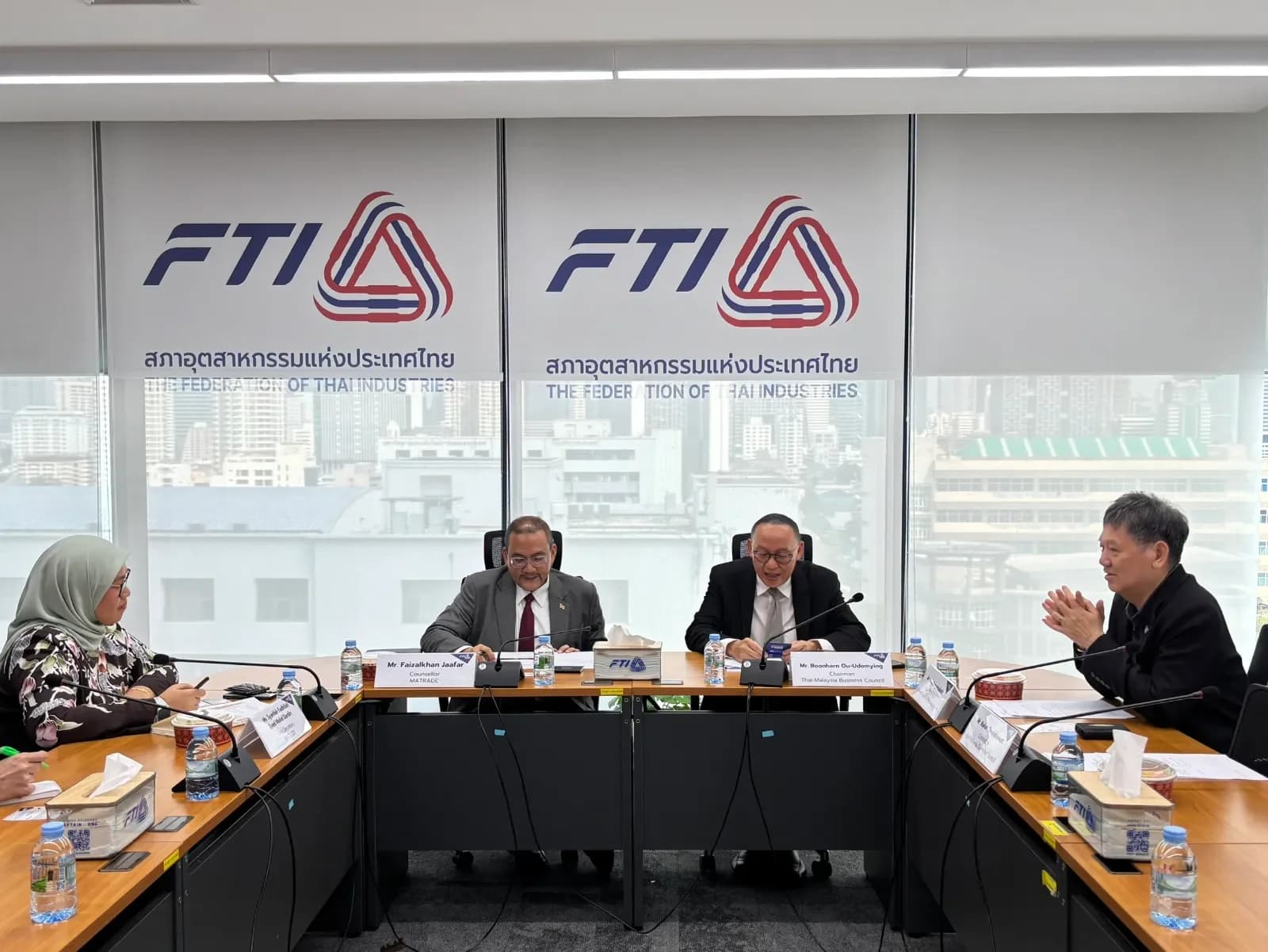

วันพุธที่ 26 พฤศจิกายน 2568 สภาอุตสาหกรรมแห่งประเทศไทย (ส.อ.ท.) นำโดย ดร.ดารัตน์ วิภาตระกลัศ รองประธาน ส.อ.ท. พร้อมด้วยนางสาวอรวรรณ ศิริวราสันติ์ กรรมการบริหาร ส.อ.ท. และรองประธานสายงานแรงงาน นายอภิชัย เตชะนิธิสวัสดิ์ กรรมการบริหาร ส.อ.ท. นายพิพัฒน์ ฤกษ์สหกุล ประธานสภาอุตสาหกรรมกลุ่มจังหวัดภาคตะวันออก 1 นายสุทธิลักษณ์ คุ้มครองรักษ์ ประธานสภาอุตสาหกรรมจังหวัดตราด และนายกิตติวุฒิ ศศิวิมลพันธุ์ ประธานสภาอุตสาหกรรมจังหวัดชลบุรี เข้าพบนางสาวตรีนุช เทียนทอง รัฐมนตรีว่าการกระทรวงแรงงาน ณ ห้องจัตุมงคล ชั้น 6 อาคารกระทรวงแรงงาน
การเข้าพบในครั้งนี้มีวัตถุประสงค์เพื่อแสดงความยินดี เนื่องในโอกาสที่รัฐมนตรีว่าการกระทรวงแรงงานเข้ารับตำแหน่งอย่างเป็นทางการ พร้อมทั้งแลกเปลี่ยนมุมมองและความคิดเห็นเกี่ยวกับสถานการณ์แรงงานในภาคอุตสาหกรรม ซึ่งเป็นหนึ่งในปัจจัยสำคัญในการขับเคลื่อนเศรษฐกิจของประเทศ โดยเฉพาะพื้นที่ภาคตะวันออกที่เป็นฐานอุตสาหกรรมและการเกษตรสำคัญของไทย
ส.อ.ท. ระบุว่า แรงงานเก็บเกี่ยวผลไม้ในภาคตะวันออกขาดแคลนอย่างหนัก จากการขาดแคลนแรงงานกัมพูชา และได้ขอให้กระทรวงพิจารณาในประเด็นสำคัญ ได้แก่
• (ร่าง) พ.ร.บ.คุ้มครองแรงงาน และข้อเสนอแนะจากภาคเอกชน เพื่อให้กฎหมายสอดคล้องกับบริบทอุตสาหกรรมในยุคปัจจุบัน
• ปัญหาการขาดแคลนแรงงานเฉพาะทาง โดยเฉพาะแรงงานเก็บเกี่ยวผลไม้ในพื้นที่ภาคตะวันออก ซึ่งส่งผลกระทบต่อผลผลิตทางการเกษตรและห่วงโซ่อุปทานของอุตสาหกรรมต่อเนื่อง
• การอนุญาตให้นำเข้าแรงงานสัญชาติเมียนมา ลาว รวมถึงชาติอื่น เช่น เนปาล ศรีลังกา และบังกลาเทศ เพื่อทดแทนแรงงานที่ขาดแคลนในภาคอุตสาหกรรม
• แนวทางกำกับดูแลบริษัทตัวแทนจัดหาแรงงาน ให้มีมาตรฐานและลดผลกระทบต่อผู้ประกอบการ
• การแก้ไขปัญหาระบบแจ้งเข้า–แจ้งออกแรงงานออนไลน์ที่ล่มบ่อย
ทั้งนี้ ส.อ.ท. ได้ยื่นหนังสือแสดงความคิดเห็นต่อ (ร่าง) พ.ร.บ.แรงงาน ซึ่งได้รวบรวมข้อคิดเห็นจากสภาอุตสาหกรรมจังหวัดทั่วประเทศ
รัฐมนตรีว่าการกระทรวงแรงงานรับทราบข้อเสนอและประเด็นปัญหาดังกล่าว พร้อมแสดงความพร้อมในการประสานความร่วมมือกับ ส.อ.ท. เพื่อพิจารณาแนวทางแก้ไข และสนับสนุนการขับเคลื่อนภาคอุตสาหกรรมให้สามารถดำเนินงานได้อย่างมีประสิทธิภาพ ภายใต้ระบบบริหารจัดการแรงงานที่เหมาะสมและทันสมัย
On Wednesday, November 26, 2025, the Federation of Thai Industries (FTI), led by Dr. Darat Wipataraklas, Vice President of FTI, along with Ms. Arovan Sirivorasanti, Executive Committee of FTI, and the Vice President of the Labour Sector, Mr. Apichai Techanitwasana, Executive Committee of FTI, Mr. Pipat Ruksahakull, President of the Eastern Region Industry Council, Mr. Suthilak Khumkrrongrak, President of the Trat Provincial Industry Council, and Mr. Kittiwut Sasivimolphan, President of the Chonburi Provincial Industry Council, met with Ms. Trinuch Thiengthong, Minister of Labour, at the Jatumongkol Room, 6th Floor, Ministry of Labour.
The purpose of this visit was to express congratulations on the Minister of Labour's official assumption of office, as well as to exchange views and opinions regarding the labour situation in the industrial sector, which is a crucial factor in driving the country's economy, especially in the eastern region, a significant hub for industry and agriculture in Thailand.
FTI stated that there is a severe shortage of fruit harvesting labour in the eastern region due to the lack of Cambodian workers. The organization requested the Ministry to consider important issues including:
• The draft Labour Protection Act and recommendations from the private sector to align the law with the current industrial context.
• The problem of a shortage of specialized labour, particularly for fruit harvesting in the eastern region, which is impacting agricultural production and the supply chain of the continuous industry.
• Permitting the importation of workers from Myanmar, Laos, and other countries such as Nepal, Sri Lanka, and Bangladesh to replace the labour shortages in the industrial sector.
• Guidelines for regulating recruitment agencies to ensure standards and reduce impacts on operators.
• Resolving the frequent failures of the online labour registration system.
Additionally, FTI submitted a letter expressing opinions on the draft Labour Act, which gathered feedback from provincial industry councils across the country.
The Minister of Labour acknowledged the proposals and issues raised and expressed readiness to cooperate with FTI to explore solutions and support the smooth operation of the industrial sector under an appropriate and modern labour management system.