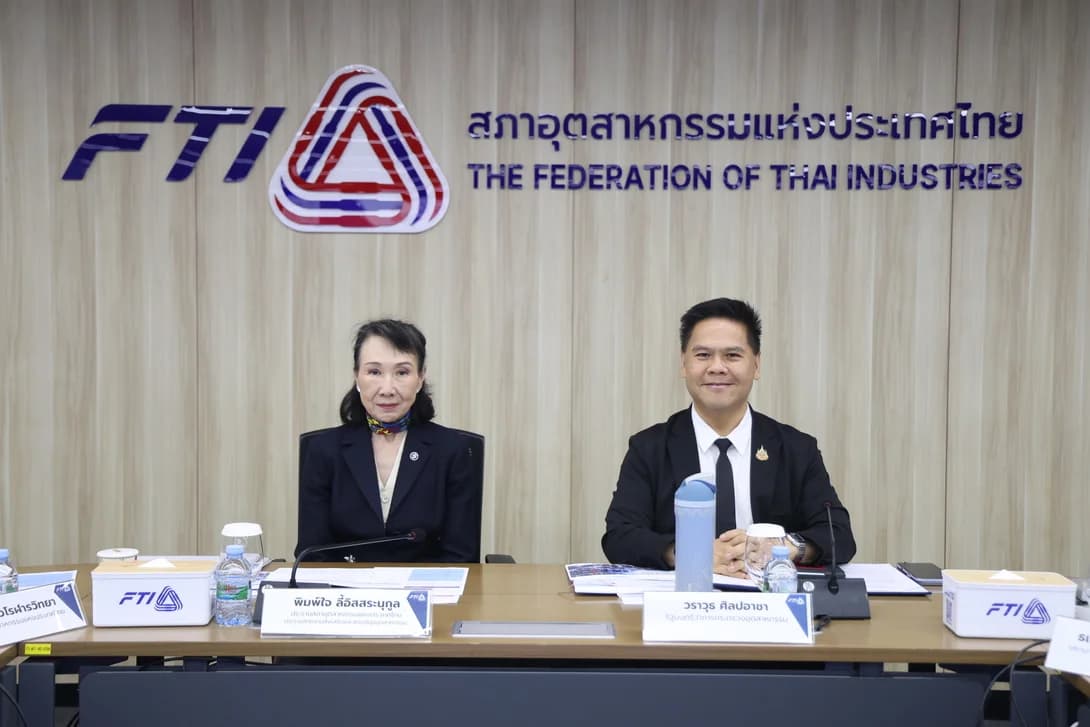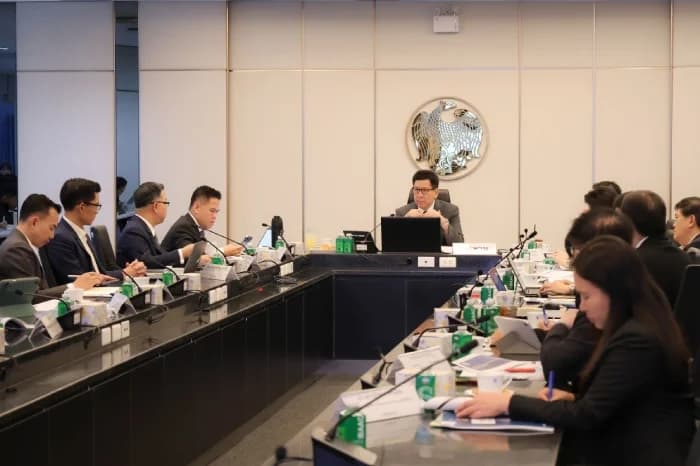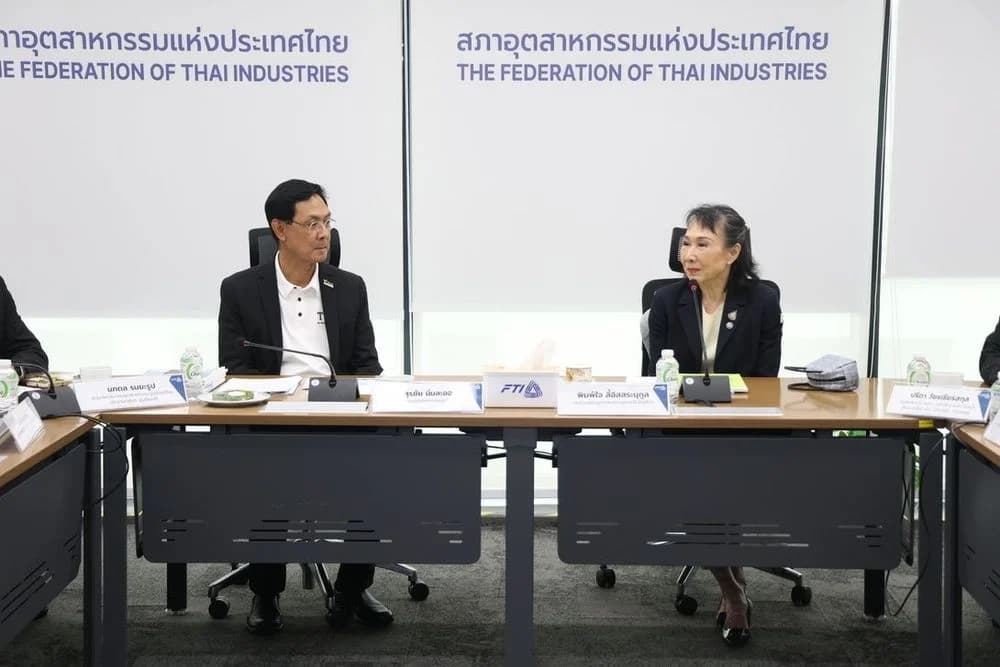

วันจันทร์ที่ 15 กันยายน 2568 นายเกรียงไกร เธียรนุกุล ประธานสภาอุตสาหกรรมแห่งประเทศไทย (ส.อ.ท.) พร้อมด้วยคณะผู้บริหาร ส.อ.ท. ให้การต้อนรับนายอนุทิน ชาญวีรกูล นายกรัฐมนตรี พร้อมคณะ ประกอบด้วยนายสุชาติ ชมกลิ่น นายเอกนิติ นิติทัณฑ์ประภาศ นางศุภจี สุธรรมพันธุ์ นายธนกร วังบุญคงชนะ นายวรภัค ธันยาวงษ์ และนายกุลิศ สมบัติศิริ ณ ห้อง Passion (802) ชั้น 8 ส.อ.ท. เพื่อหารือแนวทางความร่วมมือด้านเศรษฐกิจและอุตสาหกรรม มุ่งเสริมศักยภาพการแข่งขันและยกระดับความเข้มแข็งของเศรษฐกิจไทย
การหารือครั้งนี้ นายเกรียงไกร เธียรนุกุล ประธานสภาอุตสาหกรรมแห่งประเทศไทย (ส.อ.ท.) ได้ชี้ให้เห็นถึงภาพรวมความท้าทายของภาคอุตสาหกรรมไทยและแนวทางการขับเคลื่อนตามนโยบาย 4GO ได้แก่ GO Digital & AI (การยกระดับภาคอุตสาหกรรมด้วยดิจิทัลและปัญญาประดิษฐ์) GO Innovation (การสร้างผู้ประกอบการ “จิ๋วแต่แจ๋ว” ด้วยนวัตกรรม) GO Global (การยกระดับห่วงโซ่อุปทานสากลและการขยายสู่ตลาดโลก) และ GO Green (การพัฒนาอุตสาหกรรมที่เป็นมิตรต่อสิ่งแวดล้อมและลดคาร์บอนฟุตพริ้นท์) ซึ่งจะเป็นกลไกหลักในการผลักดันให้อุตสาหกรรมไทยก้าวทันการเปลี่ยนแปลงของเศรษฐกิจโลก
ทางด้านรัฐบาลภายใต้การนำของนายกรัฐมนตรี อนุทิน ชาญวีรกูล กำหนดนโยบายเร่งด่วนในระยะเวลา 4 เดือนเพื่อแก้ไขปัญหาสำคัญ 4 ด้านหลัก ประกอบด้วย
1. ด้านเศรษฐกิจ มุ่งดำเนินมาตรการเพื่อลดภาระค่าใช้จ่ายของประชาชน ค่าครองชีพ ค่าพลังงาน ค่าเดินทาง และค่าขนส่งต่างๆ พร้อมทั้งแก้ไขปัญหาหนี้สินของเกษตรกรและผู้มีรายได้น้อยอย่างเร่งด่วน
2. ด้านความมั่นคง มุ่งแก้ไขข้อพิพาทระหว่างประเทศไทยและกัมพูชาด้วยแนวทางสันติภาพ เพื่อลดความสูญเสียและผลกระทบต่อประชาชนทั้งสองประเทศ
3. ด้านภัยธรรมชาติ ต่อยอดการพัฒนาระบบเตือนภัยที่เคยริเริ่มไว้ตั้งแต่ดำรงตำแหน่งรัฐมนตรีว่าการกระทรวงมหาดไทย พร้อมเร่งชดเชยความเสียหายแก่ประชาชนที่ประสบภัยธรรมชาติให้ทันการณ์
4. ด้านภัยสังคม มุ่งปราบปรามขบวนการค้ายาเสพติด การค้ามนุษย์ สแกมเมอร์ การพนัน และการพนันออนไลน์อย่างจริงจัง โดยสร้างความร่วมมือกับประเทศเพื่อนบ้านและมิตรประเทศ เพื่อกวาดล้างปัญหาภัยสังคมในทุกรูปแบบ
นายอนุทิน ชาญวีรกูล นายกรัฐมนตรี กล่าวว่า เราต้องให้ความสำคัญกับปัญหาเฉพาะหน้า ไม่ว่าจะเป็นปัญหาของผู้ประกอบการ หรือแม้แต่ปัญหาการค้าชายแดนไทย- กัมพูชา เราต้องใช้ทุกวิธีในการแก้ปัญหาทั้งทางด้านการทหาร ทางการทูต และการหารือกับฝ่ายกัมพูชาอย่างใกล้ชิด
ในเรื่องของผู้ประกอบการ จะสนับสนุนให้มีการลงทุน และผลิตสินค้าภายในประเทศมากขึ้น ประเทศไทยเราไม่ได้ด้อยไปกว่าประเทศอื่น ขณะเดียวกันเรามีประเทศคู่แข่งเยอะ ถึงเวลาแล้วที่ประเทศไทยต้องตื่นตัว เพื่อความอยู่รอดของประเทศ และต้องเร่งหารือกับสำนักงานคณะกรรมการส่งเสริมการลงทุน (BOI) ด้วยในเรื่องส่งเสริมการลงทุน ถึงแม้ว่ารัฐบาลชุดนี้จะเข้ามาแก้ไขปัญหาเฉพาะหน้า แต่มั่นใจว่าเราจะใช้อำนาจหน้าที่ที่มีอยู่ผลักดันให้ประเทศไทยเติบโตและทำให้ทุกฝ่ายเกิดความคล่องตัวมากขึ้น
“ดรีมทีม จะเป็น เรียลทีม ไม่มีการแบ่งพรรคแบ่งพวก เราจะใช้หลักการทำงานเป็นทีม เพื่อพัฒนาประเทศชาติ” นายอนุทิน กล่าว
ทั้งนี้ ทางผู้บริหาร ส.อ.ท. ได้นำเสนอแนวทางในการส่งเสริมอุตสาหกรรม 5 เรื่องหลักในระยะเร่งด่วน ประกอบด้วย
1. การเตรียมความพร้อมรับมือมาตรการภาษีนำเข้าสหรัฐฯ และสงครามการค้า
2. การส่งเสริมสภาพคล่องทางการเงินและการเข้าถึงแหล่งเงินทุนของ SMEs
3. การปรับโครงสร้างค่าไฟฟ้าเพื่อลดต้นทุนผู้ประกอบการ
4. การรับมือผลกระทบจากปัญหาการค้าชายแดนไทย-กัมพูชา และมาตรการช่วยเหลือผู้ประกอบการ
5. การบริหารจัดการผลกระทบจากการแข็งค่าของเงินบาท
สำหรับประเด็นเกี่ยวกับการรับมือมาตรการภาษีนำเข้าสหรัฐฯ และสงครามการค้า นายนาวา จันทนสุรคน รองประธาน ส.อ.ท. ได้ชี้แจงว่าปัจจุบันไทยถูกสหรัฐฯ เริ่มเก็บภาษีอัตราที่ 19% ตั้งแต่วันที่ 7 สิงหาคม 2568 แต่จะมีการเรียกภาษีอยู่ 2 กรณี คือ กรณีที่ 1 สำหรับการเรียกเก็บภาษีอัตราที่ 19% ใช้กับสินค้าที่ตกอยู่ในขอบเขตของมาตรการนี้โดยรวมยกเว้นสินค้าที่อยู่ภายใต้มาตรา 232 เช่น รถยนต์ ชิ้นส่วนรถยนต์ เหล็กและอลูมิเนียม ทองแดงกึ่งสำเร็จรูป เพราะสินค้ากลุ่มนี้มีกรอบกฎเกณฑ์ต่างหาก สำหรับกรณีที่ 2 เรียกเก็บภาษีอัตราที่ 40% จะบังคับใช้เมื่อสินค้าถูกพิจารณาว่า เกิดจากการสวมสิทธิ์ของประเทศที่สาม หรือมีกรณี transshipment โดยสินค้าในกรณีนี้จะต้องผ่านการตรวจสอบและพิสูจน์โดย U.S. Customs and Border Protection (CBP) ก่อน และหากพบว่ามีการสวมสิทธิ์จริงจะถูกเรียกเก็บอัตรานี้ อย่างไรก็ตาม ขณะนี้ ยังไม่มีหลักเกณฑ์การคำนวณสัดส่วนมูลค่าการผลิตในประเทศ/ภูมิภาค (Regional Value Content: RVC) ที่ชัดเจน ภาครัฐจึงต้องติดตามแนวปฏิบัติของสหรัฐฯ อย่างใกล้ชิด เพื่อให้ผู้ประกอบการปรับตัวได้ทัน
ดังนั้น ส.อ.ท. จึงเสนอให้ภาครัฐเร่งสร้างความเข้าใจแก่ผู้ประกอบการเกี่ยวกับหลักเกณฑ์และเงื่อนไขของสหรัฐฯ การจัดตั้งหน่วยงานเพื่อให้คำปรึกษาเรื่องการคำนวณ RVC ตลอดจนการส่งเสริมผู้ประกอบการในการปรับตัว (Transformation) เพื่อปรับซัพพลายเชน (Supply Chain) ของไทยให้มีความยืดหยุ่นและทันสมัย พร้อมทั้งเน้นย้ำให้ภาครัฐดำเนินมาตรการเชิงรุกด้านการค้าระหว่างประเทศ กำกับดูแลสินค้าให้เป็นไปตามกฎหมายอย่างเคร่งครัด และส่งเสริมการใช้สินค้าที่ผลิตในประเทศ (Made in Thailand: MiT)
ด้านการส่งเสริมสภาพคล่องทางการเงินและการเข้าถึงแหล่งเงินทุนของ SMEs นายอภิชิต ประสพรัตน์ รองประธาน ส.อ.ท. ชี้แจงถึงสถานะความเปราะบางของ SME ไทย ณ เดือนมิถุนายน 2568 ว่าหนี้ที่ไม่ก่อให้เกิดรายได้ (NPL) ในกลุ่ม SME คิดเป็น 243,026 ล้านบาท และยอดหนี้คงค้างรวม (สินเชื่อ SME) คิดเป็น 3,119,525 ล้านบาท
ดังนั้น ส.อ.ท. จึงนำเสนอแนวทางส่งเสริมสภาพคล่องทางการเงินและการเข้าถึงแหล่งทุน ภายใต้ “มาตรการ Fast Track เพื่อ SME” ประกอบด้วย โครงการค้ำประกันสินเชื่อฉุกเฉิน (Emergency Credit Guarantee) ที่อนุมัติได้ภายใน 3-7 วัน โดยรัฐบาลอุดหนุนค่าธรรมเนียมช่วงแรก และเพิ่มสัดส่วนการค้ำประกันสูงกว่าปกติ เช่น 80–100% เพื่อธนาคารกล้าปล่อยสินเชื่อทันทีให้ SME ที่ต้องการสภาพคล่องเร่งด่วน สินเชื่อเสริมสภาพคล่อง SME ด่วนพิเศษ 1% ผ่านกองทุนสำนักงานส่งเสริมวิสาหกิจขนาดกลางและขนาดย่อม (สสว.) โดยให้ธนาคารรัฐเป็นผู้ดำเนินการ และเปิดช่องทางด่วน (Express Lane) สำหรับสินเชื่อวงเงิน 5-10 ล้านบาท รวมทั้งสำหรับ SME ที่อยู่ในระบบภาษี โดยไม่ต้องใช้หลักประกัน เพื่อเติมสภาพคล่องระยะสั้นให้ SME สามารถดำเนินธุรกิจต่อไปได้และลดความเสี่ยงที่จะลุกลามเป็น NPL และมาตรการ “Hair Cut” สำหรับการปรับโครงสร้างหนี้เสีย (NPL) เพื่อให้ลูกหนี้สามารถชำระหนี้ที่เหลือได้และปิดบัญชี รวมทั้งลดปริมาณหนี้เสียในระบบโดยรวม
ในส่วนของ นายอิศเรศ รัตนดิลก ณ ภูเก็ต รองประธาน ส.อ.ท. ได้เสนอแนวทางการปรับโครงสร้างค่าไฟฟ้าเพื่อลดต้นทุนผู้ประกอบการ และเพิ่มขีดความสามารถในการแข่งขันของภาคการผลิต โดยเน้นถึงความจำเป็นในการสร้างโครงสร้างค่าไฟที่เป็นธรรม สะท้อนต้นทุนการผลิตที่แท้จริง และเอื้อต่อการแข่งขันของภาคอุตสาหกรรม รวมถึงการผลักดันมาตรการสนับสนุนพลังงานทางเลือกและพลังงานหมุนเวียน ซึ่งจะช่วยให้ผู้ประกอบการไทยสามารถแข่งขันได้ในตลาดโลกที่ให้ความสำคัญกับมาตรการด้านสิ่งแวดล้อม
ทั้งนี้ ได้เน้นย้ำให้ภาครัฐเร่งจัดทำแผน PDP ฉบับใหม่ให้แล้วเสร็จภายในปี 2568 เพื่อตอบโจทย์ความต้องการของประเทศในมิติด้านสิ่งแวดล้อม ด้วยราคาที่เป็นธรรม และมีความมั่นคงด้านพลังงาน
นอกจากนี้ ยังเสนอให้ปรับโครงสร้างการกำหนดอัตราค่าไฟฟ้า เพื่อลดต้นทุนส่วนเกินที่ไม่จำเป็นและส่งเสริมการเปิดเสรีไฟฟ้า รวมทั้งปรับลดวงเงินประกันการใช้ไฟฟ้าเหลือ 0.5 เท่า สำหรับผู้ใช้ไฟฟ้าที่มีประวัติการชำระตามกำหนด เพื่อบรรเทาภาระด้านการเงิน และเสริมสภาพคล่องให้กับผู้ประกอบการ
ขณะที่ นายเวทิต โชควัฒนา รองประธาน ส.อ.ท. ได้สะท้อนปัญหาการค้าชายแดนไทย–กัมพูชา ซึ่งส่งผลกระทบต่อผู้ประกอบการจำนวนมาก โดยเสนอให้ภาครัฐเร่งหามาตรการช่วยเหลือในระยะเร่งด่วน ระยะสั้นและระยะยาว ทั้งในด้านการอำนวยความสะดวกทางการค้า การแก้ไขปัญหาด่านศุลกากร รวมถึงการเจรจาระดับทวิภาคี เพื่อสร้างความชัดเจนในกฎระเบียบการค้าชายแดน ซึ่งจะช่วยให้ผู้ประกอบการสามารถดำเนินธุรกิจได้อย่างต่อเนื่อง
สำหรับระยะเร่งด่วน ควรมุ่งเน้นการลดค่าใช้จ่ายด้านการโลจิสติกส์ให้แก่ผู้ประกอบการ ผ่านการเสริมช่องทางโลจิสติกส์เดิม การเพิ่มเรือชายฝั่งในการส่งสินค้า เข้าในช่องทางที่ไม่ใช่ชายแดนที่มีอาณาเขตติดกัน เช่น จันทบุรี และตราด และการพิจารณาอนุญาตให้ส่งออกและนำเข้าสินค้าที่เป็นวัตถุดิบหรือชิ้นส่วน ที่จะนำไปเข้าสู่กระบวนการผลิตใน Supply Chain ได้ในด่านที่ไม่มีความขัดแย้ง รวมทั้งการเยียวยาผู้ประกอบการที่ต้องขนส่งในช่วงที่ทั้งสองประเทศมีความขัดแย้ง โดยขอให้นำค่าขนส่งที่ชัดเจน มาใช้หักค่าใช้จ่ายเป็น 2 เท่าได้
สำหรับระยะสั้น เสนอแนะให้พิจารณา Soft Loan ให้ผู้ประกอบการเพื่อรักษาสภาพคล่องของกลุ่ม SME ที่ได้รับผลกระทบ โดยเฉพาะกลุ่มที่เข้าไปลงทุนในกัมพูชา หรือผู้ที่มีหลักฐานการค้าขายต่อเนื่องกับกัมพูชา เพิ่มเติมจากมาตรการที่ธนาคารเพื่อการส่งออกและนำเข้าแห่งประเทศไทย (ธสน.) หรือ EXIM Bank ออกมา รวมทั้งขอให้สำนักงานคณะกรรมการส่งเสริมการลงทุน (BOI) พิจารณาให้สิทธิประโยชน์สำหรับอุตสาหกรรมที่อยู่ใน Supply Chain ที่ได้รับผลกระทบจากเหตุการณ์นี้ เพื่อจูงใจให้มีการลงทุนในไทยสำหรับชิ้นส่วนหรือวัตถุดิบที่ต้องนำเข้าจากกัมพูชา
ในส่วนของมาตรการระยะยาว พิจารณาตามสถานการณ์ด้านความมั่นคงที่จะให้ทั้งสองประเทศกลับมาทำการค้าร่วมกัน และมีการเชื่อมโยงทางเศรษฐกิจที่ถูกกฎหมาย สร้างความเจริญเติบโตร่วมกันให้กับภูมิภาค
นอกจากนี้ นายเกรียงไกร เธียรนุกุล ประธาน ส.อ.ท. ยังได้สะท้อนความกังวลต่อการแข็งค่าของเงินบาทเมื่อเทียบกับประเทศคู่แข่งในภูมิภาค เช่น เวียดนามและอินโดนีเซีย ซึ่งส่งผลกระทบต่อการส่งออกไทย โดยได้เสนอให้ภาครัฐเร่งศึกษาและแยกแยะผลกระทบจากธุรกรรมทองคำ คริปโตเคอร์เรนซี และการโอนเงินแรงงานต่างด้าวที่ไม่ผ่านระบบ ซึ่งปัจจุบันยังไม่สามารถจำแนกได้ชัดเจน พร้อมทั้งเสนอให้ส่งเสริมการใช้สกุลเงินท้องถิ่น (Local Currency) ในการค้าระหว่างประเทศภายใต้กรอบความร่วมมืออาเซียน+3 และสนับสนุนผู้ประกอบการในการใช้เครื่องมือป้องกันความเสี่ยงอัตราแลกเปลี่ยน เช่น FX Options และ Forward Contract ด้วยมาตรการช่วยลดค่าธรรมเนียมและค่าใช้จ่ายเบื้องต้น
สำหรับกลไกความร่วมมือในอนาคต ส.อ.ท. เห็นควรให้ขับเคลื่อนการหารือผ่านคณะกรรมการร่วมภาครัฐและเอกชนเพื่อแก้ไขปัญหาทางเศรษฐกิจ (กรอ.) และจัดให้มีเวทีระดมความคิดเห็นในประเด็นเศรษฐกิจที่สำคัญ เช่น มาตรการภาษีสหรัฐฯ การค้าชายแดนไทย-กัมพูชา และมาตรการกระตุ้นเศรษฐกิจ เพื่อร่วมกันหาทางออกที่เป็นรูปธรรม
“การพบปะในครั้งนี้ ถือเป็นจุดเริ่มต้นสำคัญของการสร้างความร่วมมือเชิงรุกระหว่างภาครัฐและเอกชน โดย ส.อ.ท. พร้อมที่จะสนับสนุนและทำงานเคียงข้างรัฐบาลอย่างใกล้ชิด เพื่อนำพาเศรษฐกิจไทยสู่ความเข้มแข็ง มั่นคง และยั่งยืนในอนาคต” นายเกรียงไกร กล่าวทิ้งท้าย
................................................................................................
เผยแพร่โดย ฝ่ายสื่อสารองค์กร สภาอุตสาหกรรมแห่งประเทศไทย (โทร. 0-2345-1051)
On Monday, September 15, 2025, Mr. Kriangkoei Thiennukul, Chairman of the Federation of Thai Industries (FTI), along with the FTI management team, welcomed Prime Minister Anutin Charnvirakul and his delegation, consisting of Mr. Suchart Chomklin, Mr. Ekniti Nitithanprapas, Mrs. Suphajee Suthumpun, Mr. Thanakorn Wangboonkongchana, Mr. Warapak Thanyawong, and Mr. Kulit Sombatsiri at the Passion Room (802), 8th floor of FTI, to discuss cooperation on economic and industrial matters aimed at enhancing competitiveness and strengthening the Thai economy.
During this meeting, Mr. Kriangkoei Thiennukul highlighted the overall challenges facing the Thai industrial sector and proposed strategies in line with the 4GO policy, which includes GO Digital & AI (enhancing the industrial sector through digital and artificial intelligence), GO Innovation (creating small but impactful entrepreneurs through innovation), GO Global (elevating the global supply chain and expanding into international markets), and GO Green (developing environmentally friendly industries and reducing carbon footprints). These will serve as the main mechanisms to propel the Thai industry in keeping pace with global economic changes.
The government, under Prime Minister Anutin Charnvirakul, has set urgent policies for the next 4 months to address four significant issues:
1. Economic measures aimed at reducing the cost burden on citizens, including living expenses, energy costs, transportation, and various fees, while urgently addressing the debts of farmers and low-income individuals.
2. Security measures focused on resolving disputes between Thailand and Cambodia through peaceful means to minimize loss and impact on citizens of both countries.
3. Natural disaster measures to enhance the warning system established during the tenure as Minister of the Interior, while promptly compensating citizens affected by natural disasters.
4. Social hazard measures aimed at seriously combating drug trafficking, human trafficking, scammers, gambling, and online gambling, by collaborating with neighboring countries and allies to eradicate social threats in all forms.
Prime Minister Anutin Charnvirakul stated that we must prioritize pressing issues, whether they concern operators or even the border trade issues between Thailand and Cambodia. We must employ every method to resolve issues including military, diplomatic, and discussions with Cambodian counterparts closely.
Regarding operators, support will be provided to increase domestic investment and production. Thailand is not inferior to other countries, and at the same time, we face significant competition. It is time for Thailand to be proactive for the survival of the country and urgently discuss investment promotion with the Board of Investment (BOI). Although this government has come in to address immediate issues, we are confident that we will use our existing authority to push Thailand towards growth and enhance mobility for all parties involved.
“The dream team will be the real team with no factionalism. We will adopt teamwork principles to develop the nation,” stated Mr. Anutin.
The FTI management also presented five main urgent measures to promote the industry, including:
1. Preparation to cope with U.S. import tax measures and trade wars.
2. Enhancing financial liquidity and access to funding sources for SMEs.
3. Restructuring electricity costs to reduce operators’ costs.
4. Addressing impacts from border trade issues between Thailand and Cambodia and mitigating measures for operators.
5. Managing impacts from the strengthening of the Thai Baht.
Regarding the U.S. import tax measures and trade wars, Mr. Nawa Chantanasurakorn, FTI Vice Chairman, explained that Thailand has begun facing a 19% tax from the U.S. since August 7, 2025. This tax can be imposed in two scenarios: Scenario 1 involves a 19% tax on products falling under this measure, excluding items covered by Section 232, such as vehicles, automotive parts, steel and aluminum, and semi-finished copper, which have separate guidelines. Scenario 2 applies a 40% tax when products are considered to have been transshipped or originated from a third-country circumvention, requiring U.S. Customs and Border Protection (CBP) verification. If confirmed as circumvention, this rate will be applied. However, currently, there are no clear guidelines for calculating the Regional Value Content (RVC) concerning domestic/ regional production values, hence the government must closely monitor U.S. practices to allow operators to adapt.
Therefore, FTI proposed that the government urgently create awareness among operators about the U.S. criteria and conditions, establish an advisory unit for RVC calculation, and promote operator transformation to adapt the Thai supply chain, ensuring flexibility and modernization, while emphasizing proactive international trade measures and strict compliance with laws regarding goods and promotion of locally produced products (Made in Thailand: MiT).
For enhancing financial liquidity and access to funding sources for SMEs, Mr. Apichit Pasornrat, FTI Vice Chairman, clarified the fragility of the Thai SMEs as of June 2025, indicating that Non-Performing Loans (NPL) in the SME sector reached 243.026 billion Baht, with total outstanding SME loans at 3.119525 trillion Baht.
Thus, FTI proposed measures to enhance financial liquidity and access to funding under the “Fast Track for SMEs” initiative, including an Emergency Credit Guarantee project that can be approved within 3-7 days, with the government subsidizing initial fees and increasing guarantee proportions above usual levels (80-100%) to encourage banks to provide immediate credit to SMEs requiring urgent liquidity. SME Quick Liquidity Loans at 1% through the Office of Small and Medium Enterprises Promotion (OSMEP) with state banks as facilitators, and an Express Lane for loans ranging from 5-10 million Baht including for SMEs in the tax system without collateral to meet short-term liquidity needs and reduce risks of becoming NPL, and a “Hair Cut” scheme for restructuring NPL, allowing debtors to settle remaining debts and close accounts, thereby reducing overall NPL in the system.
Additionally, Mr. Isares Ratanadilok na Phuket, FTI Vice Chairman, proposed restructuring electricity costs to reduce operators’ expenses and enhance competitiveness in the production sector, emphasizing the need for a fair electricity pricing structure reflecting true production costs and promoting alternative and renewable energy support measures, which will help Thai operators compete in a global market focused on environmental measures.
Notably, the government must urgently finalize the new Power Development Plan (PDP) within 2025 to address the nation’s environmental needs at fair pricing while ensuring energy security.
Furthermore, it is proposed to restructure electricity rates to eliminate unnecessary excess costs and promote electricity market liberalization, along with reducing necessary deposit amounts for electricity use to 0.5 times for users with a good payment history to alleviate financial burdens and improve liquidity for operators.
Meanwhile, Mr. Vetith Chokwatana, FTI Vice Chairman, highlighted the border trade issues between Thailand and Cambodia, which have affected many operators, suggesting that the government urgently seek measures for short-term and long-term assistance. This includes facilitating trade, resolving customs issues, and negotiating bilaterally to clarify border trading regulations, which will allow operators to conduct business continuously.
In the short term, emphasis should be on reducing logistics costs for operators by enhancing existing logistics channels, increasing coastal vessels for shipping goods through routes that are not in conflict, such as Chanthaburi and Trat, and considering allowing exports and imports of raw materials or components for supply chain production at non-conflicted checkpoints, as well as compensating operators needing transport during times of conflict between both countries, allowing clear transport costs to be deducted at double rates.
For the short term, proposals include considering a Soft Loan for operators to maintain liquidity, particularly for those investing in Cambodia or having continuous trading records with Cambodia, in addition to measures released by the Export-Import Bank of Thailand (EXIM Bank). The Board of Investment (BOI) is also urged to consider benefits for industries in the supply chain affected by these events to encourage investment in Thailand for components or raw materials needing imports from Cambodia.
In terms of long-term measures, considerations must be made based on security situations to allow both countries to resume trade together and establish legal economic linkages, fostering mutual growth in the region.
Additionally, Mr. Kriangkoei Thiennukul, Chairman of FTI, expressed concerns regarding the strengthening of the Thai Baht against competitors in the region, such as Vietnam and Indonesia, which impacts Thai exports. He proposed that the government expedite the study and clarification of the impact from gold transactions, cryptocurrencies, and undocumented remittances from migrant workers, which are not currently clear. Moreover, there should be encouragement for the use of local currencies in international trade under ASEAN+3 cooperation frameworks, and support for operators in using hedging tools against exchange rate risks, such as FX Options and Forward Contracts, with initiatives to help reduce fees and initial costs.
For future cooperation mechanisms, FTI suggests driving discussions through the Joint Public-Private Economic Problem Solving Committee (JPP-C) and organizing forums for gathering opinions on significant economic issues such as U.S. tax measures, Thai-Cambodian border trade, and economic stimulus measures to collectively seek tangible solutions.
“This meeting marks a significant start for proactive collaboration between the public and private sectors, with FTI ready to support and work closely alongside the government to guide the Thai economy towards strength, stability, and sustainability in the future,” concluded Mr. Kriangkoei.
................................................................................................
Published by the Corporate Communications Department of the Federation of Thai Industries (Tel. 0-2345-1051)