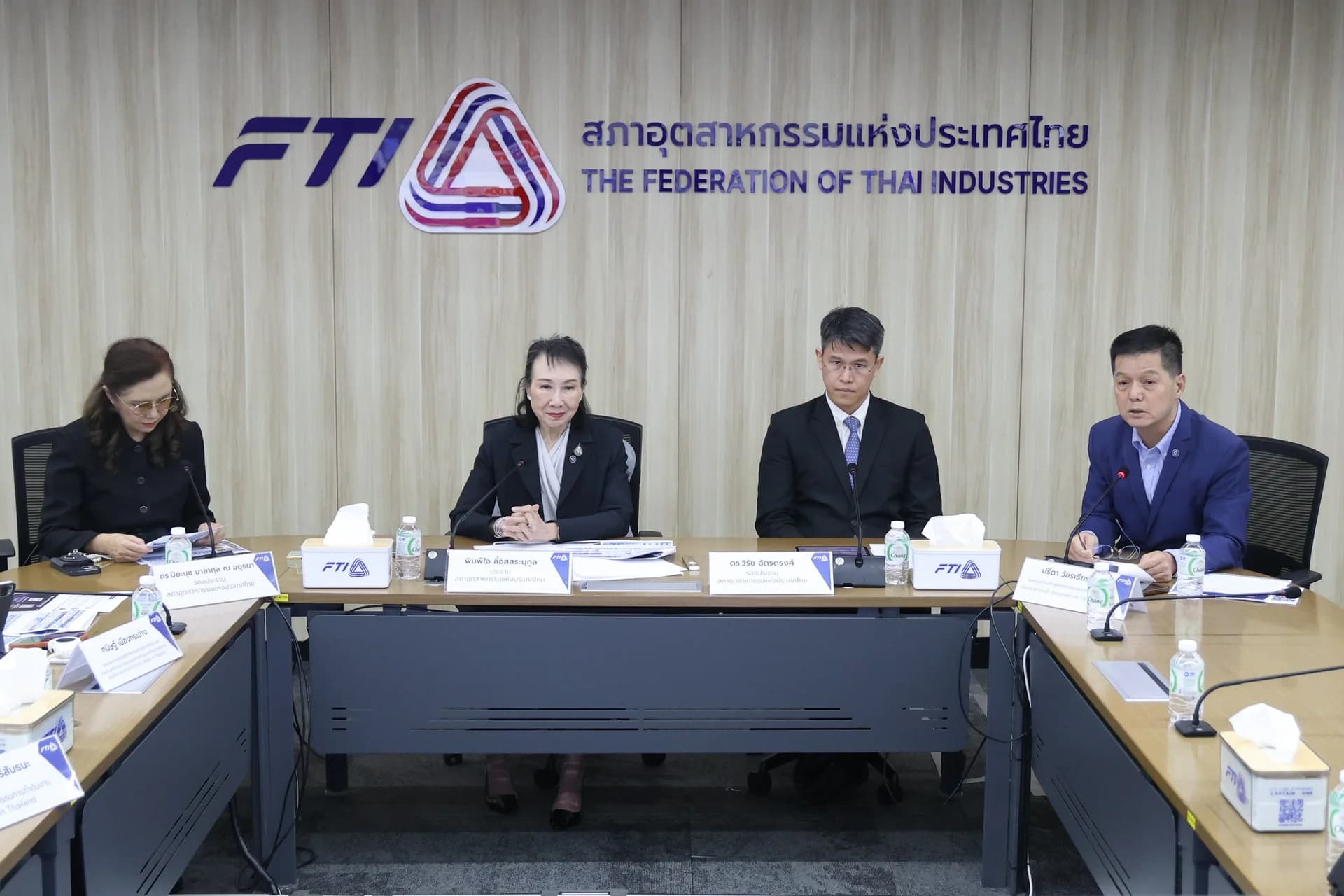

เมื่อวันที่ 17 กรกฎาคม 2568 นายกิตติพงศ์ ลิ่มสุวรรณโรจน์ กรรมการบริหารและประธาน Climate Change Pillars เป็นผู้แทนสภาอุตสาหกรรมแห่งประเทศไทย (ส.อ.ท.) เข้าร่วมพิธีลงนามบันทึกข้อตกลง (MOU) “ความร่วมมือการพัฒนาฐานข้อมูลและตัวชี้วัดเพื่อสนับสนุนเศรษฐกิจคาร์บอนต่ำ” จัดโดยสำนักงานพัฒนาวิทยาศาสตร์และเทคโนโลยีแห่งชาติ (สวทช.) ณ ห้องแถลงข่าว ชั้น 1 อาคารพระจอมเกล้า กระทรวงการอุดมศึกษา วิทยาศาสตร์ วิจัยและนวัตกรรม ถนนพระราม 6 กรุงเทพฯ โดยมีหน่วยงานที่ร่วมลงนามในครั้งนี้ ประกอบด้วยสำนักงานสภานโยบายการอุดมศึกษา วิทยาศาสตร์ วิจัยและนวัตกรรมแห่งชาติ (สอวช.) สำนักงานสภาพัฒนาการเศรษฐกิจและสังคมแห่งชาติ (สศช.) สำนักงานสถิติแห่งชาติ (สสช.) สำนักงานนโยบายและแผนทรัพยากรธรรมชาติและสิ่งแวดล้อม (สผ.) กรมการเปลี่ยนแปลงสภาพภูมิอากาศและสิ่งแวดล้อม (สส.) กรมส่งเสริมอุตสาหกรรม (กสอ.) องค์การบริหารจัดการก๊าซเรือนกระจก (องค์การมหาชน) (อบก.) สภาอุตสาหกรรมแห่งประเทศไทย (ส.อ.ท.) และมูลนิธิสถาบันสิ่งแวดล้อมไทย (มสท.) ณ ห้องแถลงข่าว ชั้น 1 อาคารพระจอมเกล้า กระทรวงการอุดมศึกษา วิทยาศาสตร์ วิจัยและนวัตกรรม ถนนพระราม 6 กรุงเทพฯ
MOU มีวัตถุประสงค์เพื่อพัฒนาฐานข้อมูลและตัวชี้วัดด้านการปลดปล่อยก๊าซเรือนกระจก (GreenHouse Gas: GHG) เศรษฐกิจหมุนเวียน (Circular Economy: CE) และเป้าหมายการพัฒนาที่ยั่งยืน (Sustainable Development Goals: SDGs)
1. รองรับการเปลี่ยนผ่านสู่เศรษฐกิจคาร์บอนต่ำ
2. ยกระดับการแข่งขันไทยในเวทีโลก
3. เตรียมพร้อมรับมือมาตรการปรับราคาคาร์บอนก่อนข้ามพรมแดน (Carbon Border Adjustment Mechanism: CBAM) ของ EU
4. สนับสนุน BCG Economy และการบรรลุเป้าหมายการปล่อยก๊าซคาร์บอนไดออกไซด์สุทธิเป็นศูนย์ (Net Zero) ภายในปี 2593
บทบาทเด่นของภาคีเครือข่าย
• สวทช. – วิจัยและพัฒนาตัวชี้วัด CO2, CE, SDGs
• สอวช. – ขับเคลื่อน -ตัวชี้วัดเศรษฐกิจหมุนเวียนและเศรษฐกิจสีเขียว (Green Enterprise Indicator: GEl) และนโยบายลด GHG
• สผ./สส./สศช./สสช. – บริหารจัดการข้อมูล-สถิติเชิงนโยบาย
• อบก. – รับรองข้อมูลคาร์บอนและมาตรฐานสากล
• ส.อ.ท., กสอ., มสท. – สะท้อนเสียงภาคอุตสาหกรรม-SMEs เพื่อใช้ฐานข้อมูลอย่างมีประสิทธิภาพ
ส.อ.ท. ให้ความสำคัญอย่างยิ่งกับความร่วมมือในครั้งนี้ โดยจะมีบทบาท ดังนี้
1. สนับสนุนและเสนอแนะข้อมูลจากภาคอุตสาหกรรม เพื่อสะท้อนความต้องการที่แท้จริง ตลอดจนความเร่งด่วนของการพัฒนาฐานข้อมูลและตัวชี้วัดให้สอดคล้องกับทิศทางการค้าและการลงทุนในอนาคต
2. ผลักดันโจทย์วิจัย พัฒนา และนวัตกรรมที่สามารถตอบสนองต่อการเปลี่ยนผ่านสู่เศรษฐกิจหมุนเวียนและสังคมคาร์บอนต่ำของประเทศ
3. เสนอแนะแนวทางการจัดทำฐานข้อมูลและตัวชี้วัดสิ่งแวดล้อมที่เหมาะสมกับบริบทไทย ทั้งในระดับภาคอุตสาหกรรมและระดับประเทศ และพร้อมให้การสนับสนุน ทั้งในรูปแบบความร่วมมือและความเชี่ยวชาญจากสมาชิกภาคอุตสาหกรรมทั่วประเทศ
ความร่วมมือครั้งนี้ ถือเป็น “ก้าวสำคัญ” ในการปักหมุด โครงสร้างพื้นฐานด้านสิ่งแวดล้อมของประเทศ สู่อนาคตที่ยั่งยืน แข่งขันได้ และปลอดคาร์บอน
On July 17, 2025, Mr. Kittipong Lim Suwanroj, Executive Board Member and Chair of the Climate Change Pillars, represented the Federation of Thai Industries (FTI) at the signing ceremony of the Memorandum of Understanding (MOU) on “Collaboration for the Development of a Database and Indicators to Support a Low-Carbon Economy”, organized by the National Science and Technology Development Agency (NSTDA) at the Press Conference Room, 1st Floor, King Mongkut's Building, Ministry of Higher Education, Science, Research and Innovation, Rama 6 Road, Bangkok. The signing was attended by multiple agencies, including the Office of National Higher Education Science Research and Innovation Policy Council (NXPO), the National Economic and Social Development Board (NESDB), the National Statistics Office (NSO), the Office of Natural Resources and Environmental Policy and Planning (ONEP), the Department of Climate Change and Environment (DCCE), the Department of Industrial Promotion (DIP), the Office of the Greenhouse Gas Management Organization (Public Organization) (TGO), the Federation of Thai Industries (FTI), and the Thailand Environment Institute (TEI).
The MOU aims to develop a database and indicators related to greenhouse gas emissions (GreenHouse Gas: GHG), circular economy (Circular Economy: CE), and sustainable development goals (Sustainable Development Goals: SDGs)
1. To support the transition to a low-carbon economy
2. To enhance Thailand's competitiveness on the global stage
3. To prepare for the Carbon Border Adjustment Mechanism (CBAM) measures set by the EU
4. To support the BCG Economy and achieve the goal of net zero carbon dioxide emissions by 2050.
Key Roles of Network Partners
• NSTDA – Research and develop indicators for CO2, CE, SDGs
• NXPO – Drive circular economy indicators and Green Enterprise Indicator (GEl) and GHG reduction policies
• ONEP/DCCE/NESDB/NSO – Manage policy-related data and statistics
• TGO – Certify carbon data and international standards
• FTI, DIP, TEI – Reflect the voices of the industrial sector and SMEs to utilize the database effectively.
FTI places significant importance on this collaboration and will play the following roles:
1. Support and provide data from the industrial sector to reflect real demands, as well as the urgency of developing the database and indicators in line with future trade and investment directions.
2. Promote research, development, and innovation that can respond to the transition towards a circular economy and low-carbon society in the country.
3. Offer recommendations for the establishment of environmental databases and indicators that are suitable for the Thai context, both at the industrial and national levels, and provide support in the form of collaboration and expertise from industrial sector members nationwide.
This collaboration is considered a “significant step” in establishing the country's environmental infrastructure towards a sustainable, competitive, and carbon-neutral future.