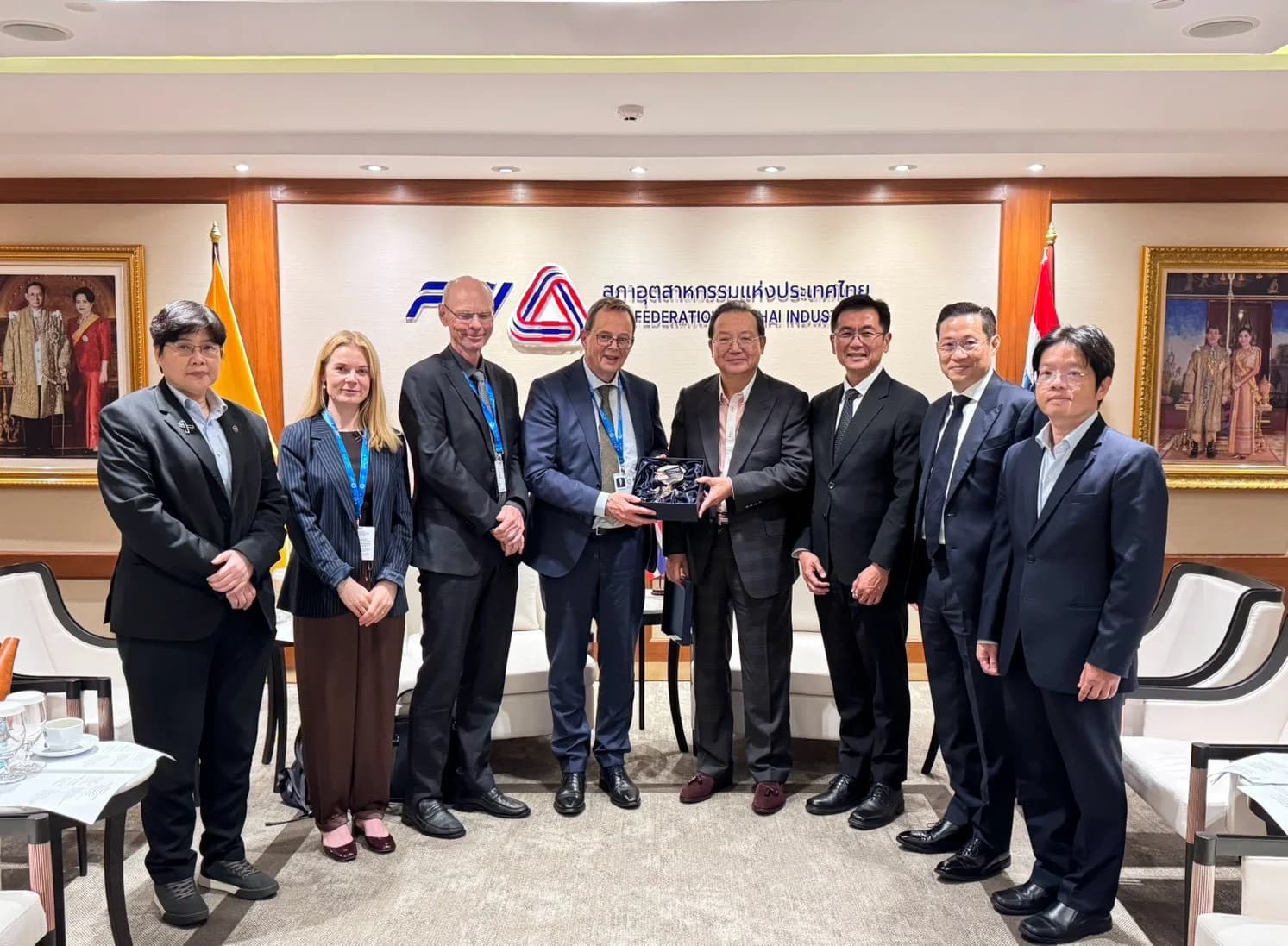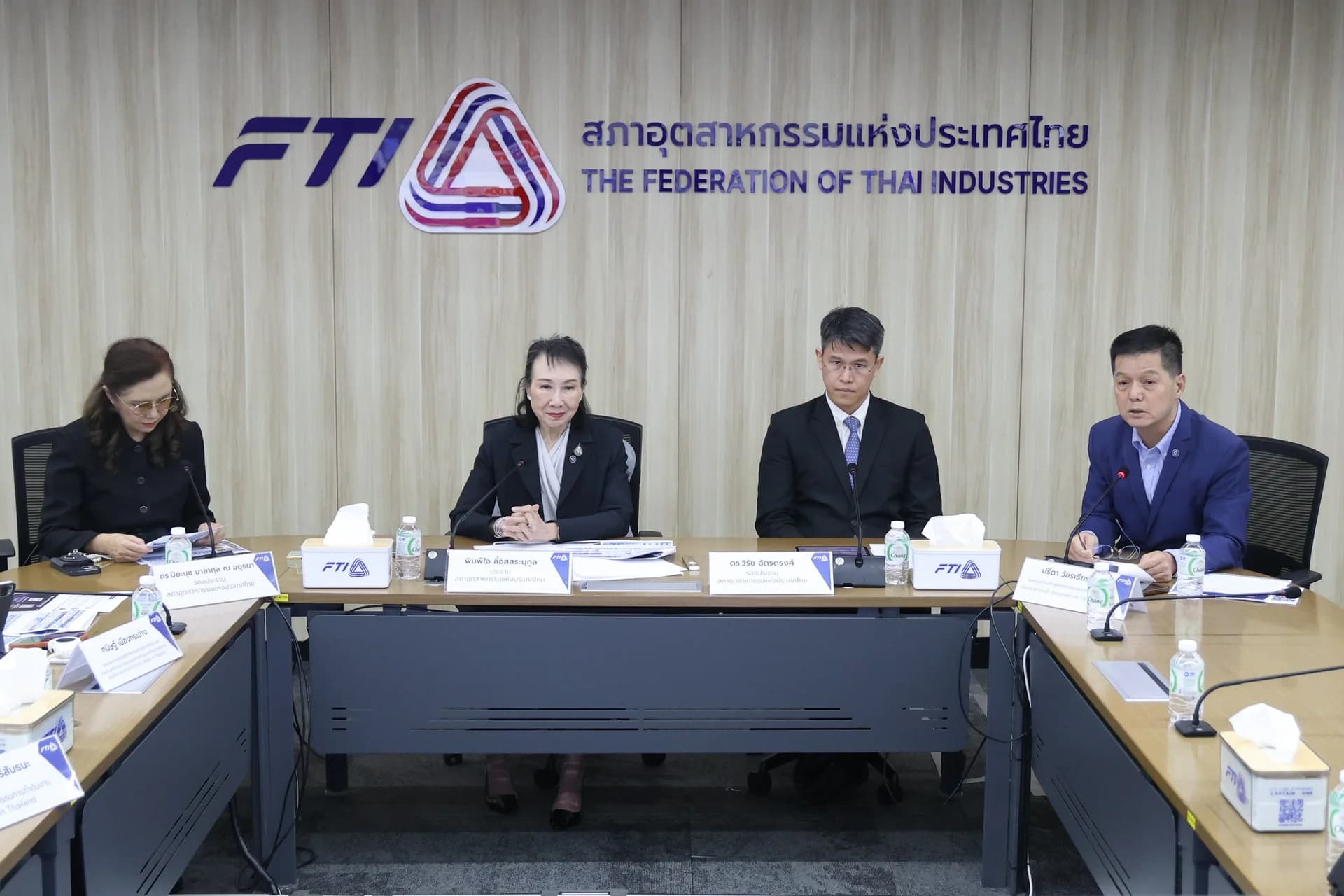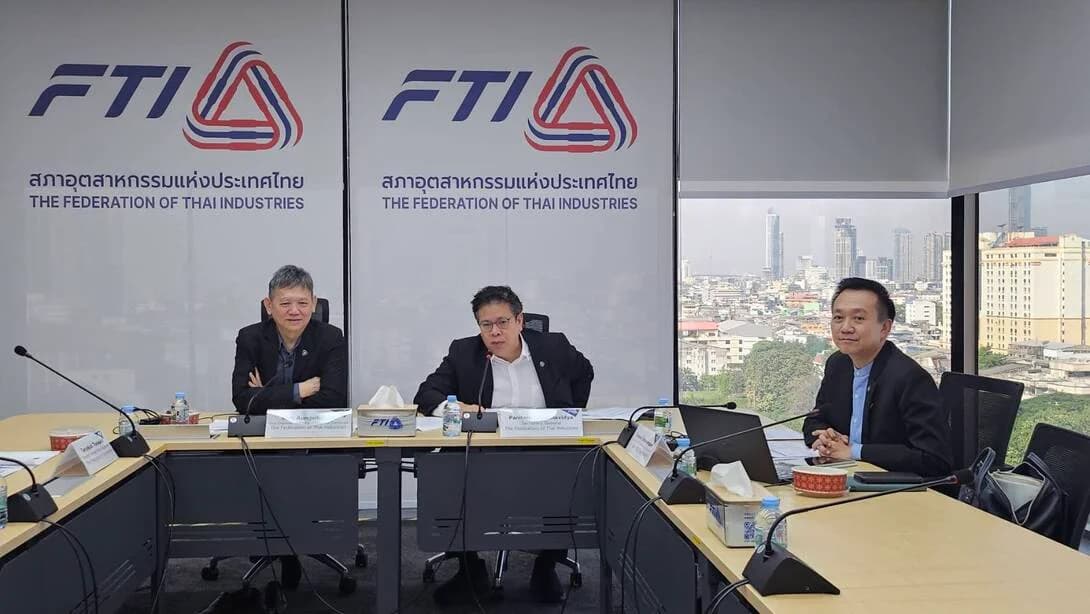

เมื่อวันที่ 6 กรกฎาคม 2569 สภาอุตสาหกรรมแห่งประเทศไทย (ส.อ.ท.) โดยสถาบันน้ำ สิ่งแวดล้อม และ Climate Change เข้าพบ ดร.พิรุณ สัยยะสิทธิ์พานิช อธิบดีกรมการเปลี่ยนแปลงสภาพภูมิอากาศและสิ่งแวดล้อม (สส.) เพื่อหารือความร่วมมือในการขับเคลื่อนนโยบายด้านการเปลี่ยนแปลงสภาพภูมิอากาศ และการยกระดับขีดความสามารถของภาคอุตสาหกรรมไทย โดยมี นายปรีดา วัชรเธียรสกุล รองประธาน ส.อ.ท. และประธานสถาบันน้ำ สิ่งแวดล้อม และ Climate Change พร้อมด้วย นายสุพจน์ ชัยวิไล นายเจมส์ แอนดริว มอร์ และนางวีรวรรณา สุวรรณประดิษฐ์ กรรมการสถาบันฯ เข้าร่วม ณ ห้องประชุมอาคารกรมการเปลี่ยนแปลงสภาพภูมิอากาศและสิ่งแวดล้อม
ส.อ.ท. ได้นำเสนอนโยบายการดำเนินงานภายใต้แนวคิด "5I" พร้อมภารกิจของสถาบันฯ ผ่านคณะอนุกรรมการ 6 ด้าน ซึ่งมีบทบาทในการสนับสนุนการขับเคลื่อนนโยบายด้านการเปลี่ยนแปลงสภาพภูมิอากาศของประเทศ
หนึ่งในประเด็นสำคัญ คือ มาตรการปรับคาร์บอนก่อนข้ามพรมแดนของสหภาพยุโรป (EU CBAM) ซึ่งส่งผลกระทบต่ออุตสาหกรรมเหล็กและเหล็กกล้า อะลูมิเนียม ปุ๋ย ไฟฟ้า ไฮโดรเจน รวมถึงผู้ผลิตนอตและสกรู โดยปัจจุบันประเทศไทยยังไม่มีหน่วยทวนสอบการปล่อยก๊าซเรือนกระจกที่แฝงอยู่ในสินค้า (Embedded Emissions) ที่ได้รับการยอมรับจากสหภาพยุโรป ส่งผลให้ผู้ส่งออกไทยต้องแบกรับภาระค่าใช้จ่ายด้าน CBAM สูงขึ้น
ส.อ.ท. จึงเสนอความร่วมมือในการพัฒนาหน่วยทวนสอบภายในประเทศให้เป็นไปตามมาตรฐานของสหภาพยุโรป ซึ่งกรมฯ แจ้งว่า ขณะนี้อยู่ระหว่างจัดทำมาตรฐานการทวนสอบ Embedded Emissions ร่วมกับหน่วยงานด้านมาตรฐานของประเทศ
ทั้งสองฝ่ายยังหารือแนวทางส่งเสริมการใช้ไฟฟ้าจากชีวมวล เพื่อเพิ่มสัดส่วนการใช้พลังงานทดแทน ลดการพึ่งพาเชื้อเพลิงฟอสซิล และช่วยลดปัญหา PM2.5 จากการเผาวัสดุเหลือใช้ทางการเกษตร โดย ส.อ.ท. จะศึกษารายละเอียดและจัดทำข้อเสนอเพื่อหารือร่วมกับกรมฯ ต่อไป
นายปรีดา กล่าวว่า สถาบันฯ มุ่งส่งเสริมผู้ประกอบการ SMEs ให้สามารถประเมินและลดการปล่อยก๊าซเรือนกระจก ซึ่งเป็นจุดเริ่มต้นสำคัญในการผลักดันประเทศสู่เป้าหมายการปล่อยก๊าซเรือนกระจกสุทธิเป็นศูนย์ (Net Zero)
ด้านกรมฯ ระบุว่า ภายหลังพระราชบัญญัติการเปลี่ยนแปลงสภาพภูมิอากาศมีผลบังคับใช้ ซึ่งคาดว่าจะเป็นช่วงไตรมาส 3 ปี 2570 จะมีการจัดตั้งกองทุน Climate Fund เพื่อสนับสนุนการปรับตัวของภาคอุตสาหกรรม โดยเฉพาะผู้ประกอบการ SMEs ในการก้าวสู่เศรษฐกิจคาร์บอนต่ำ
On July 6, 2026, the Federation of Thai Industries (FTI), through the Water, Environment, and Climate Change Institute, met with Dr. Pirun Saiyasitpanit, Director-General of the Department of Climate Change and Environment (DCCE), to discuss collaborative efforts in advancing climate change policies and enhancing the capacity of the Thai industrial sector, with participation from Mr. Preeda Wacharathiansakul, Vice President of FTI and Chairman of the Institute, along with Mr. Supachai Chaiwai, Mr. James Andrew Moore, and Ms. Veerawan Suwanpradit, Board members of the Institute, at the meeting room of the Department of Climate Change and Environment.
FTI presented its operational policy under the "5I" concept, along with the mission of the Institute, through six sub-committees, which play a role in supporting the advancement of the country’s climate change policies.
One of the key issues discussed was the European Union's Carbon Border Adjustment Mechanism (EU CBAM), which impacts the steel, aluminum, fertilizer, electricity, and hydrogen industries, along with manufacturers of nuts and bolts. Currently, Thailand lacks a greenhouse gas verification unit for embedded emissions that is recognized by the European Union, resulting in Thai exporters bearing higher costs related to CBAM.
As a result, FTI proposed collaboration to develop a domestic verification unit that meets European Union standards, to which the Department notified that it is currently in the process of establishing standards for verifying embedded emissions in cooperation with national standardization agencies.
Both parties also discussed measures to promote the use of electricity generated from biomass to increase the share of renewable energy, reduce dependence on fossil fuels, and help alleviate PM2.5 problems arising from the burning of agricultural waste. FTI will study the details and develop proposals for further discussions with the Department.
Mr. Preeda stated that the Institute aims to promote SMEs to assess and reduce greenhouse gas emissions, which is a crucial starting point in driving the country toward the net-zero greenhouse gas emissions target.
The Department indicated that following the enforcement of the Climate Change Act, expected to be in the third quarter of 2027, a Climate Fund will be established to support the adaptation of the industrial sector, particularly for SMEs in transitioning to a low-carbon economy.