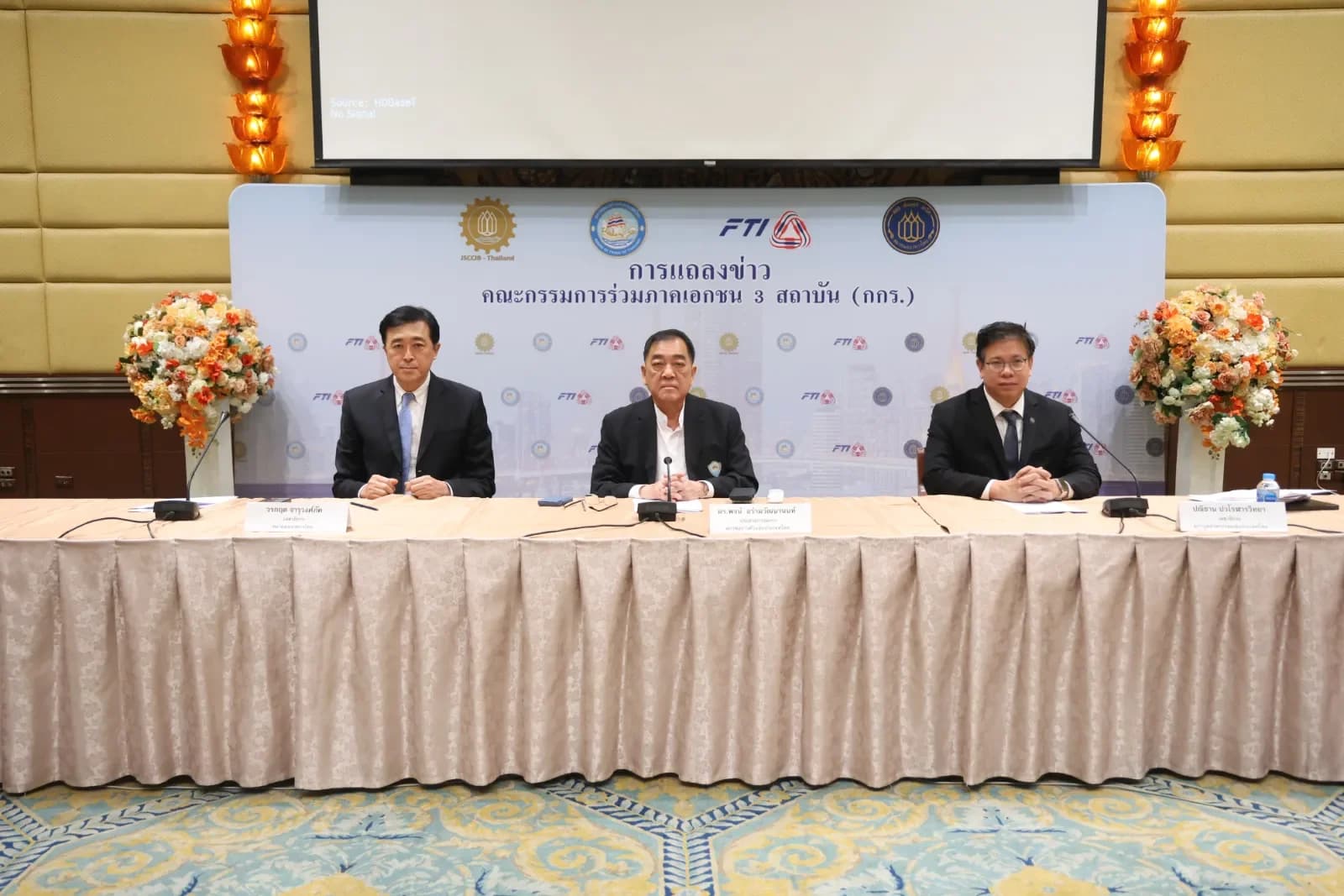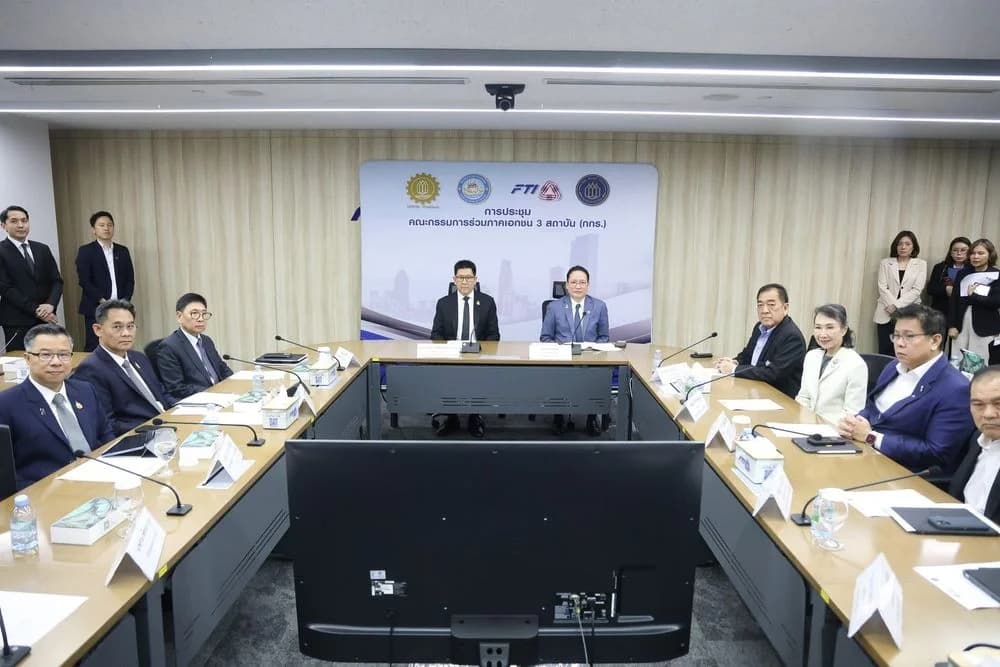

วันพุธที่ 6 พฤศจิกายน 2567 นายสนั่น อังอุบลกุล ประธานสภาหอการค้าแห่งประเทศไทย เป็นประธานการประชุมคณะกรรมการร่วมภาคเอกชน 3 สถาบัน (กกร.) โดยมีนายอภิชิต ประสพรัตน์ รองประธานสภาอุตสาหกรรมแห่งประเทศไทย (ส.อ.ท.) และนายผยง ศรีวณิช ประธานสมาคมธนาคารไทย ร่วมในการแถลงข่าว
เศรษฐกิจไทยปี 2567 มีแนวโน้มขยายตัวได้ที่ 2.6-2.8% สูงกว่าประมาณการเดิม จากแรงขับเคลื่อนของการส่งออกที่ได้รับอานิสงส์จากวัฏจักรขาขึ้นของกลุ่มอิเล็กทรอนิกส์ ที่ส่งผลให้การส่งออกสามารถเติบโตได้ 2.5-2.9% สูงกว่าประมาณการเดิม ประกอบกับมีปัจจัยหนุนจากการกระตุ้นกำลังซื้อ และการเร่งเบิกจ่ายงบประมาณของภาครัฐ นอกจากนี้ มาตรการภาครัฐทั้งระยะสั้น ระยะกลาง และระยะยาว ที่กำลังจะทยอยออกมา
•เศรษฐกิจโลกชะลอตัวลงชัดเจน คาด GDP โลกทั้งปี 2567 มีแนวโน้มขยายตัวได้ต่ำ เครื่องชี้การผลิตภาคอุตสาหกรรม เดือนตุลาคมของประเทศสำคัญ ทั้งสหรัฐฯ ยุโรป และญี่ปุ่น ต่างหดตัวต่อเนื่อง ขณะที่กองทุนการเงินระหว่างประเทศ (IMF) มองเศรษฐกิจโลกปี 2567 ยังเติบโตได้ต่ำ โดยคาดว่าจะขยายตัวที่ 3.2% ส่วนปีหน้ามีแนวโน้มทรงตัว ทั้งนี้ยังเตือนว่าเศรษฐกิจโลกระยะข้างหน้ายังมีความเสี่ยงจากหลายปัจจัยหลัก ทั้ง (i) การกีดกันทางการค้าที่รุนแรงขึ้น (ii) อัตราเงินเฟ้อที่กลับมาเร่งตัวจากปัญหาด้านภูมิรัฐศาสตร์ และ (iii) ปัญหาในภาคอสังหาริมทรัพย์ของจีนที่แย่กว่าคาด
•จับตาผลการเลือกตั้งสหรัฐฯ ซึ่งนัยยะต่อเศรษฐกิจไทยเบื้องต้น ถือเป็นความเสี่ยงต่อสินค้าไทยที่มีการเกินดุลกับสหรัฐฯ คาดว่าจะกระทบการส่งออกไทยผ่านมาตรการขึ้นภาษีการนำเข้าและการกีดกันทางการค้ารอบใหม่ โดยเฉพาะกลุ่มสินค้าที่เกินดุลการค้าสูงและมูลค่าการส่งออกขยายตัวได้ดี เช่น ฮาร์ดดิสก์ไดรฟ์ เซมิคอนดักเตอร์ ยางล้อ และกลุ่มสินค้าที่เกินดุลการค้าปานกลางและมูลค่าการส่งออกที่ขยายตัวรวดเร็ว เช่น เครื่องปรับอากาศ โซลาร์เซลล์ เป็นต้น ซึ่งจำเป็นจะต้องติดตามความคืบหน้าของนโยบายเหล่านี้ต่อไป โดยภาครัฐและผู้ประกอบการต้องเตรียมหาแนวทางร่วมกันในการรับมือกับนโยบายที่อาจจะมีการเปลี่ยนแปลง
•เศรษฐกิจไทยปี 2567 มีแนวโน้มขยายตัวได้ที่ 2.6-2.8% สูงกว่าประมาณการเดิม จากแรงขับเคลื่อนของการส่งออกที่ได้รับอานิสงส์จากวัฏจักรขาขึ้นของกลุ่มอิเล็กทรอนิกส์ ที่ส่งผลให้การส่งออกสามารถเติบโตได้ 2.5-2.9% สูงกว่าประมาณการเดิม ประกอบกับมีปัจจัยหนุนจากการกระตุ้นกำลังซื้อ และการเร่งเบิกจ่ายงบประมาณของภาครัฐ นอกจากนี้ มาตรการภาครัฐทั้งระยะสั้น ระยะกลาง และระยะยาว ที่กำลังจะทยอยออกมา อาทิ การช่วยเหลือลูกหนี้รายย่อยและกลุ่มผู้ประกอบการ SME การปรับกฎหมายเกี่ยวกับการเช่าที่ดินระยะยาว 99 ปีเพื่อดึงดูดการลงทุนจากต่างประเทศ ถือเป็นกลไกสำคัญในการแก้ปัญหาเชิงโครงสร้างและสร้างความเชื่อมั่นต่อการเติบโตของเศรษฐกิจในระยะข้างหน้า
กรอบประมาณการเศรษฐกิจปี 2567 ของ กกร.
%YoY ปี 2567
(ณ ก.ย. 67) ปี 2567
(ณ ต.ค. 67) ปี 2567
(ณ พ.ย. 67)
GDP 2.2 ถึง 2.7 2.2 ถึง 2.7 2.6 ถึง 2.8
ส่งออก 1.5 ถึง 2.5 1.5 ถึง 2.5 2.5 ถึง 2.9
เงินเฟ้อ 0.5 ถึง 1.0 0.5 ถึง 1.0 0.5 ถึง 1.0
•ในระยะถัดไปเศรษฐกิจมีสัญญานการฟื้นตัวจากมาตรการกระตุ้นกำลังซื้อของภาครัฐ อย่างไรก็ตาม จากสถานการณ์น้ำท่วมเฉียบพลันในหลายพื้นที่ของประเทศ ส่งผลให้เศรษฐกิจและภาคการท่องเที่ยวยังคงฟื้นตัวได้ไม่เต็มที่ สะท้อนจากผลการสำรวจภาวะเศรษฐกิจภูมิภาคของมหาวิทยาลัยหอการค้าไทย ประกอบกับปัญหาสินค้าทุ่มตลาดที่ยังคงกดดันยอดขายของผู้ประกอบการในประเทศ ดังนั้นจึงจำเป็นต้องมีการกระตุ้นเศรษฐกิจต่อเนื่อง เช่น มาตรการส่งเสริมการท่องเที่ยวในช่วงปลายปี และมาตรการเพิ่มกำลังซื้อคูณ 2 เช่น E-Receipt เป็นต้น ในช่วงต้นปีหน้าให้กับประชาชน รวมทั้งการเร่งลงทุนในโครงสร้างพื้นฐานเพื่อยกระดับศักยภาพเศรษฐกิจในระยะยาว ส่งเสริมการลงทุนโดยตรงจากต่างประเทศ โดย กกร.สนับสนุนการปรับกฎหมายเกี่ยวกับการเช่าที่ดินระยะยาว 99 ปี และจะมีการประสานกับหน่วยงานที่เกี่ยวข้องเพื่อให้มีความเข้าใจในรายละเอียด โดยมีวัตถุประสงค์เพื่อประโยชน์สูงสุดต่อระบบและกิจกรรมทางเศรษฐกิจของประเทศ
•ที่ประชุมกกร.สนับสนุนแนวทางการแก้ปัญหาหนี้ครัวเรือน ตามที่สมาคมธนาคารไทย กระทรวงการคลัง และธนาคารแห่งประเทศไทย (ธปท.) เตรียมออกมาตรการช่วยเหลือลูกหนี้กลุ่มเปราะบาง ทั้งรายย่อยและธุรกิจขนาดเล็ก ที่มีภาระหนี้สูง และประสบความยากลำบากในการชำระหนี้ โดยมุ่งช่วยเหลือลูกหนี้รายย่อยสินเชื่อบ้าน สินเชื่อรถยนต์ และสินเชื่อ SME รายเล็ก ที่มีวงเงินสินเชื่อไม่สูง และมีปัญหาเริ่มค้างชำระ อ้างอิงข้อมูล ณ วันที่ 31 ตุลาคม 2567 ซึ่งเป็นจุดตั้งต้นในการแก้ปัญหาเชิงโครงสร้างอย่างเป็นระบบและต่อเนื่อง ไม่ใช่มาตรการที่มุ่งแก้ปัญหาชั่วคราว โดยทางรัฐบาลจะต้องมีมาตรการในการดึงทุกภาคส่วนเข้าสู่ระบบ รวมถึงฐานข้อมูลเครดิตแห่งชาติ (NCB) เพื่อให้ทุกฝ่ายทราบถึงภาระและความสามารถในการชำระหนี้ของลูกหนี้ได้ไม่ก่อให้เกิดภาระหนี้เกินกำลังหรือเกินความจำเป็น และเพื่อให้มีข้อมูลในการให้ความช่วยเหลืออย่างตรงจุด เหมาะสมและเป็นธรรม ลดรอยรั่วที่เป็นต้นทุนแฝงในระบบ เช่น การเสริมทักษะแรงงาน เพื่อให้มีรายได้เพิ่มขึ้น เป็นทรัพยากรขับเคลื่อนธุรกิจ SME พร้อมเสริมศักยภาพการแข่งขัน สร้างแต้มต่อให้กับผู้ประกอบการ SME เช่น มีมาตรการสนับสนุนให้ SME เข้าถึงการประมูลงานภาครัฐ สำหรับแหล่งเงินทุนในมาตรการจะมาจาก 2 ส่วนคือ การลดเงินนำส่งเข้ากองทุน FIDF ทั้งระบบเหลือ 0.23% และเงินสนับสนุนจากภาคธนาคาร โดยรายละเอียดของมาตรการทางธปท.และกระทรวงการคลังอยู่ระหว่างการพิจารณาและจะเสนอให้ที่ประชุมคณะรัฐมนตรี (ครม.) พิจารณาอนุมัติต่อไป
On Wednesday, November 6, 2024, Mr. Sanan Angubolkul, Chairman of the Thai Chamber of Commerce, presided over a meeting of the Joint Committee of Private Sector from three organizations (JSCC) with Mr. Apichit Prasoprat, Vice Chairman of the Federation of Thai Industries (FTI), and Mr. Payong Srivanich, President of the Thai Bankers' Association, participating in the press conference.
The Thai economy in 2024 is projected to grow at 2.6-2.8%, higher than previous estimates, driven by exports benefiting from the upward cycle of the electronics sector, leading to export growth of 2.5-2.9%, surpassing prior predictions. Additionally, there are supportive factors from consumer purchasing stimulation and the acceleration of budget disbursements by the government. Furthermore, government measures in the short, medium, and long term are expected to be gradually released.
The global economy is clearly slowing down, with global GDP for the entire year of 2024 predicted to grow at a low rate. Key industrial production indicators for October in major countries, including the U.S., Europe, and Japan, continue to contract. The International Monetary Fund (IMF) anticipates that the global economy will still grow at a low rate in 2024, forecasting growth at 3.2%. For the following year, stability is expected. It warns that the global economy faces risks from several main factors, including (i) intensifying trade barriers, (ii) a resurgence in inflation due to geopolitical issues, and (iii) worse-than-expected problems in the Chinese real estate sector.
Close attention should be paid to the results of the U.S. elections, which are preliminarily considered a risk to Thai products with a trade surplus with the U.S. It is anticipated that these elections could impact Thai exports through new import tax measures and trade restrictions, particularly affecting high trade surplus items with substantial export value that are growing well, such as hard disk drives, semiconductors, and tires, as well as medium trade surplus items with rapidly expanding export value, such as air conditioners and solar cells. Continuous monitoring of the progress of these policies is essential, and both the government and entrepreneurs must prepare to seek collaborative ways to cope with potential policy changes.
The Thai economy in 2024 is projected to grow at 2.6-2.8%, higher than previous estimates, driven by exports benefiting from the upward cycle of the electronics sector, leading to export growth of 2.5-2.9% that surpasses prior predictions. Additionally, there are supportive factors from consumer purchasing stimulation and the acceleration of budget disbursements by the government. Furthermore, government measures in the short, medium, and long term are expected to be gradually released, such as assistance for individual debtors and SME operators, and adjustments to long-term land lease laws for attracting foreign investment, which are important mechanisms for addressing structural problems and building confidence in future economic growth.
The economic forecast framework for 2024 by JSCC
%YoY 2024
(as of September 2024) 2024
(as of October 2024) 2024
(as of November 2024)
GDP 2.2 to 2.7 2.2 to 2.7 2.6 to 2.8
Exports 1.5 to 2.5 1.5 to 2.5 2.5 to 2.9
Inflation 0.5 to 1.0 0.5 to 1.0 0.5 to 1.0
In the near future, economic recovery signals are emerging from government spending stimulation measures. However, due to the recent heavy flooding in various parts of the country, the economy and tourism sector are still recovering inadequately, as reflected in the Thai Chamber of Commerce's economic situation survey. Moreover, ongoing concerns about dumping of goods continue to pressure domestic sales for entrepreneurs. Therefore, ongoing economic stimulation measures are necessary, such as promoting tourism in the year-end period and implementing multiplier measures like E-Receipt to enhance purchasing power for citizens at the beginning of the upcoming year, along with accelerating infrastructure investments to elevate long-term economic potential and promote direct foreign investment. JSCC supports the adjustment of long-term land lease laws for 99 years and will coordinate with relevant agencies to ensure clarity on the details, aiming for maximal benefits to the country's economic systems and activities.
The JSCC meeting supports addressing household debt issues as the Thai Bankers' Association, the Ministry of Finance, and the Bank of Thailand (BOT) prepare to launch assistance measures for vulnerable debtors, including individual and small business borrowers facing high debt burdens and difficulties in repayment. The focus will be on assisting individual debtors such as home loan, auto loan, and small SME borrowers with low credit limits who are beginning to default, referencing data as of October 31, 2024, as a starting point for systematically and continuously addressing structural problems, rather than temporary solutions. The government must create measures to include all sectors into the system, including the National Credit Bureau (NCB), to ensure all parties understand the debts and the repayment capabilities of debtors without creating excessive or unnecessary debt burdens, while also providing precise, adequate, and fair assistance information to reduce leakage that incurs hidden costs in the system, such as enhancing workforce skills to increase income, serving as a resource driving SME business forward, while enhancing competitive resilience. There will be supportive measures for SMEs to access public procurement opportunities. Funding sources for the measures will derive from two parts: reducing the contribution rate to the Financial Institutions Development Fund (FIDF) across the board to 0.23%, and support from the banking sector. Details of the measures from the BOT and the Ministry of Finance are currently under consideration and will be submitted for approval to the Cabinet (Cabinet) in due course.