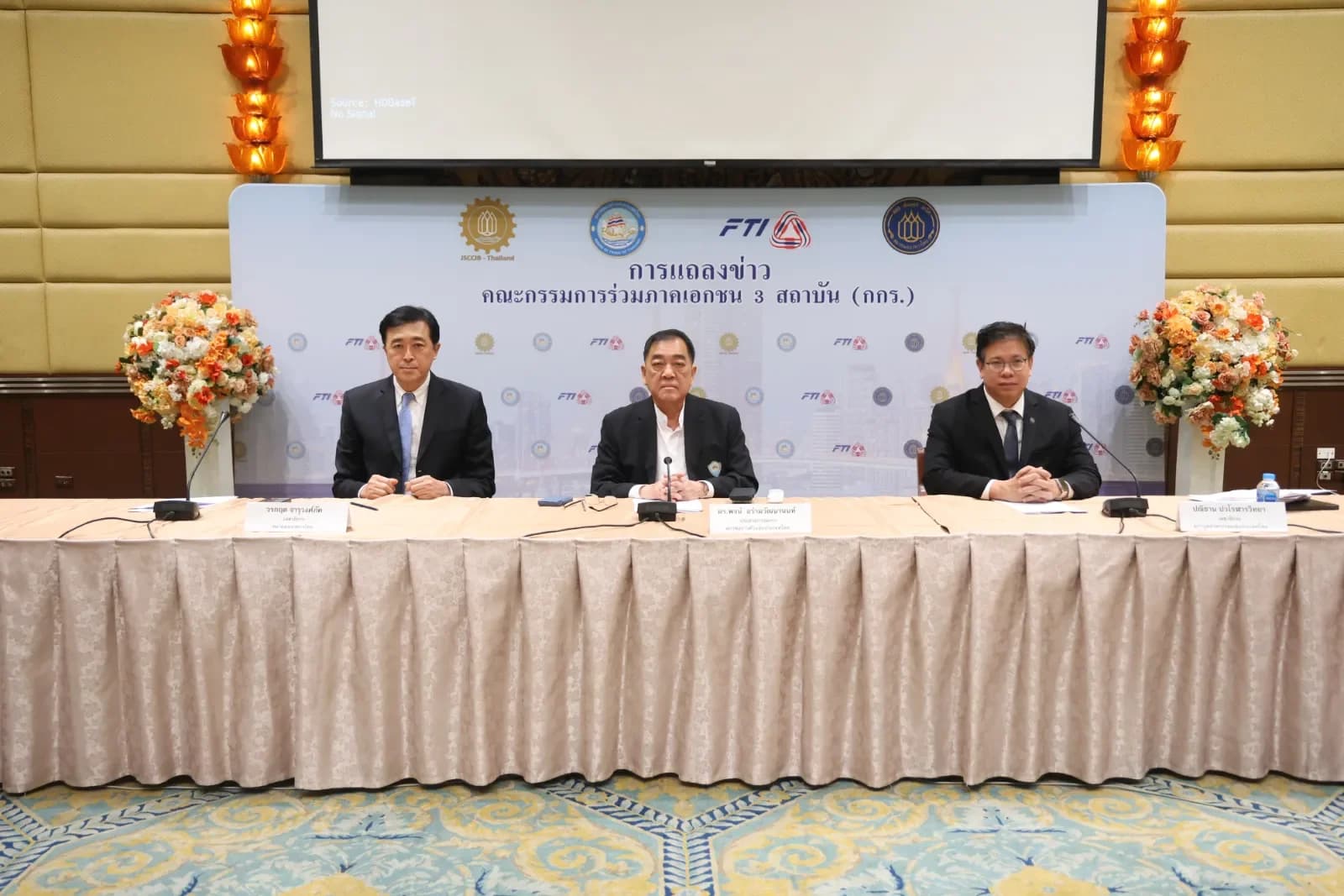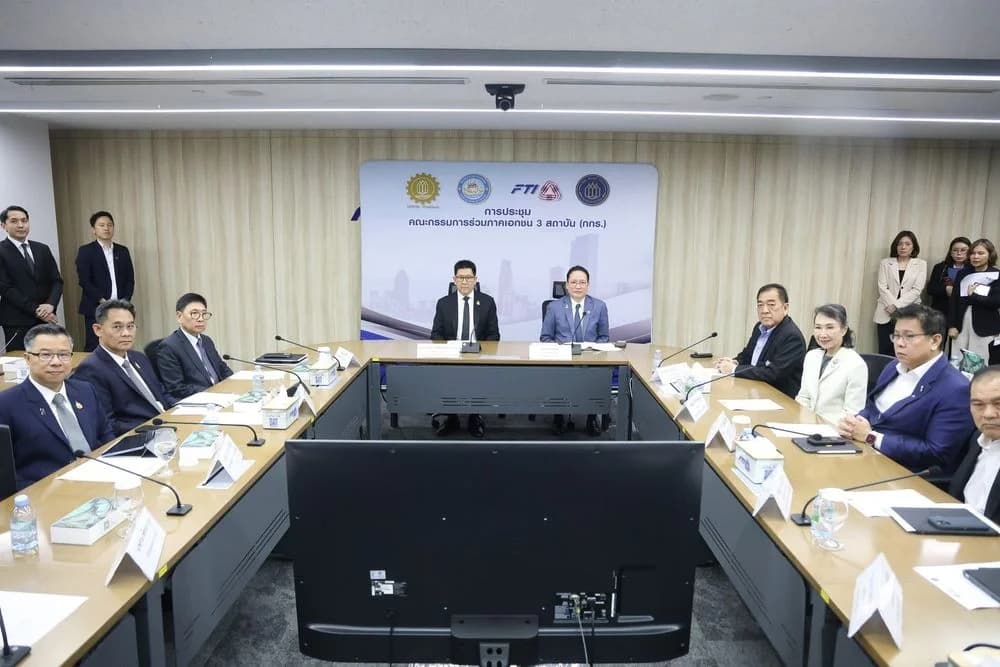

วันพุธที่ 6 สิงหาคม 2568 นายผยง ศรีวณิช ประธานกรรมการสมาคมธนาคารไทย เป็นประธานการประชุมคณะกรรมการร่วมภาคเอกชน 3 สถาบัน (กกร.) โดยมีนายเกรียงไกร เธียรนุกุล ประธานสภาอุตสาหกรรมแห่งประเทศไทย (ส.อ.ท.) และ ดร.พจน์ อร่ามวัฒนานนท์ ประธานกรรมการสภาหอการค้าแห่งประเทศไทย ร่วมแถลงข่าว ณ ศูนย์การประชุมแห่งชาติสิริกิติ์
เศรษฐกิจโลกมีทิศทางดีขึ้น หลังสหรัฐฯ ประกาศข้อตกลงด้านภาษีกับหลายประเทศ อัตราภาษีศุลกากรส่วนใหญ่ปรับลดลงกว่าที่สหรัฐฯ ประกาศเมื่อเดือนเมษายน โดยเฉพาะสำหรับประเทศในเอเชียและอาเซียน ประมาณการเศรษฐกิจโลกปี 2568 โดย IMF ปรับเพิ่มเป็นเติบโต 3% จากเดิม 2.8% ซึ่งต่ำกว่าค่าเฉลี่ยในอดีตที่อยู่ประมาณ 3.5% สะท้อนภาวะชะลอตัวจากผลของกำแพงภาษีสูง และความไม่ชัดเจนในรายละเอียดของการดำเนินการ โดยเฉพาะประเด็นที่เกี่ยวข้องกับภาษีสินค้า transshipment และการกำหนดสัดส่วน local content ของแต่ละประเทศ
ประเทศไทยต้องเร่งปรับตัวรับมือทั้งในระยะสั้น และการเปลี่ยนผ่านในระยะข้างหน้า ในระยะสั้นการแข่งขันด้านราคาจะเพิ่มขึ้นทั้งสินค้าที่ไทยส่งออกและสินค้าที่ขายในประเทศที่จะแข่งขันกับสินค้าที่ไทยเปิดตลาดนำเข้าเพิ่มขึ้น ซึ่งจะกระทบกลุ่มที่มี Margin ต่ำ และต้องเร่งสำรวจการใช้ Local Content เพื่อลดความเสี่ยงภาษี transshipment รวมถึงบังคับใช้กฎหมายอย่างมีประสิทธิภาพ ทั้งในส่วนพิธีการศุลกากร และการตรวจสอบมาตรฐานสินค้าที่ขายในประเทศ ขณะที่นโยบายการค้าของสหรัฐฯ เป็น wake-up call ให้ไทยใช้โอกาสนี้ในการปรับตัวเพื่อสร้างความสามารถในการแข่งขันในระยะยาวของภาคเอกชน โดยเฉพาะ SMEs ทั้งการปรับโครงสร้างอุตสาหกรรม กำหนด Priority Sectors ให้สอดคล้องกับยุทธศาสตร์ของประเทศ ยกระดับกระบวนการผลิตตลอดห่วงโซ่อุปทานและอุตสาหกรรมต้นน้ำเพื่อเพิ่ม local content เพิ่ม Productivity ลดต้นทุน ใช้เทคโนโลยีและนวัตกรรม และยกระดับทักษะแรงงานการจ้างงานของแรงงานไทยในประเทศ แรงงานต่างด้าว และมูลค่าเพิ่มทางเศรษฐกิจที่แท้จริงของประเทศ ซึ่งต้องอาศัยความร่วมมืออย่างใกล้ชิดระหว่างภาครัฐและภาคเอกชน
เศรษฐกิจไทยปี 68 มีแนวโน้มขยายตัวได้ที่ 1.8-2.2% ปรับเพิ่มขึ้นจากประมาณการเดิมที่ 1.5-2.0% ส่วนการส่งออกมีแนวโน้มขยายตัว 2-3% สูงกว่าประมาณการเดิมเช่นกัน โดยความสำเร็จจากการเจรจาการค้าส่งผลให้ไทยถูกเรียกเก็บภาษีที่ 19% แทน 36% ซึ่งยังต้องให้ความสำคัญกับรายละเอียดที่ต้องมีการเจรจากันต่อไป เบื้องต้นทำให้ไทยไม่เสียเปรียบประเทศเพื่อนบ้านซึ่งเป็น worst case scenario อย่างไรก็ตาม เศรษฐกิจในครึ่งปีหลังมีแนวโน้มชะลอตัว โดยการส่งออกแผ่วลงหลังหมดปัจจัยชั่วคราวจากการเร่งส่งออก การแข่งขันด้านราคาที่มากขึ้น ค่าเงินบาทที่แข็งค่าขึ้นรวมถึงปัญหาเศรษฐกิจนอกระบบ และกำลังซื้อของผู้บริโภคสหรัฐฯที่ลดลงจากเงินเฟ้อ ส่วนรายได้จากการท่องเที่ยวชะลอตามจำนวนนักท่องเที่ยวต่างชาติโดยเฉพาะ short haul ที่ชะลอตัวรวมทั้งผลกระทบจากปัจจัยความขัดแย้งไทย-กัมพูชา ทั้งนี้เศรษฐกิจไตรมาสสุดท้ายของปีและต้นปีหน้าอาจมีความผันผวนสูง โดยเฉพาะภาคส่งออกที่จะได้รับผลกระทบจากภาษีสหรัฐฯชัดเจน และการแข่งขันที่สูงขึ้นจากประเทศคู่แข่ง ซึ่งแตกต่างกันในแต่ละประเภทสินค้าและการจัดเก็บ Stock คงค้างที่ไม่เท่ากัน
กกร. เห็นว่าไทยยังขาดข้อมูลสำคัญด้านโครงสร้างการผลิตรายอุตสาหกรรม เช่น การใช้วัตถุดิบขั้นต้นและขั้นกลางในประเทศ รวมถึง Regional Value Content ซึ่งภาคเอกชนได้เริ่มสำรวจและเก็บข้อมูลพื้นฐาน เพื่อให้สามารถปฏิบัติได้ตามเงื่อนไขการส่งออกสินค้าไปยังสหรัฐฯ อย่างไรก็ตาม เพื่อให้มีฐานข้อมูลที่ครบถ้วนและเชื่อถือได้ จำเป็นต้องอาศัยความร่วมมือจากภาครัฐ และหน่วยงานของรัฐที่รับผิดชอบเรื่องนี้โดยตรง เพื่อการตัดสินใจและเจรจาภายใต้การค้าโลกรูปแบบใหม่ (New trade paradigm) บทบาทของไทยในอาเซียน สร้างโอกาสให้กับผู้ประกอบการไทยในเวทีการค้าโลก
กรอบประมาณการเศรษฐกิจปี 2568 ของ กกร.
ณ ม.ค.-เม.ย. 68
GDP 2.4 ถึง 2.9
ส่งออก 1.5 ถึง 2.5
เงินเฟ้อ 0.8 ถึง 1.2
ณ พ.ค. 68
GDP 2.0 ถึง 2.2
ส่งออก 0.3 ถึง 0.9
เงินเฟ้อ 0.5 ถึง 1.0
ณ มิ.ย. 68
GDP 1.5 ถึง 2.0
ส่งออก -0.5 ถึง 0.9
เงินเฟ้อ 0.5 ถึง 1.0
ณ ก.ค. 68
GDP 1.5 ถึง 2.0
ส่งออก -0.5 ถึง 0.3
เงินเฟ้อ 0.5 ถึง 1.0
ณ ส.ค. 68
GDP 1.8 ถึง 2.2
ส่งออก 2.0 ถึง 3.0
เงินเฟ้อ 0.5 ถึง 1.0
On Wednesday, August 6, 2025, Mr. Payong Srivanitch, Chairman of the Thai Bankers' Association, presided over a meeting of the Joint Committee of Three Private Sector Organizations (JCC) which included Mr. Kreingkrai Theeranukul, Chairman of the Federation of Thai Industries (FTI), and Dr. Poj Aramwatananon, Chairman of the Board of the Thai Chamber of Commerce, who jointly held a press conference at the Queen Sirikit National Convention Center.
The global economy is improving following the United States’ announcement of tax agreements with several countries. Most customs tariffs have been reduced from the levels announced in April, particularly for Asian and ASEAN countries. The International Monetary Fund (IMF) has upgraded its global economic growth forecast for 2025 to 3% from the previous estimate of 2.8%, which is lower than the historical average of approximately 3.5%. This reflects a slowdown due to the impact of high tariffs and uncertainties surrounding implementation details, especially concerning transshipment taxes and local content ratios in each country.
Thailand must accelerate its adaptation to both short-term challenges and future transitions. In the short term, price competition will intensify for both exported Thai goods and domestic products competing with increased imports. This will impact low-margin sectors and require a rapid exploration of local content use to mitigate transshipment tax risks, alongside effective enforcement of laws related to customs procedures and product standard inspections. Meanwhile, U.S. trade policies serve as a wake-up call for Thailand to seize this opportunity to enhance long-term competitiveness in the private sector, especially for SMEs, by restructuring industries, defining priority sectors in line with national strategies, upgrading production processes across the supply chain, and improving local content. It is essential to enhance productivity, reduce costs, leverage technology and innovation, and upgrade the skills of the domestic labor force, foreign workers, and the true economic value added to the nation. This requires close collaboration between the government and the private sector.
The Thai economy in 2025 is projected to grow between 1.8% and 2.2%, up from the previous estimate of 1.5% to 2.0%. Export growth is expected to be between 2% and 3%, also higher than previous estimates. Successful trade negotiations have resulted in Thailand being charged a 19% tax instead of 36%, yet there is still a need to focus on the details to be negotiated further. This preliminary outcome ensures that Thailand does not fall behind neighboring countries, representing the worst-case scenario. However, economic conditions in the second half of the year are likely to slow, with exports declining after temporary factors boosted export rates, as well as increased price competition, a stronger baht, issues in the informal economy, and decreased consumer spending in the U.S. due to inflation. Revenue from tourism may also decelerate in line with decreasing international tourist numbers, particularly short-haul travelers, alongside impacts from the Thai-Cambodian conflict. Thus, the economy in the fourth quarter and early next year may experience significant fluctuations, particularly in the export sector affected by U.S. taxes and mounting competition from rivals, which varies by product type and differing inventory management.
The JCC believes that Thailand still lacks crucial data regarding production structures across industries, such as the use of domestic primary and intermediate materials, along with Regional Value Content. The private sector has begun to explore and gather baseline data to comply with export conditions to the United States. However, for a comprehensive and reliable database, cooperation from the government and relevant agencies is essential, facilitating decision-making and negotiations under the new trade paradigm. Thailand's role in ASEAN presents opportunities for Thai entrepreneurs in the global trading arena.
Economic projections for 2025 from the JCC:
As of January-April 2025:
GDP: 2.4 to 2.9
Exports: 1.5 to 2.5
Inflation: 0.8 to 1.2
As of May 2025:
GDP: 2.0 to 2.2
Exports: 0.3 to 0.9
Inflation: 0.5 to 1.0
As of June 2025:
GDP: 1.5 to 2.0
Exports: -0.5 to 0.9
Inflation: 0.5 to 1.0
As of July 2025:
GDP: 1.5 to 2.0
Exports: -0.5 to 0.3
Inflation: 0.5 to 1.0
As of August 2025:
GDP: 1.8 to 2.2
Exports: 2.0 to 3.0
Inflation: 0.5 to 1.0