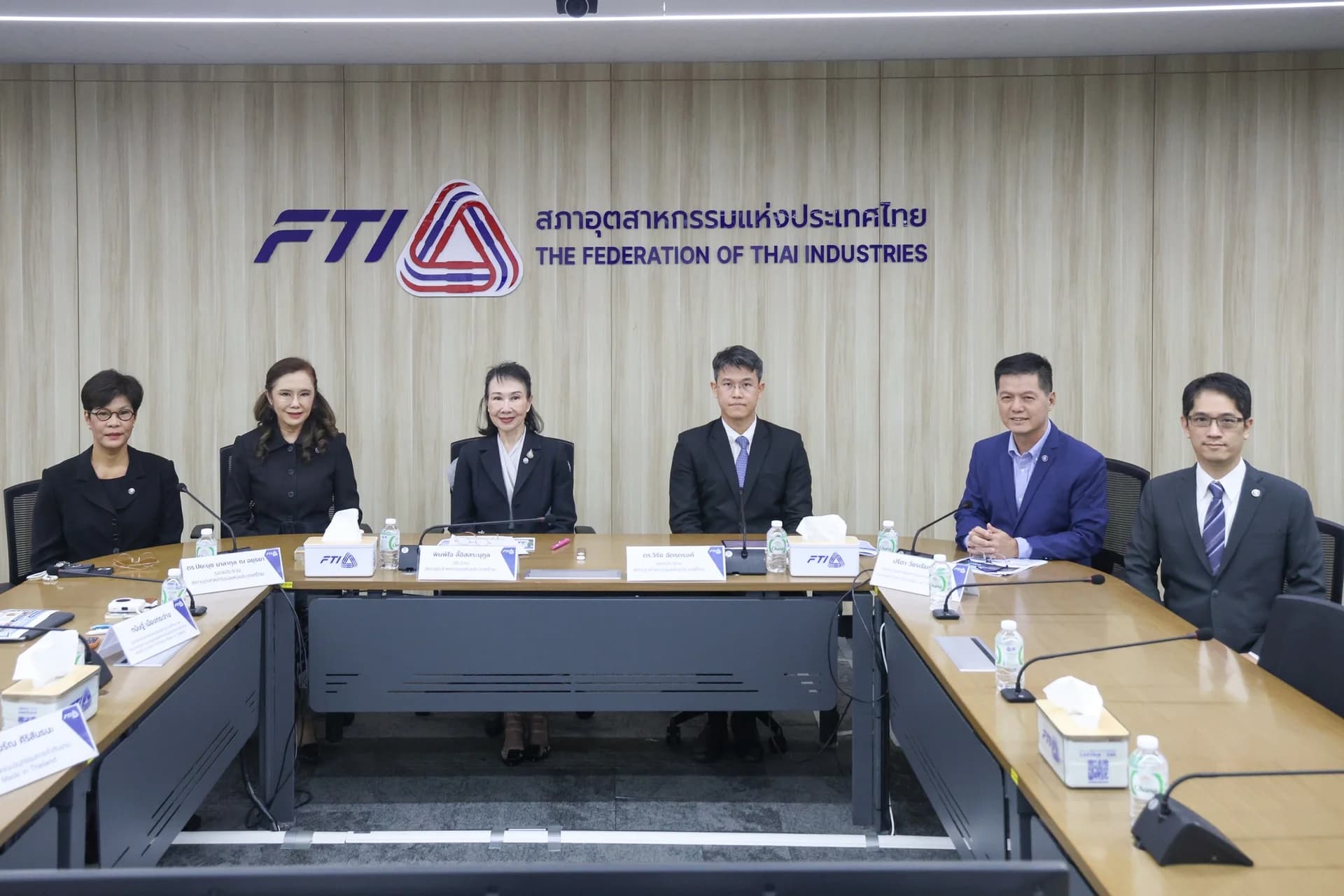
เมื่อวันศุกร์ที่ 21 มิถุนายน 2567 นางพิมพ์ใจ ลี้อิสสระนุกูล รองประธานสภาอุตสาหกรรมแห่งประเทศไทย (ส.อ.ท.) ร่วมงานสัมมนาเชิงปฏิบัติการเพื่อขับเคลื่อนนโยบาย 1 ครอบครัว 1 ซอฟต์พาวเวอร์ (OFOS Workshop) ซึ่งจัดโดยสำนักงานขับเคลื่อนการปฎิรูปประเทศ ยุทธศาสตร์ชาติ
และการสร้างความสามัคคีปรองดอง (สำนักงาน ป.ย.ป.) ณ ห้องเจ้าพระยา บอลรูม โรงแรมอนันตรา ริเวอร์ไซด์ กรุงเทพฯ รีสอร์ท โดยมีนายแพทย์สุรพงษ์ สืบวงศ์ลี ประธานคณะอนุกรรมการขับเคลื่อนนโยบาย 1 ครอบครัว 1 ทักษะซอฟต์พาวเวอร์ และ ดร.ชุติมา หาญเผชิญ ผู้อำนวยการสำนักงาน ป.ย.ป. พร้อมคณะอนุกรรมการขับเคลื่อนซอฟต์พาวเวอร์ ทั้ง 11 ด้าน และหน่วยงานที่เกี่ยวข้องทั้งภาครัฐ และเอกชน ร่วมหารือการพัฒนาหลักสูตร OFOS เพื่อเสริมสร้างศักยภาพของคนไทยให้เกิดการสร้างงาน สร้างรายได้
ดร.ชุติมา หาญเผชิญ ผู้อำนวยการสำนักงาน ป.ย.ป. กล่าวถึงวัตถุประสงค์การจัดงาน OFOS Workshop ว่าเป็นเวทีหารือการพัฒนาหลักสูตร OFOS ของแต่ละด้านอุตสาหกรรมซอฟต์พาวเวอร์
ทั้ง 11 ด้านให้ตอบโจทย์ความต้องการของผู้ประกอบการภาคเอกชน นำไปสู่การจับคู่งาน หรือ Job Matching ตลอดจนเพื่อแนะนำแนวทางการพัฒนามาตรฐานหลักสูตรและระบบคลังหน่วยกิตซอฟต์พาวเวอร์แห่งชาติ (National Soft Power Credit Bank) มุ่งสู่การสร้างหลักสูตร OFOS ที่มีคุณภาพต่อไป
นายแพทย์สุรพงษ์ สืบวงศ์ลี กล่าวถึงหลักสูตร OFOS นโยบายที่จะเปลี่ยนประเทศไทย
โดยกล่าวถึงวัตถุประสงค์ของการขับเคลื่อนซอฟต์พาวเวอร์ว่า มี 2 ประการ ได้แก่ 1. ต้องการสร้างเครื่องยนต์ขับเคลื่อนเศรษฐกิจให้สามารถนำพาประเทศไทยสู่ประเทศพัฒนา โดยการเพิ่มทักษะฝีมือของแรงงานภายในประเทศผ่านซอฟต์พาวเวอร์ เพื่อให้ประชาชนมีรายได้ที่สูงขึ้นและยกระดับคุณภาพชีวิตประชาชน 2. เพื่อสร้างโอกาสให้คนไทยทุกคน ลดความเหลื่อมล้ำในสังคม และลดจำนวนคนยากจนภายในประเทศ โดยยกตัวอย่างซอฟต์พาวเวอร์ไทยที่โด่งดังไปทั่วโลก อาทิ อาหารไทย และกีฬามวยไทย เป็นต้น ดังนั้น การพัฒนาทักษะของประชาชนจึงเป็นหัวใจหลักในการขับเคลื่อนประกอบกับการพัฒนาอุตสาหกรรมทั้งห่วงโซ่อุปทาน เพื่อสร้างเศรษฐกิจไทยที่เข้มแข็งและยั่งยืนต่อไป
ดร.สิริกร มณีรินทร์ ประธานคณะทำงานจัดการศึกษาหลักสูตร 1 ครอบครัว 1 ทักษะ
ซอฟต์พาวเวอร์ กล่าวถึงการจัดทำซอฟต์พาวเวอร์คลังหน่วยกิตแห่งชาติ (National Soft Power Credit Bank) ว่าเป็นมาตรฐานในการจัดทำหลักสูตรการเรียนรู้ และเมื่อผู้เรียนสำเร็จหลักสูตรสามารถเก็บสะสมหน่วยกิตได้ตลอดชีวิต เพื่อต่อยอดการเรียนรู้สู่ระดับที่สูงกว่าต่อไป ดังนั้น การขับเคลื่อนหลักสูตร OFOS จึงเป็นโอกาสการเรียนรู้ตลอดชีวิตครั้งใหญ่ และไร้รอยต่อ
ดร.ศุภฤกษ์ ภู่พงศ์ศักดิ์ รองผู้อำนวยการสำนักงาน ป.ย.ป. กล่าวถึงการดำเนินงานของสำนักงาน ป.ย.ป. ในการขับเคลื่อนนโยบาย OFOS ว่าสำนักงาน ป.ย.ป. ได้สำรวจหลักสูตรฝึกอบรมของหน่วยงานภาครัฐที่สอดคล้องกับ 11 อุตสาหกรรมซอฟต์พาวเวอร์ เพื่อให้คณะอนุกรรมการขับเคลื่อนอุตสาหกรรมซอฟต์พาวเวอร์ ได้ยืนยันว่าตอบโจทย์ความต้องการของอุตสาหกรรมซอฟต์พาวเวอร์ พร้อมรวบรวมหลักสูตรที่คณะอนุกรรมการขับเคลื่อนอุตสาหกรรมซอฟต์พาวเวอร์ด้านต่าง ๆ ได้จัดทำขึ้น จำนวนรวมทั้งสิ้น 225 หลักสูตร และสำนักงาน ป.ย.ป. ได้จัดทำภาพการทำงานร่วมกัน เพื่อสร้างระบบนิเวศรองรับหลักสูตร OFOS หรือ OFOS Ecosystem เพื่อให้การขับเคลื่อนนโยบาย 1 ครอบครัว 1 ทักษะซอฟต์พาวเวอร์ (OFOS) เป็นไปอย่างยั่งยืน
ทั้งนี้ รัฐบาลเตรียมเปิดตัวระบบลงทะเบียนระบบ OFOS ตามนโยบายสร้างคน ยกระดับศักยภาพ สร้างสรรค์ให้คนไทยมีทักษะสำหรับการประกอบอาชีพ โดยมีกำหนดการเริ่มลงทะเบียนอย่างเป็นทางการ ภายในงาน THACCA SPLASH: Soft Power Forum 2024 ในวันศุกร์ที่ 28 มิถุนายน 2567 เป็นต้นไป
นางพิมพ์ใจ ลี้อิสสระนุกูล รองประธานสภาอุตสาหกรรมแห่งประเทศไทย กล่าวถึงยุทธศาสตร์การขับเคลื่อนการดำเนินงานของสภาอุตสาหกรรมแห่งประเทศไทย (ส.อ.ท.) ที่มีความสอดคล้องกับนโยบายซอฟต์พาวเวอร์ เนื่องจากอุตสาหกรรมในประเทศไทยมีจำนวนทั้งสิ้น 46 อุตสาหกรรม โดยกว่าครึ่งมีความเกี่ยวข้องกับอุตสาหกรรมซอฟต์พาวเวอร์ ทั้งนี้ ส.อ.ท. มีความพร้อมในการร่วมขับเคลื่อนและพัฒนาซอฟต์พาวเวอร์ผ่าน 76 สภาอุตสาหกรรมทั่วประเทศ ซึ่งมีสมาชิกทั้งสิ้น 16,000 บริษัท ก้าวไปสู่เป้าหมายการสร้างคุณค่าซอฟต์พาวเวอร์ไทย สู่อุตสาหกรรมสร้างสรรค์อย่างยั่งยืน
ดร.วิศิษฐ์ ลิ้มลือชา รองประธานหอการค้าไทย กล่าวในประเด็นความร่วมมือเพื่อพัฒนาคุณภาพหลักสูตร OFOS ไปสู่ระบบซอฟต์พาวเวอร์คลังหน่วยกิตแห่งชาติ โดยระบุว่าปัจจุบันประเทศไทยมีอันดับ Global Soft Power Index 2024 ที่ 40 จากการจัดลำดับทั้งสิ้น 193 ประเทศ และเป็นอันดับที่ 3 ของอาเซียน ด้วยคะแนน 44.8 คะแนน โดยมองว่าการขับเคลื่อนซอฟต์พาวเวอร์การขับเคลื่อนจาก
ทุกภาคส่วนผ่าน 8 ปัจจัยสำคัญ ได้แก่ ภาคธุรกิจและการค้า การปกครอง ความสัมพันธ์ระหว่างประเทศ วัฒนธรรม การสื่อสาร การศึกษาและวิทยาศาสตร์ ประชาชนและค่านิยม เพื่อนำไปสู่ปัจจัยสุดท้าย คือ “อนาคตอันยั่งยืน”
On Friday, June 21, 2024, Ms. Pimjai Leeissaranukul, Vice President of the Federation of Thai Industries (FTI), attended the workshop to drive the 1 Family 1 Soft Power Policy (OFOS Workshop) organized by the Office of National Reform Strategy and Reconciliation (Office of the NRSC) at the Chaophraya Ballroom, Anantara Riverside Bangkok Resort. Dr. Surapong Suaiphonglee, Chairman of the Sub-Committee on Driving the 1 Family 1 Soft Skill Policy, and Dr. Chutima Harnphachai, Director of the Office of the NRSC, along with the sub-committee for soft power in all 11 sectors and relevant agencies from both the public and private sectors, discussed the development of the OFOS curriculum to enhance the capabilities of Thai people for job creation and income generation.
Dr. Chutima Harnphachai, Director of the Office of the NRSC, stated that the purpose of the OFOS Workshop was to serve as a forum for discussing the development of the OFOS curriculum within each of the soft power industry sectors, ensuring that it meets the needs of private sector entrepreneurs. This will lead to job matching as well as to introduce the development of standards for the curriculum and the National Soft Power Credit Bank, aiming for the creation of a quality OFOS curriculum in the future.
Dr. Surapong Suaiphonglee discussed the OFOS curriculum as a policy that aims to transform Thailand, outlining two objectives for driving soft power: 1. To create an engine for economic growth that propels Thailand into developed country status by enhancing the skills of the domestic workforce through soft power, ensuring that citizens achieve higher incomes and improved quality of life. 2. To create opportunities for all Thai citizens, reducing social inequality and poverty in the country, citing popular Thai soft power examples such as Thai cuisine and Muay Thai. Therefore, enhancing the skills of the people is the core of this initiative, along with developing the industry throughout the supply chain to build a strong and sustainable Thai economy.
Dr. Sirikorn Maneerin, Chair of the Working Group on the 1 Family 1 Soft Skill Curriculum, discussed the establishment of the National Soft Power Credit Bank as a standard for developing learning curricula. Once students complete the courses, they will be able to accumulate credits for lifelong learning, allowing them to progress to higher levels of education. Thus, driving the OFOS curriculum represents a significant and seamless lifelong learning opportunity.
Dr. Suphakrit Poopongsak, Deputy Director of the Office of the NRSC, discussed the Office’s efforts in promoting the OFOS policy, stating that the Office has surveyed training curricula from government agencies that align with the 11 soft power industries to confirm that they meet the industry’s needs. Additionally, the Office compiled a total of 225 courses developed by various subcommittees of the soft power industry. A collaborative framework has been established to create an ecosystem supporting the OFOS curriculum, or OFOS Ecosystem, to ensure the sustainability of the 1 Family 1 Soft Skill Policy (OFOS).
The government is preparing to launch the OFOS registration system under the policy of building human capacity and enhancing skills for the workforce, with official registration set to begin during the THACCA SPLASH: Soft Power Forum 2024 on Friday, June 28, 2024.
Ms. Pimjai Leeissaranukul highlighted the strategic approach of the Federation of Thai Industries (FTI) in alignment with the soft power policy, noting that Thailand has a total of 46 industries, over half of which relate to the soft power sectors. The FTI is ready to collaborate and develop soft power through 76 local industry councils across the nation, comprising 16,000 member companies, moving towards the goal of creating value for Thai soft power in a sustainable creative industry.
Dr. Wisit Limleucha, Vice Chairman of the Thai Chamber of Commerce, spoke on the collaboration to improve the quality of the OFOS curriculum towards the National Soft Power Credit Bank system. He noted that Thailand currently ranks 40th in the Global Soft Power Index 2024 out of 193 countries, and holds the 3rd position in ASEAN with a score of 44.8. He believes that the advancement of soft power is driven by all sectors through 8 key factors: business and trade, governance, international relations, culture, communication, education and science, the populace and values, leading to the final factor, "sustainable future."