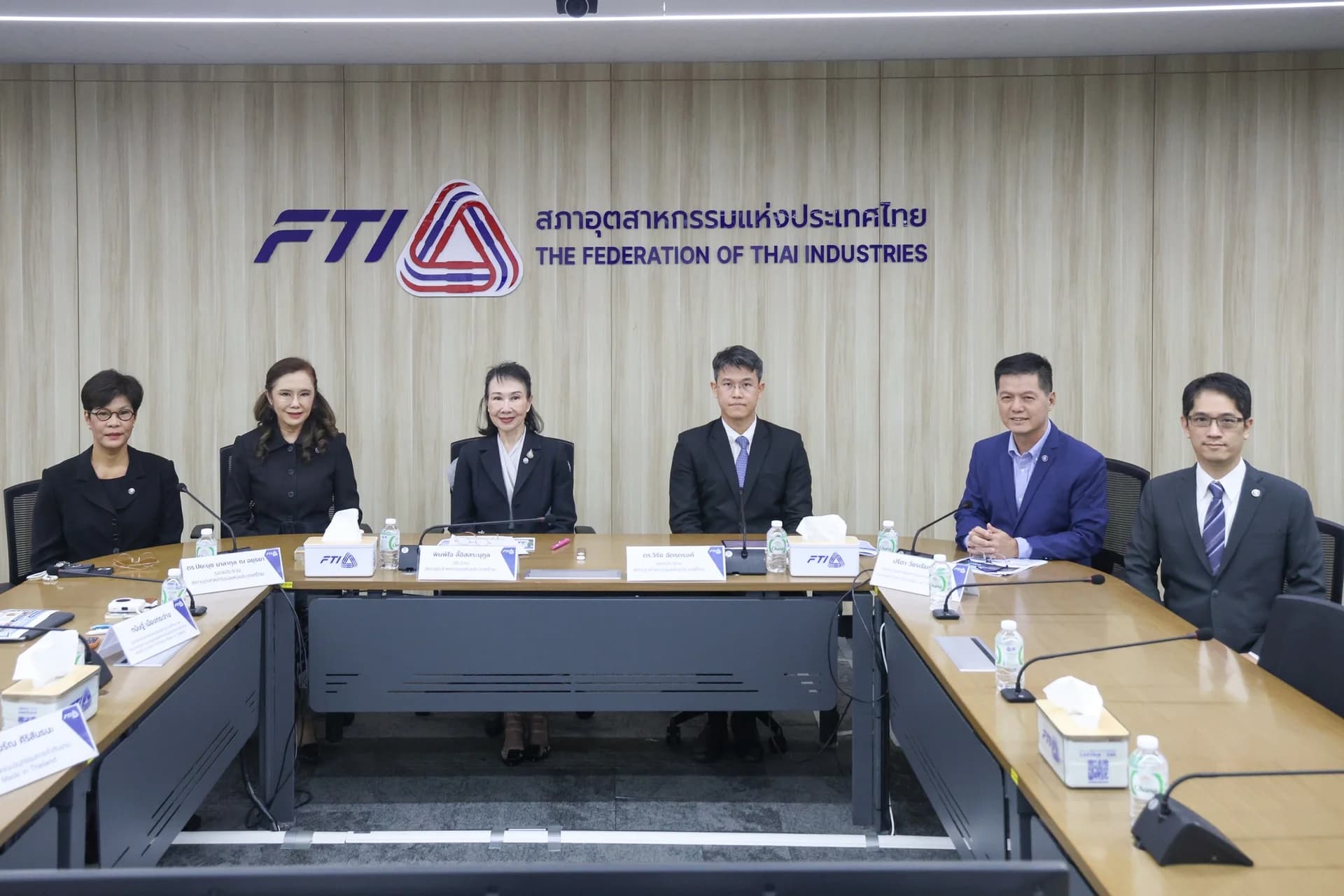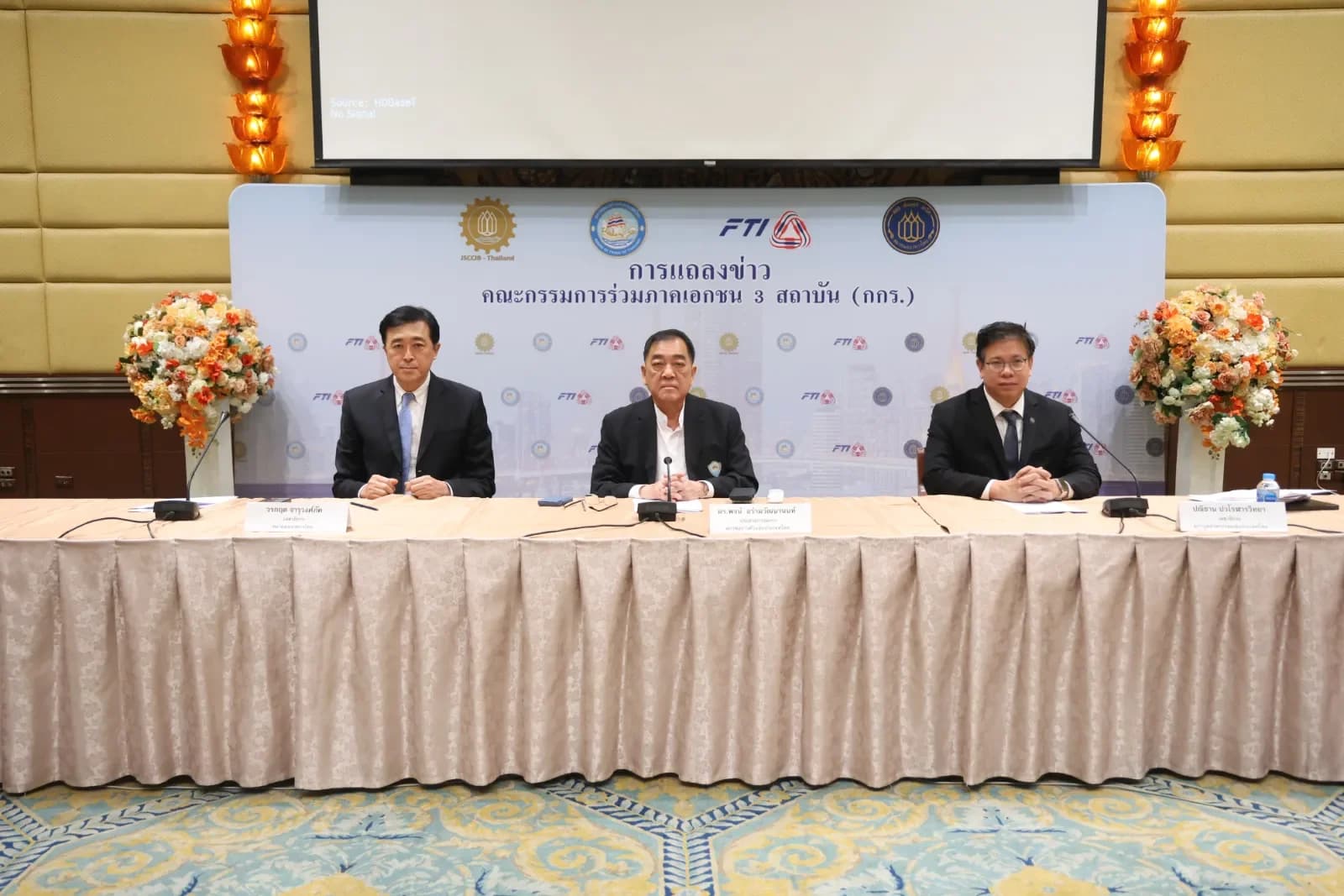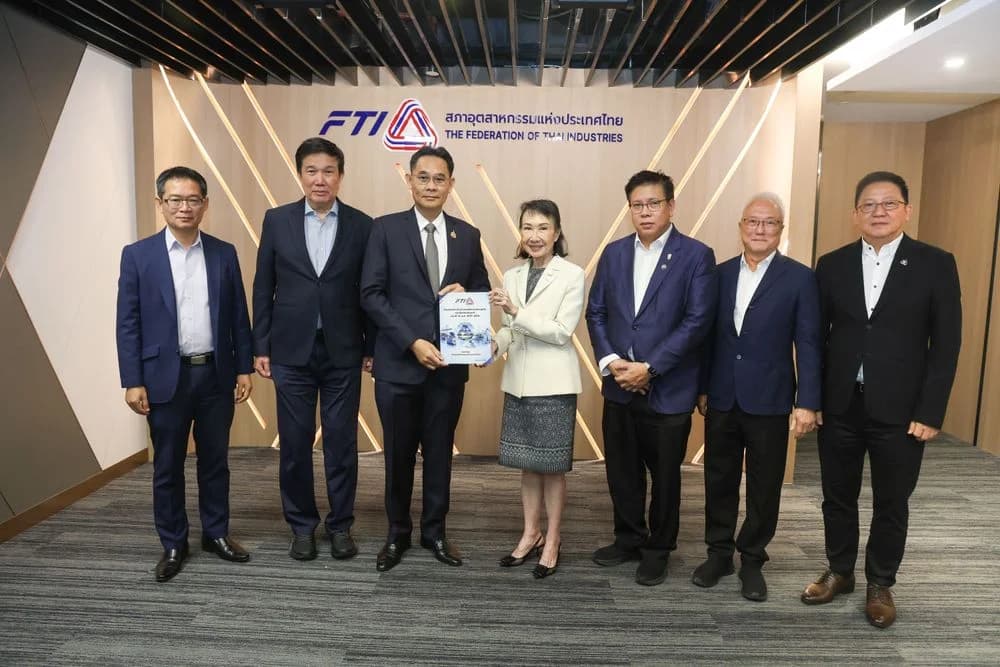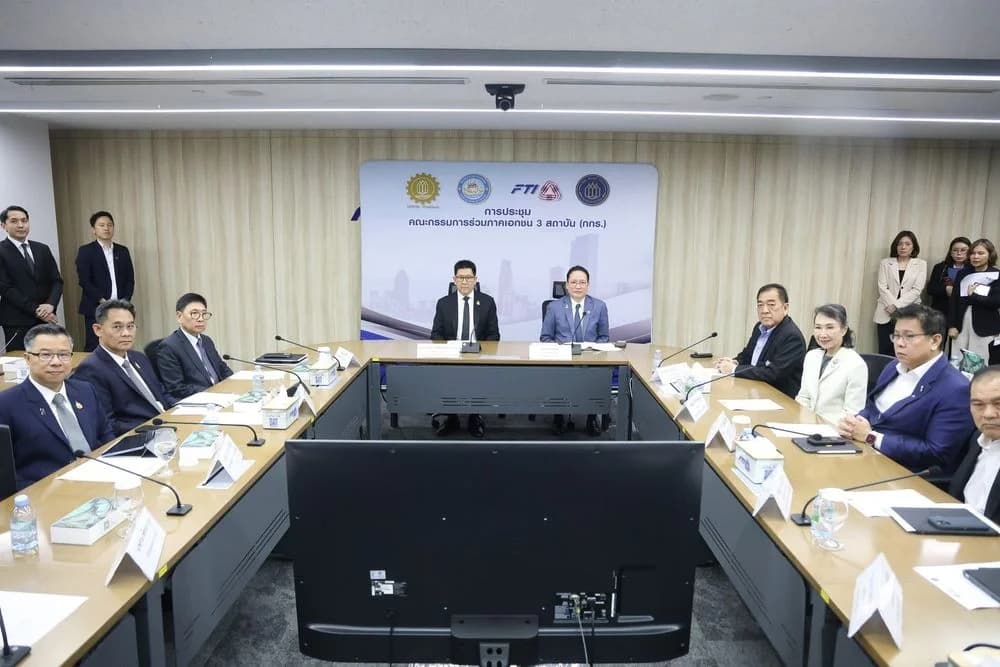

วันพุธที่ 6 มีนาคม 2567 นายเกรียงไกร เธียรนุกุล ประธานสภาอุตสาหกรรมแห่งประเทศไทย (ส.อ.ท.) เป็นประธานการประชุมคณะกรรมการร่วมภาคเอกชน 3 สถาบัน (กกร.) โดยมีนายจีรพันธ์ อัศวะธนกุล รองประธานกรรมการ สภาหอการค้าแห่งประเทศไทย และนายกอบศักดิ์ ดวงดี เลขาธิการสมาคมธนาคารไทย ร่วมในการแถลงข่าว
เศรษฐกิจโลกปี 2567 มีแนวโน้มเติบโตได้แต่ยังมีปัจจัยเสี่ยงอยู่มาก กิจกรรมทางเศรษฐกิจของประเทศหลักเดือนกุมภาพันธ์มีแนวโน้มเติบโตจากภาคบริการเป็นหลัก อย่างไรก็ตามเครื่องชี้เศรษฐกิจสหรัฐฯด้านแรงงานเริ่มมีแนวโน้มแผ่วลง ส่วนจีนนั้นมาตรการกระตุ้นเศรษฐกิจยังมีจำกัด สำหรับปัญหาวิกฤตในทะเลแดงส่งผลให้ค่าระวางเรือยังอยู่ในระดับสูง ปัจจัยเหล่านี้ถือเป็นแรงกดดันต่อการฟื้นตัวของภาคการส่งออกสินค้าไทย
เศรษฐกิจไทยยังอ่อนแอจากหลายปัจจัย โดยการส่งออกยังฟื้นตัวได้ช้า การท่องเที่ยวยังไม่กลับเข้าสู่ระดับเดิม และกำลังซื้อภายในประเทศถูกกดดันจากปัญหาหนี้ครัวเรือน แม้ภาคการส่งออกมีแนวโน้มกลับมาขยายตัวได้แต่คาดว่าทั้งปีมูลค่าการส่งออกจะเติบโตได้ในระดับต่ำ อีกทั้งความเสี่ยงจากปัจจัยภายนอกประเทศยังมีสูง ขณะที่อุตสาหกรรมที่พึ่งพาการส่งออกมีอัตราการใช้กำลังการผลิตอยู่ในระดับต่ำ สำหรับการท่องเที่ยวยังฟื้นตัวได้แต่จำนวนนักท่องเที่ยวชาวจีนยังต่ำกว่าระดับก่อนโควิดถึง 50% เนื่องจากชาวจีนหันไปท่องเที่ยวในประเทศเป็นหลัก นอกจากนี้ปัญหาหนี้และกำลังซื้อภายในประเทศที่มีแนวโน้มอ่อนแอจะเป็นปัจจัยกดดันการบริโภคของครัวเรือนต่อไป
การเบิกจ่ายงบประมาณภาครัฐมีแนวโน้มปรับดีขึ้นในไตรมาสที่ 2 จากปฏิทินงบประมาณรายจ่ายประจำปี 2567 ปรับเร็วขึ้น เพื่อให้สามารถเบิกจ่ายได้ตั้งแต่ต้นไตรมาสที่ 2 ซึ่งจะเป็นตัวช่วยในการประคองเศรษฐกิจให้ขับเคลื่อนได้อย่างต่อเนื่อง และจะหนุนการลงทุนทั้งภาครัฐและภาคเอกชนในระยะข้างหน้า ดังนั้น คาดว่าเศรษฐกิจไทยยังขยายตัวได้ในกรอบ 2.8-3.3% ตามที่ประเมินไว้เดิม
กรอบประมาณการเศรษฐกิจปี 2567 ของ กกร.
(ณ ธ.ค. 66) ปี 2566
GDP 1.9*
ส่งออก -1.7*
เงินเฟ้อ 1.2*
(ณ ก.พ. 67) ปี 2567
GDP 2.8 ถึง 3.3
ส่งออก 2.0 ถึง 3.0
เงินเฟ้อ 0.7 ถึง 1.2
(ณ มี.ค. 67) ปี 2567
GDP 2.8 ถึง 3.3
ส่งออก 2.0 ถึง 3.0
เงินเฟ้อ 0.7 ถึง 1.2
หมายเหตุ: *เลขจริง
กกร. ให้ความสำคัญกับกลไกการแก้ไขปัญหามลพิษทางอากาศ ผ่าน ร่าง พ.ร.บ. บริหารจัดการเพื่ออากาศสะอาด พ.ศ. … ที่ ครม. ได้มีมติรับหลักการ และมอบให้คณะกรรมาธิการวิสามัญ พิจารณาปรับแก้ไขร่าง พ.ร.บ. อยู่นั้น ดังนั้น เพื่อให้การกลไกการแก้ไขปัญหามลพิษทางอากาศมีความยั่งยืน และครอบคลุมปัญหาในทุกมิติทั้งจากปัญหา PM2.5 การเผาในที่โล่ง มลพิษจากภาคขนส่ง และมลพิษข้ามแดน กกร. จึงมีข้อเสนอแนะต่อการจัดทำ ร่าง พ.ร.บ. อากาศสะอาดฯ ดังนี้
1. เสนอให้มีผู้แทนภาคเอกชนจำนวน 4 ท่านเท่ากับภาคประชาชนเพื่อเข้าไปมีส่วนร่วมในคณะกรรมการขับเคลื่อน 3 คณะ ภายใต้ ร่าง พ.ร.บ.อากาศสะอาดฯ ประกอบด้วย 1) คณะกรรมการนโยบายอากาศสะอาด 2) คณะกรรมการบริหารจัดการเพื่ออากาศสะอาด 3) คณะกรรมการอากาศสะอาดจังหวัด เพื่อให้เกิดการบูรณาการความร่วมมือในการแก้ไขปัญหามลพิษทางอากาศอย่างยั่งยืน
2. บูรณาการการกำกับดูแล ด้านมาตรฐานคุณภาพอากาศสะอาด ดัชนีคุณภาพอากาศ และมาตรฐานการควบคุมต่างๆ เพื่อลดความซ้ำซ้อนในการปฏิบัติตามกฎหมายของแต่ละหน่วยงาน
3. ทบทวนการวางหลักประกันความเสียหายต่อสิ่งแวดล้อมในการขออนุญาตประกอบกิจการ โดยควรนำเอาระบบการซื้อประกันภัยมาใช้ทดแทนในกรณีที่เกิดความเสียหาย รวมทั้งปรับบทลงโทษผู้กระทำความผิดให้มีความเหมาะสมและเป็นธรรม
4. ทบทวนการปรับปรุงเงื่อนไขและข้อจำกัดการใช้เงินกองทุนสิ่งแวดล้อม เพื่อให้สามารถนำงบประมาณมาใช้ในการแก้ไขปัญหาได้อย่างมีประสิทธิภาพ รวมทั้งมีการกำหนดมาตรการทางเศรษฐศาสตร์ที่เหมาะสมกับสภาพเศรษฐกิจในปัจจุบัน
5. ศึกษาความเหมาะสมและรายละเอียดในร่าง พ.ร.บ. โดยเน้นกระบวนการการมีส่วนร่วมจากทุกภาคส่วน
ที่ประชุม กกร. มีความกังวลถึงเรื่องคุณภาพและมาตรฐานของผักและผลไม้ที่นำเข้ามาจำหน่ายภายในประเทศไทย โดยในเดือนมกราคมการนำเข้าสินค้าได้ปรับเพิ่มสูงขึ้นมาอยู่ที่ 13,275.20 ล้านบาท ขยายตัวร้อยละ 8.45 จากเดือนเดียวกันของปีก่อน ซึ่งการที่ผักและผลไม้มีการนำเข้าเพิ่มขึ้นจำนวนมาก ส่งผลให้ภาครัฐต้องเข้มงวดเรื่องการตรวจสอบคุณภาพเพิ่มขึ้น จึงเสนอให้หน่วยงานภาครัฐที่เกี่ยวข้อง ช่วยรัดกุมในการตรวจสอบคุณภาพและมาตรฐานของสินค้าผักและผลไม้ รวมทั้ง เพิ่มกำลังคนและเครื่องมืออุปกรณ์ในการตรวจสอบสินค้าผักและผลไม้ที่เข้ามาเป็นจำนวนมากในช่วงนี้ เพื่อความปลอดภัยของผู้บริโภคภายในประเทศ
——————————–
On Wednesday, March 6, 2024, Mr. Kriengkrai Thiennukul, Chairman of the Federation of Thai Industries (FTI), presided over the meeting of the Joint Private Sector Committee of Three Institutions (JPS), with Mr. Jirapan AsawanthanuKul, Vice Chairman of the Thai Chamber of Commerce, and Mr. Kobsak Duangdee, Secretary General of the Thai Bankers' Association, participating in the press conference.
The global economy in 2024 is projected to grow, although many risk factors remain. Economic activities in major countries in February show signs of growth, primarily driven by the service sector. However, labor indicators in the United States are starting to weaken, while stimulus measures in China remain limited. The ongoing crisis in the Red Sea has resulted in high freight rates, which is a pressure factor on the recovery of Thai exports.
The Thai economy continues to be weak due to several factors, with exports recovering slowly. Tourism has not returned to previous levels, and domestic purchasing power is pressured by household debt. While the export sector is showing signs of expansion, the overall export value for the year is expected to grow at a low level. Additionally, external risk factors remain high, and industries reliant on exports are operating at low capacities. Tourism is recovering, but the number of Chinese tourists is still 50% below pre-COVID levels as many Chinese travelers prefer domestic trips. Furthermore, the issues of debt and weak domestic purchasing power will continue to constrain household consumption.
Government budget disbursement is expected to improve in the second quarter, following the accelerated annual budget allocation timeline for 2024, allowing for spending from the beginning of the second quarter. This will help sustain the economy and support both public and private investments in the near term. Therefore, it is anticipated that the Thai economy will continue to expand within the estimated range of 2.8-3.3% as previously assessed.
Economic projections for 2024 by JPS
(as of December 2023) For 2023
GDP 1.9*
Exports -1.7*
Inflation 1.2*
(as of February 2024) For 2024
GDP 2.8 to 3.3
Exports 2.0 to 3.0
Inflation 0.7 to 1.2
(as of March 2024) For 2024
GDP 2.8 to 3.3
Exports 2.0 to 3.0
Inflation 0.7 to 1.2
Note: *actual figures
JPS emphasizes the importance of mechanisms to address air pollution issues through the draft Clean Air Management Act B.E. … which the Cabinet has agreed in principle to and assigned the special committee to review and amend the draft. Therefore, to ensure the sustainability of the air pollution mitigation mechanisms and to comprehensively address various problems, including PM2.5 pollution, open burning, transport sector pollution, and transboundary pollution, JPS proposes the following suggestions for the preparation of the draft Clean Air Act:
1. Propose that there be four private sector representatives equal to the number of public representatives to participate in the three committees under the draft Clean Air Act, consisting of 1) the Clean Air Policy Committee 2) the Clean Air Management Committee 3) the Provincial Clean Air Committee, to foster collaboration in sustainable air pollution mitigation.
2. Integrate oversight of clean air quality standards, air quality indices, and various control standards to reduce redundancy in compliance with the laws of different agencies.
3. Review damage assurance provisions for the environment in granting operational licenses, suggesting the adoption of an insurance system to cover potential damage and adjusting penalties for offenders to be appropriate and fair.
4. Review the conditions and limitations on the use of the Environmental Fund to ensure effective budget allocation for problem-solving, alongside establishing economic measures suitable for the current economic climate.
5. Study the suitability and details in the draft Act, emphasizing participatory processes from all sectors.
The JPS meeting expressed concerns regarding the quality and standards of imported vegetables and fruits sold within Thailand. In January, imports surged to 13.275 billion baht, increasing by 8.45% compared to the same month last year. The significant increase in vegetable and fruit imports has led the government to tighten quality inspections. Therefore, it is advised that relevant government agencies enhance their scrutiny of the quality and standards of vegetable and fruit products while increasing personnel and equipment to manage the influx of imported vegetables and fruits during this period, ensuring safety for domestic consumers.
——————————–