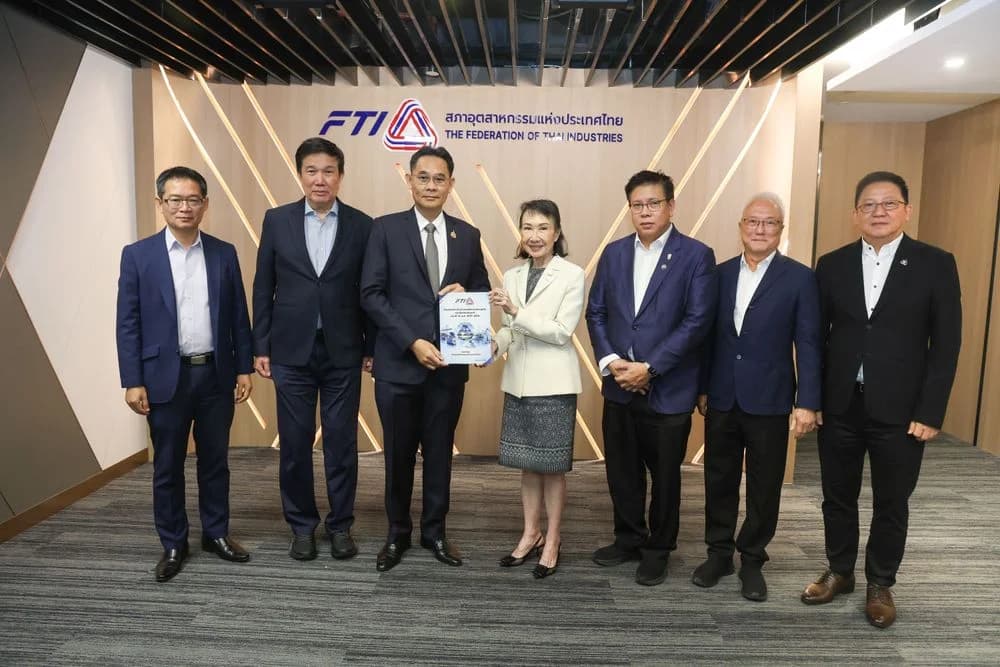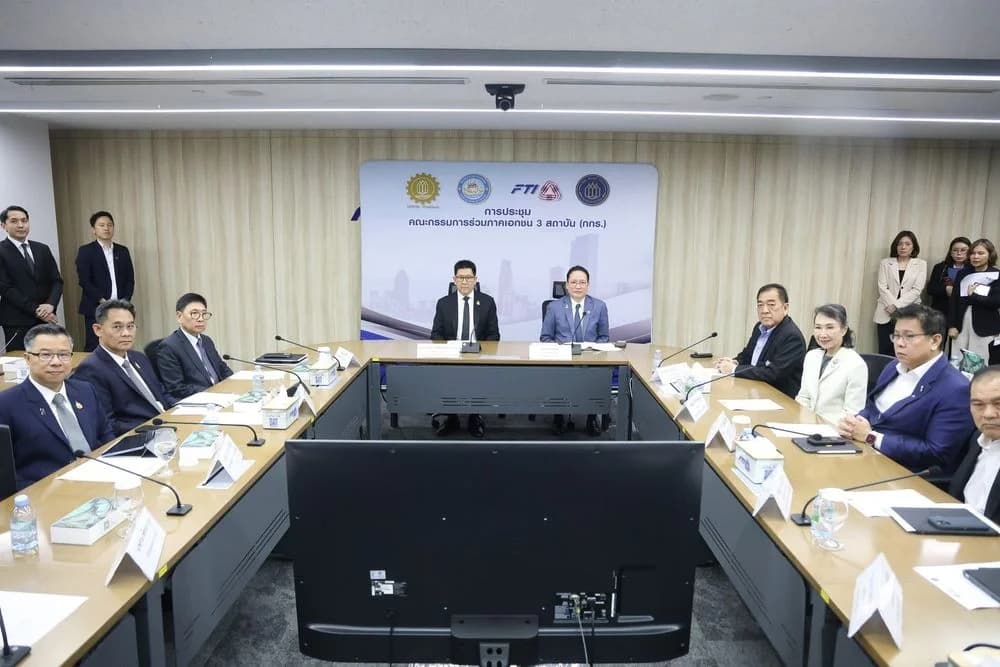

เมื่อวันที่ 3 สิงหาคม 2569 นางสุภาวดี โชคสกุลนิมิตร ประธานสภาอุตสาหกรรมภาคใต้ ในฐานะผู้แทนสภาอุตสาหกรรมแห่งประเทศไทย (ส.อ.ท.) เข้าร่วมประชุมคณะกรรมการนโยบายการประมงแห่งชาติ โดยมี ศ.ดร.ยศชนัน วงศ์สวัสดิ์ รองนายกรัฐมนตรี และรัฐมนตรีว่าการกระทรวงการอุดมศึกษา วิทยาศาสตร์ วิจัยและนวัตกรรม (อว.) เป็นประธาน ณ ทำเนียบรัฐบาล
ในช่วงกว่า 10 ปีที่ผ่านมา มาตรการทางกฎหมายในการควบคุมการประมงพาณิชย์ ส่งผลให้จำนวนเรือประมงในระบบลดลงอย่างมีนัยสำคัญ ปัจจุบันมีเรือที่ออกทำการประมงจริงเพียงประมาณ 30% ส่งผลกระทบต่อห่วงโซ่อุปทานและก่อให้เกิดภาวะขาดแคลนวัตถุดิบสัตว์น้ำในประเทศ
ส.อ.ท. จึงเสนอให้ภาครัฐร่วมทบทวน 4 ประเด็นสำคัญ เพื่อขับเคลื่อนการฟื้นฟูอุตสาหกรรมประมงและเสริมสร้างความมั่นคงด้านวัตถุดิบ ดังนี้
1. ทบทวนนโยบายการบริหารจัดการวัตถุดิบ
อุตสาหกรรมแปรรูปสัตว์น้ำขนาดกลางและขนาดใหญ่จำเป็นต้องนำเข้าวัตถุดิบจากต่างประเทศสูงถึง 95% เพื่อทดแทนปริมาณวัตถุดิบที่ขาดแคลน จึงเป็นโอกาสสำคัญที่ภาครัฐและภาคเอกชน จะร่วมกันทบทวนนโยบายและกำหนดแนวทางส่งเสริม โดยเฉพาะพื้นที่ภาคใต้ ซึ่งมีศักยภาพจากการมีชายฝั่งทะเลทั้งสองฝั่ง เพื่อดึงศักยภาพวัตถุดิบในประเทศกลับมาใช้ให้เกิดประโยชน์สูงสุด
2. ยกระดับมาตรฐานการกำกับดูแลการประมงอย่างเป็นระบบ
สนับสนุนให้ภาครัฐจัดทำมาตรฐานการกำกับดูแลการทำประมงให้มีความเป็นเอกภาพ ครอบคลุม และบังคับใช้อย่างเท่าเทียม ขณะเดียวกันควรคงมาตรการคุ้มครองกลุ่ม "ประมงพื้นบ้านดั้งเดิม" (เรือเครื่องท้ายที่ใช้แรงงานในครอบครัวไม่เกิน 3 คน) เพื่อรักษาวิถีชีวิตและภูมิปัญญาท้องถิ่นควบคู่กับการใช้ทรัพยากรอย่างยั่งยืน
3. ส่งเสริมมาตรการลดต้นทุนด้านพลังงาน
เสนอแนวทางช่วยเหลือด้านต้นทุนน้ำมันเชื้อเพลิงสำหรับเรือประมง เพื่อช่วยเสริมสภาพคล่องให้ผู้ประกอบการประมงพาณิชย์ที่ยังอยู่ในระบบสามารถออกทำการประมงได้อย่างต่อเนื่อง อันจะช่วยรักษาความต่อเนื่องของกิจกรรมทางเศรษฐกิจในภาคประมง
4. กระจายรายได้สู่ชุมชนและเศรษฐกิจท้องถิ่น
การออกเรือประมงพาณิชย์ 1 เที่ยว ก่อให้เกิดการใช้จ่ายหมุนเวียนประมาณ 600,000–900,000 บาท ผ่านการจัดซื้อเสบียง น้ำมัน ข้าวสาร อาหารแห้ง และอุปกรณ์ประมง ช่วยกระจายรายได้สู่ร้านค้าในชุมชน อีกทั้งเมื่อนำสัตว์น้ำกลับเข้าฝั่ง ยังช่วยสร้างมูลค่าเพิ่มและกระจายรายได้ต่อเนื่องไปยังแรงงาน ผู้ประกอบการ และประชาชนในพื้นที่อีกหลายทอด
ทั้งนี้ ส.อ.ท. พร้อมร่วมมือกับคณะกรรมการนโยบายการประมงแห่งชาติในการทบทวนและวางรากฐานนโยบายใหม่ โดยมุ่งผลักดันการทำงานเชิงรุกที่นำองค์ความรู้และงานวิจัยมาสนับสนุนการกำหนดนโยบาย เพื่อให้ชาวประมงและผู้ประกอบการสามารถกลับมาดำเนินธุรกิจได้อย่างเข้มแข็ง และร่วมขับเคลื่อนเศรษฐกิจไทยให้เติบโตอย่างมั่นคงและยั่งยืน
On August 3, 2026, Mrs. Supawadee Choksakun-Nimit, Chairperson of the Southern Industrial Council, representing the Federation of Thai Industries (FTI), attended a meeting of the National Fishery Policy Committee, chaired by Professor Dr. Yothachana Wongwasana, Deputy Prime Minister and Minister of Higher Education, Science, Research, and Innovation (MHESI), at Government House.
During the past decade, legal measures to regulate commercial fishing have significantly reduced the number of operating fishing vessels. Currently, only about 30% of these vessels are actively engaged in fishing, adversely affecting the supply chain and leading to a shortage of aquatic raw materials in the country.
FTI therefore proposed that the government review four critical issues to promote the revitalization of the fishing industry and enhance raw material security as follows:
1. Review of raw material management policies
The medium and large-scale seafood processing industry currently relies on imports for as much as 95% of its raw materials to compensate for the shortage. This presents a significant opportunity for the government and private sector to collaboratively review policies and establish promotional guidelines, particularly in the southern region, which has the potential from its dual coastlines to maximize the use of domestic raw material resources.
2. Elevate standards for systematic fishery supervision
Encourage the government to establish unified, comprehensive, and equitable fishery supervision standards. At the same time, measures to protect the “traditional small-scale fishing” groups (powered boats using familial labor not exceeding 3 individuals) should be maintained to preserve local livelihoods and wisdom while ensuring sustainable resource use.
3. Promote measures to reduce energy costs
Propose support mechanisms regarding fuel costs for fishing vessels to help maintain liquidity for commercial fishery operators still active in the system, ensuring the continuity of economic activities in the fishing sector.
4. Disseminate income to communities and local economies
A single commercial fishing trip generates approximately 600,000–900,000 Baht in circulating expenditures through the procurement of supplies, fuel, rice, dry food, and fishing gear, thereby redistributing income to local businesses. Furthermore, upon returning with aquatic resources, value is added and income is further disseminated to laborers, entrepreneurs, and residents in the area in several tiers.
FTI is ready to collaborate with the National Fishery Policy Committee in reviewing and establishing new policy foundations, focusing on proactive efforts that employ knowledge and research to support policy formulation, allowing fishermen and operators to robustly resume their businesses and collectively drive sustainable and stable growth for the Thai economy.