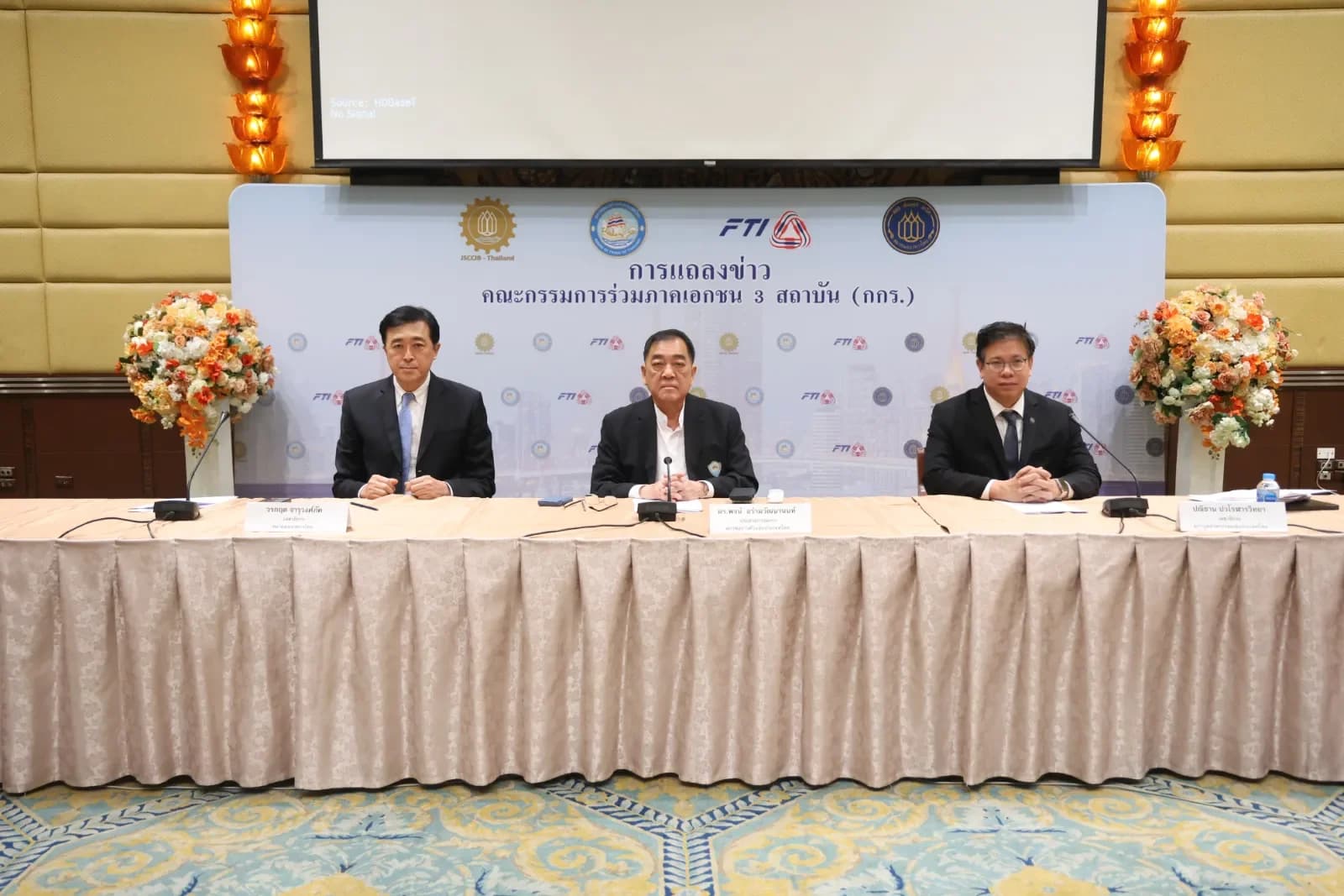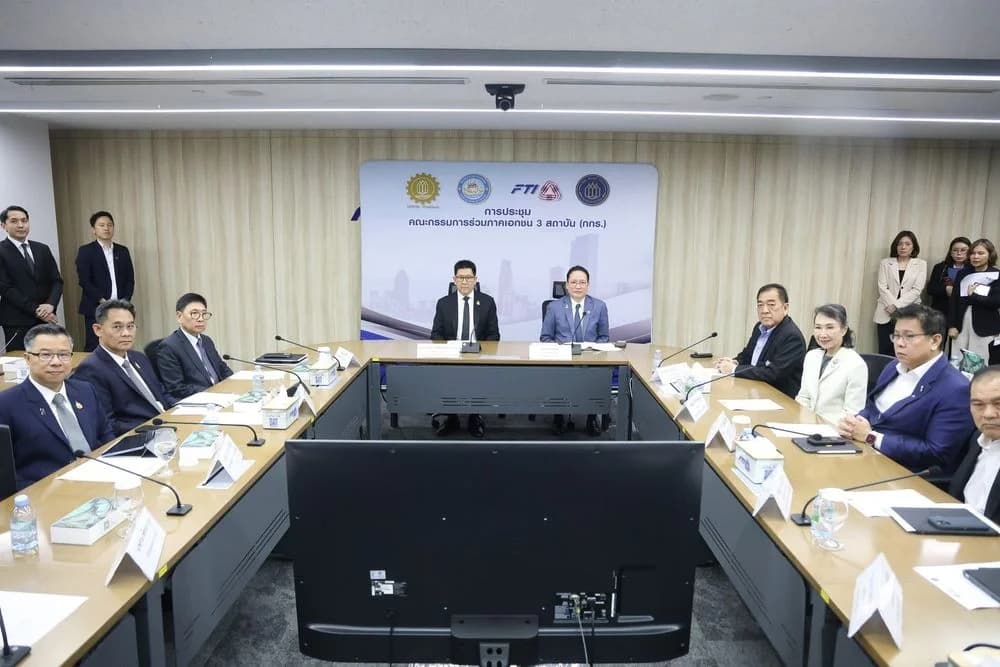

วันพุธที่ 4 กุมภาพันธ์ 2569 นายเกรียงไกร เธียรนุกุล ประธานสภาอุตสาหกรรมแห่งประเทศไทย (ส.อ.ท.) เป็นประธานการแถลงข่าว คณะกรรมการร่วมภาคเอกชน 3 สถาบัน (กกร.) โดยมี ดร.พจน์ อร่ามวัฒนานนท์ ประธานกรรมการหอการค้าไทยและสภาหอการค้าแห่งประเทศไทย และนายผยง ศรีวณิช ประธานสมาคมธนาคารไทย ร่วมในการแถลงข่าว ณ ศูนย์การประชุมแห่งชาติสิริกิติ์
ปัจจัยด้านภูมิรัฐศาสตร์และความไม่แน่นอนจากมาตรการภาษีสหรัฐฯ เป็นความเสี่ยงหลักของเศรษฐกิจโลกปี 2569 สะท้อนจาก Global Risks Report ของ World Economic Forum ที่ระบุว่าปัจจัยด้าน Geoeconomics เป็นความเสี่ยงอันดับหนึ่งของโลกและสูงขึ้นกว่าปีที่แล้ว
อีกทั้ง เหตุการณ์ด้านภูมิรัฐศาสตร์ที่เกิดขึ้นต่อเนื่องตั้งแต่ต้นปี ส่งผลให้ตลาดการเงิน โดยเฉพาะค่าเงินและราคาทองคำผันผวน โดยมาตรการภาษีของสหรัฐฯ
ในปีนี้มีอีกอย่างน้อย 9 รายการสินค้าที่อยู่ในข่ายถูกเก็บภาษีนำเข้าเพิ่มเติม โดยมีมูลค่าการส่งออกไปสหรัฐฯ 4.5 หมื่นล้านดอลลาร์ สรอ. หรือคิดเป็น 63% ของมูลค่าการส่งออกไทยไปสหรัฐฯ ในปี 2568 โดยเฉพาะ Semiconductor ที่ขยายตัวสูงถึง 53%
กกร. มีความกังวลต่อเศรษฐกิจไทยปี 2569 ที่มีแนวโน้มโตต่ำกว่า 2% และมีความเสี่ยงเพิ่มเติมจากการจัดทำงบประมาณปี 2570
ที่อาจล่าช้า โดยล่าสุด สศค. คาดการณ์การใช้จ่ายภาครัฐจะลดลงจากปีก่อนหน้า โดยเฉพาะด้านการลงทุน ขณะที่ข้อมูลจากกรมบัญชีกลาง
ณ วันที่ 31 มกราคม 2569 ระบุว่ามีการเบิกจ่ายงบลงทุนแล้ว จำนวน 176,655 ล้านบาท หรือคิดเป็นร้อยละ 21.57 ซึ่งต่ำกว่าเป้าหมาย ณ สิ้นเดือนมกราคม 2569 ที่กำหนดไว้ร้อยละ 26 สะท้อนถึงความล่าช้าในการดำเนินโครงการลงทุนภาครัฐ
นอกจากนี้ กกร.มุ่งหวังให้การเปลี่ยนผ่านทางการเมืองหลังการเลือกตั้งเป็นไปอย่างราบรื่น เพื่อให้การดำเนินนโยบายเศรษฐกิจมีความต่อเนื่อง ปรับลดกฎระเบียบเพื่อส่งเสริมความสามารถในการแข่งขัน และการเข้าสู่ระบบของ SMEs ให้แต้มต่อสินค้า Made in Thailand และสนับสนุนการลงทุนเพื่อยกระดับศักยภาพธุรกิจ สอดคล้องกับแนวทาง “Reinvent Thailand” เพื่อการเติบโตอย่างยั่งยืนของไทย
กรอบประมาณการเศรษฐกิจปี 2569 ของ กกร.
ปี 2568 (ณ ธ.ค. 68)
4GDP 2.0
ส่งออก 12.9*
เงินเฟ้อ -0.1*
ปี 2569 (ณ ธ.ค.68 – ม.ค. 69)
4GDP 1.6 ถึง 2.0
ส่งออก -1.5 ถึง -0.5
เงินเฟ้อ 0.2 ถึง 0.7
ปี 2569 (ณ ก.พ. 69)
4GDP 1.6 ถึง 2.0
ส่งออก -1.5 ถึง -0.5
เงินเฟ้อ 0.2 ถึง 0.7
หมายเหตุ: *เลขจริง
ที่มา: สศช. พณ. และประมาณการโดย กกร.
กกร. ขอขอบคุณกระทรวงการคลัง และธนาคารแห่งประเทศไทย ที่ดำเนินการเชิงรุกในการแก้ปัญหาธุรกรรมทองคำที่มีผลต่อการเคลื่อนไหวของค่าเงินบาท
ผ่านการควบคุมธุรกรรมซื้อขายทองคำในสกุลเงินบาทบนแพลตฟอร์มออนไลน์ อย่างไรก็ตาม ในระยะถัดไป หน่วยงานที่เกี่ยวข้องยังต้องร่วมกันสร้างกลไกและเครื่องมือในการตรวสอบอย่างเป็นระบบ เชื่อมโยงข้อมูลอย่างรอบด้าน และปรับเปลี่ยนกฎระเบียบ เพื่อป้องกันและปิดช่องว่างการทำธุรกรรมอื่นๆ
ที่อาจกระทบค่าเงินบาท อาทิ การซื้อขายสินทรัพย์ดิจิทัล ที่พบว่าการซื้อขายสินทรัพย์ดิจิทัลผ่านแพลตฟอร์มในไทยเป็น USDT ในระดับสูง และมีสัดส่วนของนักลงทุนต่างประเทศค่อนข้างสูง โดยการเคลื่อนไหวของอัตราแลกเปลี่ยนระหว่าง USDT กับเงินบาท เสมือนกับการเคลื่อนไหวของอัตราแลกเปลี่ยนระหว่าง USD กับเงินบาท เป็นต้น
กกร. แสดงความกังวลต่อนโยบายหาเสียงของพรรคการเมือง ที่ส่วนใหญ่ที่มักให้ความสำคัญกับนโยบายประชานิยมและการกระตุ้นเศรษฐกิจระยะสั้น ซึ่งใช้งบประมาณสูงมาก มากกว่าการลงทุนเพื่อปรับโครงสร้างเศรษฐกิจในระยะยาว รวมถึงขาดนโยบายในการสร้างรายได้ให้ประเทศอย่างเป็นระบบและยั่งยืน ขณะเดียวกัน พรรคการเมืองควรตระหนักถึงข้อจำกัดด้านพื้นที่ทางนโยบายการคลัง (Fiscal Space) จากระดับหนี้สาธารณะที่ปรับสูงขึ้น
โดย ณ เดือนธันวาคม 2568 หนี้สาธารณะคงค้างอยู่ที่ 12.45 ล้านล้านบาท หรือคิดเป็นร้อยละ 66.09 ต่อ GDP ซึ่งเข้าใกล้กรอบวินัยการคลังที่กฎหมายกำหนดไว้ไม่เกินร้อยละ 70 ต่อ GDP ทำให้การกำหนดนโยบายด้านการใช้จ่ายมีข้อจำกัดมากขึ้น
กกร. เห็นว่าการกำหนดนโยบายเศรษฐกิจในระยะต่อไปควรให้ความสำคัญกับการวางยุทธศาสตร์การเติบโตในระยะยาว ควบคู่กับการใช้ทรัพยากรทางการคลังอย่างมีประสิทธิภาพ โดยมุ่งเสริมสร้างฐานรายได้ใหม่ให้ประเทศ ผ่านการเพิ่มผลิตภาพของภาคการผลิต การยกระดับขีดความสามารถของผู้ประกอบการ โดยเฉพาะ SMEs การพัฒนาเทคโนโลยีและนวัตกรรม ตลอดจนการสร้างระบบเศรษฐกิจที่มีเสถียรภาพ สามารถรองรับความผันผวนในอนาคต และเติบโตได้อย่างมั่นคง สมดุล และยั่งยืน สอดคล้องกับ spirit ของ Reinvent
Thailand
On Wednesday, February 4, 2026, Mr. Kriangkrai Theeranukool, President of the Federation of Thai Industries (FTI), presided over a press conference of the Joint Private Sector Committee of 3 Institutions (JCC), with Dr. Photch Aramwattananon, Chairman of the Thai Chamber of Commerce and the Council of Thai Chambers of Commerce, and Mr. Payong Srivanit, President of the Thai Bankers' Association, attending the press conference at the Queen Sirikit National Convention Center.
The geopolitical factors and uncertainties from U.S. tax measures pose significant risks to the global economy in 2026, as reflected in the Global Risks Report by the World Economic Forum, which identifies geoeconomic factors as the top risk in the world, increasing from the previous year.
Furthermore, ongoing geopolitical events since the beginning of the year have led to fluctuations in financial markets, particularly in currency and gold prices, due to U.S. tax measures. This year, at least nine items are subject to additional import taxes, with an export value to the United States of $45 billion, accounting for 63% of Thailand's exports to the U.S. in 2025, particularly in semiconductors, which grew by 53%.
The JCC expresses concerns about the Thai economy in 2026, predicting growth below 2%, with additional risks stemming from the preparation of the 2027 budget that may be delayed. Recently, the Office of the National Economic and Social Development Council (NESDC) has forecast that public spending will decrease from the previous year, particularly in terms of investment. Data from the Comptroller General’s Department as of January 31, 2026, indicates that budget disbursement reached 176.655 billion baht, representing 21.57%, which is below the target set at 26% by the end of January 2026, reflecting delays in public investment projects.
Additionally, the JCC hopes for a smooth political transition following the elections to ensure continuity in economic policy, reduce regulations to enhance competitiveness, and support SMEs to gain advantages for products made in Thailand, as well as promote investment to elevate business potential in line with the "Reinvent Thailand" approach for sustainable growth.
The JCC's economic projections for 2026 are as follows:
For 2025 (as of December 2025)
GDP: 2.0
Exports: 12.9*
Inflation: -0.1*
For 2026 (as of December 2025 – January 2026)
GDP: 1.6 to 2.0
Exports: -1.5 to -0.5
Inflation: 0.2 to 0.7
For 2026 (as of February 2026)
GDP: 1.6 to 2.0
Exports: -1.5 to -0.5
Inflation: 0.2 to 0.7
Note: *Actual numbers
Source: NESDC, Ministry of Commerce, and estimates by the JCC.
The JCC expresses gratitude to the Ministry of Finance and the Bank of Thailand for proactively addressing gold transaction issues that impact the movement of the baht through the control of gold transactions denominated in baht on online platforms. However, in the future, relevant agencies must work together to establish mechanisms and tools for systematic monitoring, connect comprehensive data, and adjust regulations to prevent and close gaps in other transactions that may affect the baht, such as trading in digital assets, which has been found to have a high level of USDT trading on platforms in Thailand, with a relatively high proportion of foreign investors. The exchange rate movements between USDT and the baht mirror those between USD and the baht, among others.
The JCC expresses concerns regarding the election policies of political parties, which often emphasize populist policies and short-term economic stimulus, incurring high budgets compared to investments for long-term economic restructuring, as well as a lack of policies to create systematic and sustainable revenue for the country. At the same time, political parties should be mindful of the fiscal space limitations due to the rising public debt, which was recorded at 12.45 trillion baht, or 66.09% of GDP, as of December 2025, nearing the fiscal sustainability threshold set by law at 70% of GDP, making the formulation of expenditure policies increasingly constrained.
The JCC believes that future economic policy formulation should emphasize long-term growth strategies while effectively utilizing fiscal resources, focusing on creating new revenue streams for the country through increasing the productivity of the manufacturing sector, enhancing the capabilities of entrepreneurs, particularly SMEs, developing technology and innovation, as well as establishing a resilient economy capable of withstanding future fluctuations and achieving stable, balanced, and sustainable growth, in line with the spirit of Reinvent Thailand.