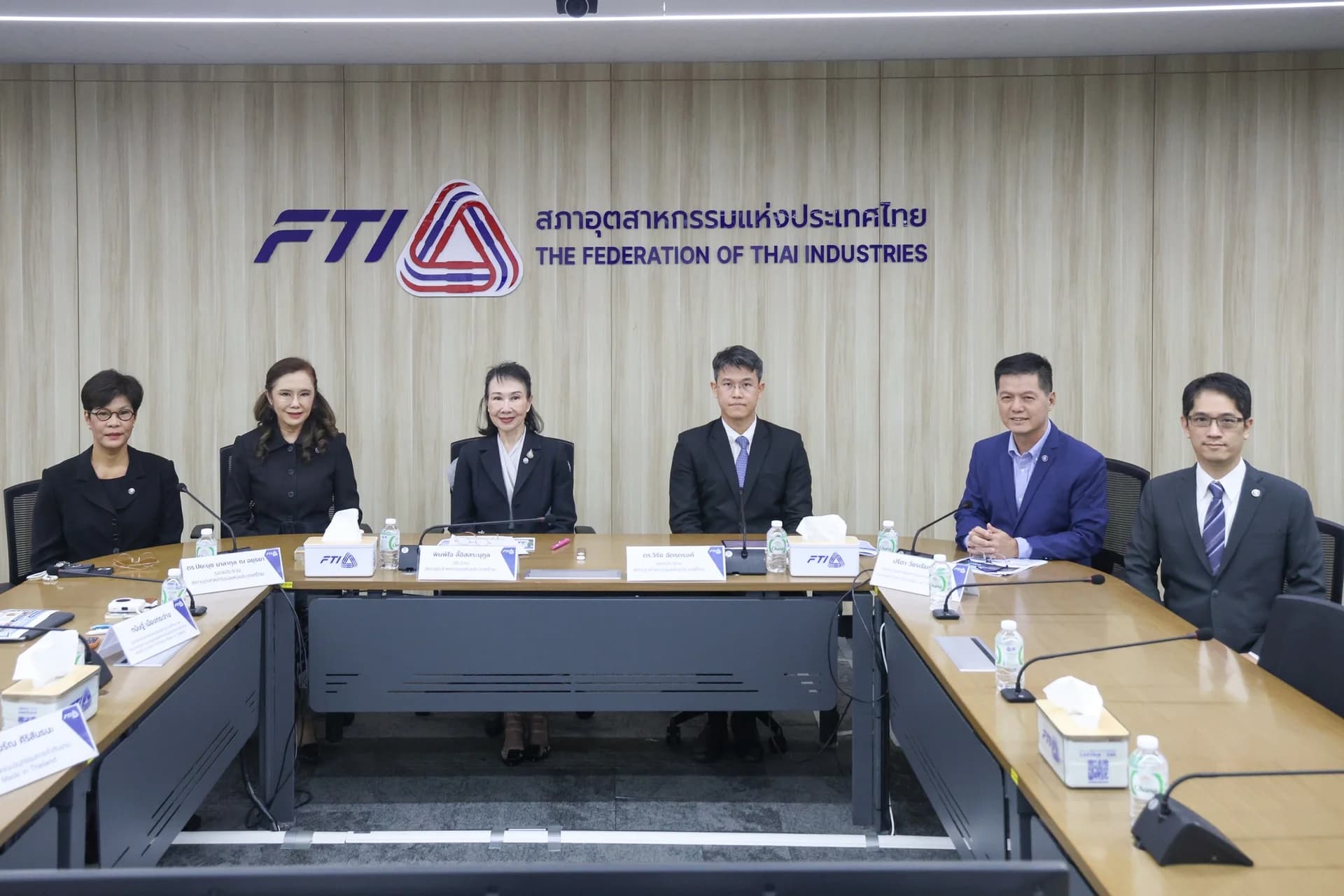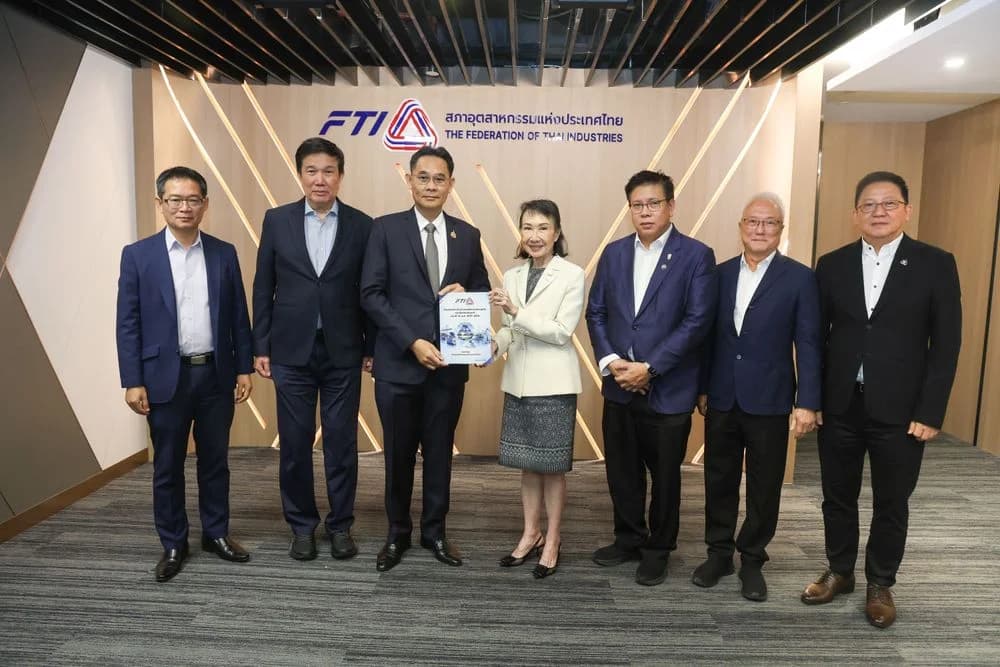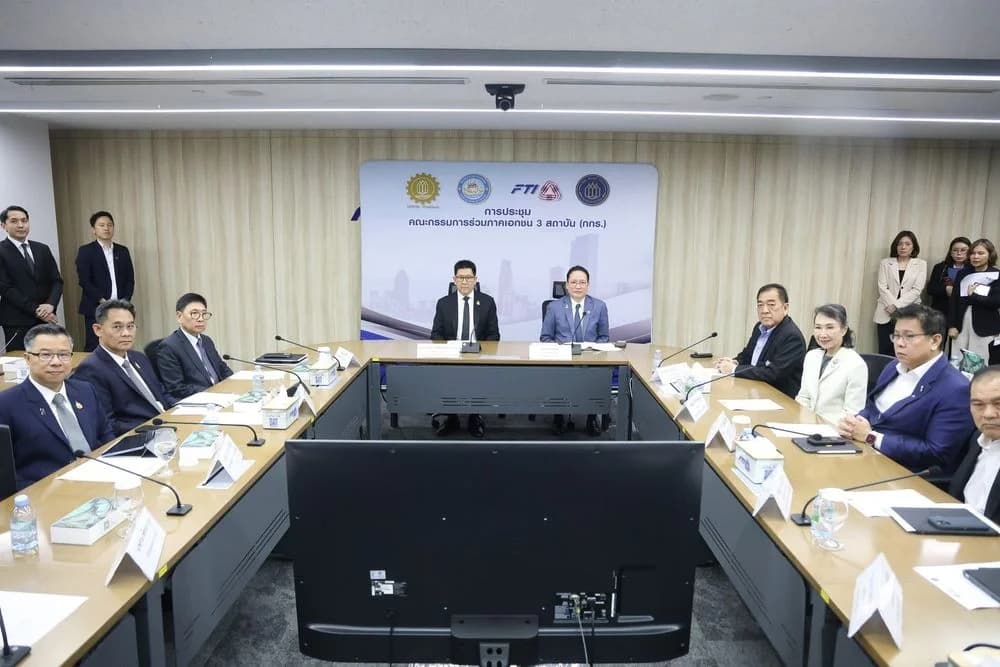
วันอังคารที่ 3 กุมภาพันธ์ 2569 นายเกรียงไกร เธียรนุกุล ประธานสภาอุตสาหกรรมแห่งประเทศไทย (ส.อ.ท.) พร้อมด้วยคณะผู้บริหาร ส.อ.ท. ให้การต้อนรับคณะผู้บริหารพรรคเศรษฐกิจ นำโดย พล.อ.รังษี กิติญาณทรัพย์ หัวหน้าพรรคเศรษฐกิจ พร้อมนายทนง ขันทอง นายกสมาคมสื่อมวลชนนานาชาติ ประเทศไทย IMCT นายศรัทธา คชพลายุกต์ กรรมการบริหารพรรค รศ.ดร. กิตติ ลิ่มสกุล ประธานที่ปรึกษาคณะทำงานด้านเศรษฐกิจ ดร. อัครเวช โชตินฤมล หัวหน้าคณะทำงานด้านเศรษฐกิจ นายณัฐพงษ์ จิตต์เจริญ คณะทำงานด้านเศรษฐกิจ และนายชัชพล บุญธนาพิบูลย์ คณะทำงานและเลขานุการคณะทำงานด้านเศรษฐกิจ เพื่อแลกเปลี่ยนมุมมองและข้อเสนอเชิงนโยบายในการขับเคลื่อนภาคอุตสาหกรรมไทย ท่ามกลางความท้าทายทางเศรษฐกิจทั้งในและต่างประเทศ มุ่งเสริมสร้างขีดความสามารถการแข่งขัน และวางรากฐานการพัฒนาอย่างยั่งยืนในอนาคต ณ ห้อง Passion (802) ชั้น 8 ส.อ.ท.
นายเกรียงไกร เธียรนุกุล ประธานสภาอุตสาหกรรมแห่งประเทศไทย (ส.อ.ท.) กล่าวถึงภาพรวมเศรษฐกิจไทยในปัจจุบันว่า อยู่ในภาวะที่ต้องเร่งฟื้นฟู เปรียบเสมือน “รถติดหล่ม” ซึ่งจำเป็นต้องอาศัยพลังจากทุกภาคส่วน และมาตรการที่เข้มข้น เป็นรูปธรรม และต่อเนื่อง เพื่อกระตุ้นเศรษฐกิจให้กลับมาเดินหน้าได้โดยเฉพาะการผลักดันนโยบายภาครัฐที่มุ่งเพิ่มรายได้ ลดรายจ่าย แก้ไขปัญหาหนี้ เสริมสภาพคล่องและฟื้นภาคการท่องเที่ยวให้กลับมาเป็นหนึ่งในเครื่องยนต์หลักของเศรษฐกิจไทยอีกครั้งหนึ่ง
ทั้งนี้ กองทุนการเงินระหว่างประเทศ (IMF) ประเมินว่าเศรษฐกิจไทยในปี 2569 จะมีอัตราการเติบโตของ GDP อยู่ที่ร้อยละ 1.6 ชะลอตัวลงจากร้อยละ 2.1 ในปี 2568 ซึ่งสอดคล้องกับการคาดการณ์ของคณะกรรมการร่วมภาคเอกชน 3 สถาบัน (กกร.) ภายใต้ความเสี่ยงทางเศรษฐกิจรอบด้าน และแนวโน้มการขาดดุลการค้าที่เพิ่มขึ้น แม้การส่งออกบางกลุ่ม เช่น กลุ่มอิเล็กทรอนิกส์ จะเริ่มมีสัญญาณฟื้นตัวก็ตาม รวมทั้ง GDP ไทยกำลังถูกเพื่อนบ้านแซง อีก 6 ปี จะร่วงจากอันดับที่ 2 เป็นอันดับที่ 5 ของอาเซียน
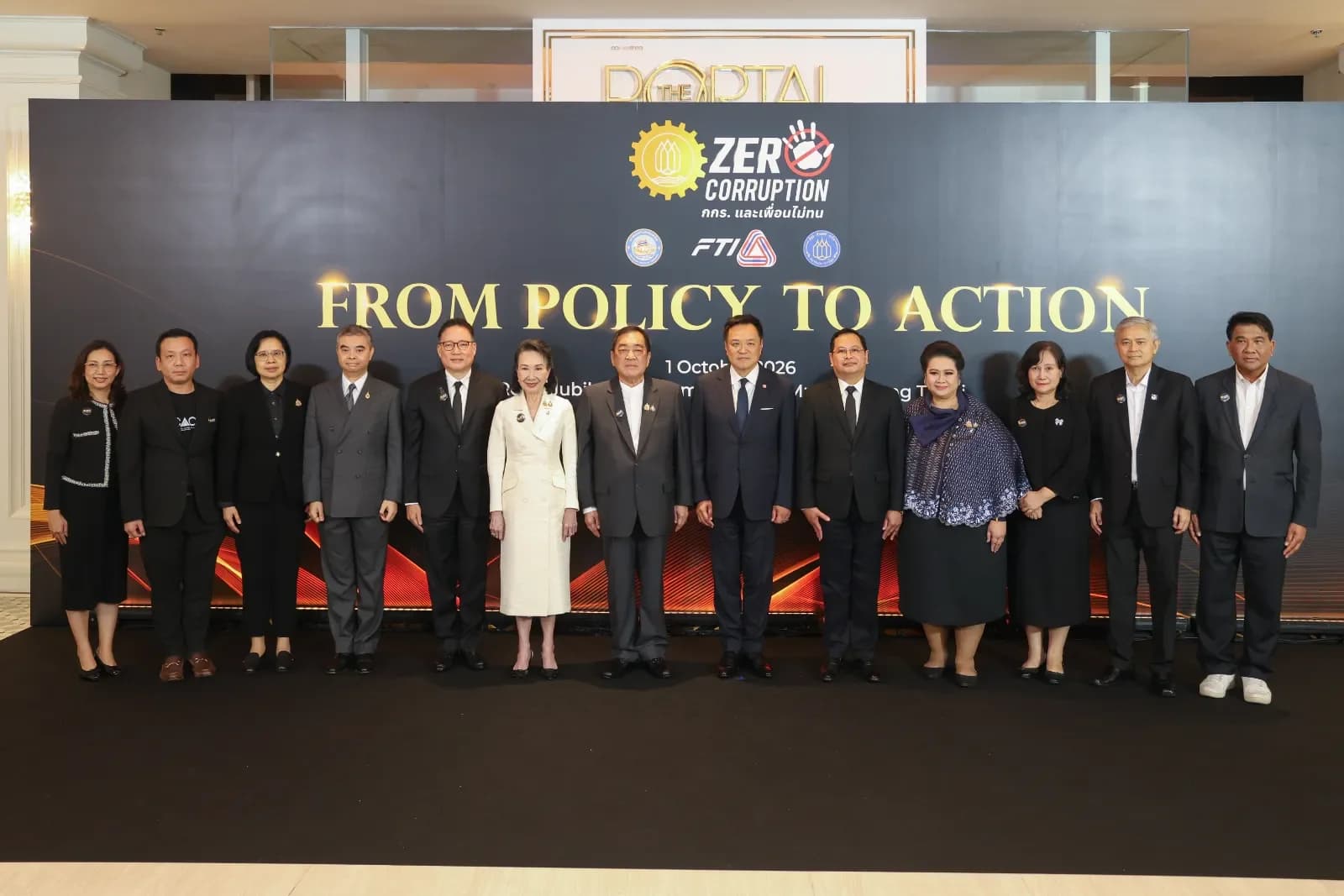
ในโอกาสนี้ นายเกรียงไกร ได้สะท้อนความท้าทายสำคัญที่ภาคอุตสาหกรรมไทยกำลังเผชิญ ทั้งจากปัจจัยภายนอกและภายในประเทศ อาทิ มาตรการทางภาษีของสหรัฐอเมริกา ปัญหาสินค้าทุ่มตลาดและการสวมสิทธิ์ส่งออก สงครามการค้า ความขัดแย้งทางภูมิรัฐศาสตร์ ข้อพิพาทพื้นที่ชายแดน รวมถึงปัญหาหนี้ครัวเรือนและหนี้ภาคธุรกิจ ค่าเงินบาทแข็งค่า ผลกระทบจากการเปลี่ยนแปลงสภาพภูมิอากาศ การเปลี่ยนแปลงทางเทคโนโลยีอย่างรวดเร็ว ธุรกิจสีเทาและอาชญากรรมทางไซเบอร์ ตลอดจนปัญหาเชิงโครงสร้าง เช่น การเข้าสู่สังคมผู้สูงอายุ การติดกับดักรายได้ปานกลาง ระบบการศึกษา เสถียรภาพทางการเมือง ความไม่ต่อเนื่องของนโยบาย งบประมาณที่ไม่สมดุล กฎหมายที่ล้าสมัยและคอร์รัปชัน ที่ขณะนี้ กกร. ได้ออกแคมเปญรณรงค์การต่อต้านคอร์รัปชัน ภายใต้ชื่อ “Zero Corruption: กกร. และเพื่อนไม่ทน” โดยมีกรอบการดำเนินงาน 6 ด้าน คือ การปลูกฝังจิตสำนึก นโยบายต่อต้านการทุจริต ระบบบริหารความเสี่ยง การเปิดเผยข้อมูลภาครัฐ เทคโนโลยีและแนวทางการร้องเรียน
ส.อ.ท. ขับเคลื่อน 46 กลุ่มอุตสาหกรรมดั้งเดิม เพื่อยกระดับขีดความสามารถในการแข่งขัน และปัจจุบัน ประเทศไทยได้ปรับโมเดลไปสู่อุตสาหกรรมแห่งอนาคต เพื่อปรับตัวและรับมือกับความเปลี่ยนแปลงของโลกที่เกิดขึ้นอย่างรวดเร็ว รวมทั้งสร้างเครื่องยนต์ใหม่ขับเคลื่อนเศรษฐกิจ โดยขับเคลื่อนอุตสาหกรรมใหม่ทั้งหมด 2 กลุ่ม คือ กลุ่มอุตสาหกรรมการบินและอวกาศ และกลุ่มอุตสาหกรรมป้องกันประเทศ
จากสถานการณ์ดังกล่าว ส.อ.ท. จึงได้เสนอแนวทางการพัฒนาอุตสาหกรรมไทยใน 8 ด้านสำคัญ ได้แก่ การปฏิรูปกฎหมายและกฎระเบียบ การพัฒนากำลังคนและเพิ่มผลิตภาพแรงงาน การบริหารจัดการพลังงาน การส่งเสริมการส่งออกและอุตสาหกรรมเป้าหมาย การยกระดับเทคโนโลยีและนวัตกรรม การพัฒนาอุตสาหกรรมอย่างยั่งยืน การสนับสนุนผู้ประกอบการ SMEs และการพัฒนาโครงสร้างพื้นฐานด้านโลจิสติกส์และพื้นที่อุตสาหกรรม เพื่อเสริมสร้างขีดความสามารถในการแข่งขันของประเทศในระยะยาว
นอกจากนี้ ส.อ.ท. ยังได้มอบหนังสือ Reinvent Thailand ให้แก่พรรคเศรษฐกิจ ซึ่งรวบรวมข้อเสนอแนะเชิงนโยบาย เพื่อให้ภาครัฐนำไปใช้เป็นแนวทางในการกำหนดนโยบายที่สามารถปฏิบัติได้จริง โดยมุ่งหวังให้ภาคเอกชนเป็นกลไกหลักในการขับเคลื่อนเศรษฐกิจ ภาครัฐทำหน้าที่สนับสนุนและสร้างสภาพแวดล้อมที่เอื้อต่อการปรับตัว ขณะที่ภาคการเงินช่วยจัดสรรทรัพยากรอย่างมีประสิทธิภาพ เพื่อร่วมกันสร้างอนาคตประเทศไทยที่เติบโตอย่างมั่นคงและยั่งยืน
ทั้งนี้ ส.อ.ท. พร้อมสนับสนุนการพัฒนา 6 Sectors ตั้งต้น ที่มีความสำคัญต่อเศรษฐกิจไทย ได้แก่
• Smart Electronics ฐานการผลิตอิเล็กทรอนิกส์ระดับกลาง–ปลายทางของบริษัทรายใหญ่ของโลก ซึ่งมีศักยภาพในการต่อยอดสู่ฐานการออกแบบและนวัตกรรม
• Automotive ฐานการผลิตยานยนต์รายใหญ่ที่สุดในอาเซียน มีห่วงโซ่อุปทานครบวงจรและเข้มแข็ง พร้อมต่อยอดสู่ยานยนต์ไฟฟ้า (EV) และยานยนต์อัจฉริยะ
• Retail & Trading ตลาดค้าปลีกและค้าส่งขนาดใหญ่ที่ตอบโจทย์ผู้บริโภคหลากหลายระดับรายได้ และกระจายตัวครอบคลุมทุกพื้นที่
• Medical & Wellness อุตสาหกรรมที่มีมาตรฐานการบริการเป็นที่ยอมรับในระดับสากล และมีข้อได้เปรียบด้านวัตถุดิบภายในประเทศในการผลิตยาและเวชภัณฑ์
• Agri & Food Processing อุตสาหกรรมที่มีความพร้อมด้านวัตถุดิบการเกษตรและห่วงโซ่อุปทานครบตั้งแต่ต้นน้ำถึงปลายน้ำ พร้อมยกระดับสู่สินค้ามูลค่าเพิ่มสูง
• Tourism ภาคการท่องเที่ยวที่มีความหลากหลายของแหล่งท่องเที่ยว เอกลักษณ์ทางวัฒนธรรมและอาหาร และมีศักยภาพในการดึงดูดนักท่องเที่ยวคุณภาพสูง
ทั้ง 6 Sectors จะมีบทบาทสำคัญต่อการขับเคลื่อนเศรษฐกิจ การสร้างการจ้างงาน และการเติบโตของ SMEs รวมถึงเชื่อมโยงกับอุตสาหกรรม New S-Curve ที่จะเป็นแรงขับเคลื่อนเศรษฐกิจไทยในอนาคต
ด้าน พล.อ.รังษี กิติญาณทรัพย์ หัวหน้าพรรคเศรษฐกิจ กล่าวถึงแนวคิดและนโยบายในการขับเคลื่อนเศรษฐกิจและอุตสาหกรรมของพรรคฯ เพื่อนำพาประเทศไปสู่ความมั่งคั่งและพลิกฟื้นประเทศได้ทันที โดยมี 5 นโยบายหลักสำคัญ ที่จะตอบโจทย์แนวทางการพัฒนาอุตสาหกรรมไทยของ ส.อ.ท. ประกอบด้วย
1. โครงการขนส่งยุทธศาสตร์: รถไฟความเร็วสูง พัฒนารถไฟความเร็วสูงเชื่อมประเทศเพื่อนบ้านและภูมิภาค เพื่อเป็นศูนย์กลางโลจิสติกส์ และเพื่อเอื้อประโยชน์ต่อการลงทุน โดยเฉพาะอุตสาหกรรมที่ย้ายฐานการผลิต
2. โครงการ “OCEAN LINK” เชื่อมผ่านระหว่างมหาสมุทรอินเดีย-ชายฝั่งทะเลอันดามัน-ชุมพร-อ่าวไทย-มหาสมุทรแปซิฟิก กระตุ้นการค้า การลงทุน และเศรษฐกิจชายฝั่ง ทั้ง 2 โครงการข้างต้นนี้เป็นโครงการเมกะโปรเจ็ก ตรงกับยุทธศาสตร์ One Belt One Road ของประเทศจีน ซึ่งพรรคฯ ได้มีการเจรจากับรัฐบาลจีนถึงความเป็นไปได้ของโครงการนี้แล้ว ยังสามารถสร้างงาน สร้างอาชีพได้อย่างมหาศาล ทั้งภาคบริการ ภาคอุตสาหกรรม ภาคการเกษตร และภาคการท่องเที่ยว ที่จะเติบโตไปพร้อมกัน ตลอดจนสามารถสร้าง GDP ได้มากถึง 3 เท่า ย่อมเกิดขึ้นได้อย่างแน่นอน
3. ปราบทุจริตอย่างเด็ดขาด — Zero Corruption พรรคฯ มีนโยบาย “ถอนรากถอนโคน” บุคคล 3 ประเภท ที่มักร่วมกันฉ้อโกง ได้แก่ นักธุรกิจ ข้าราชการและนักการเมือง โดยจะกำหนดโทษสูงสุดทั้งฝั่งผู้ให้และผู้รับถึงขั้นประหารชีวิต สำหรับเจ้าหน้าที่รัฐหรือข้าราชการที่ทำผิดมาตรา 157 (ฉ้อราษฎร์บังหลวง) โดยไม่มีการลดหย่อนโทษ เพื่อป้องกันการทุจริตอย่างจริงจัง ซึ่งเชื่อว่าการคอร์รัปชันจะหายไป 50 %
4. ปฏิรูปกระบวนการยุติธรรม ผู้บังคับใช้กฎหมายต้องเด็ดขาดตั้งแต่ต้นน้ำจนถึงปลายน้ำ โดยต้องปรับระบบงานตำรวจและการสืบสวนสอบสวนออกจากกัน เพื่อให้กระบวนการยุติธรรมมีประสิทธิภาพ โปร่งใส และลดความเหลื่อมล้ำ โดยตั้งหน่วยสอบสวนกลางแยกจากตำรวจเดิม
5. ลดค่าไฟฟ้าทั่วประเทศ เสนอให้ลดค่าไฟฟ้าจากประมาณ 3.94 บาท/หน่วย เหลือ 2.80 บาท/หน่วย เพื่อลดภาระค่าครองชีพของประชาชน โดยจะมีรัฐเข้ามาบริหารจัดการพลังงานและคอร์รัปชันในระบบไฟฟ้า
รัฐบาลภายใต้การนำของพรรคเศรษฐกิจ จะให้บริษัทที่ผูกขาดด้านราคาพลังงานดำเนินนโยบายที่คำนึงถึง ผลประโยชน์ของชาติ รวมทั้งจะเข้าไปปรับปรุงราคาก๊าซในภาคอุตสาหกรรมปิโตรเคมีให้เป็นไปตามต้นทุนจริง และยกเลิกการนำราคาจากภาคส่วนดังกล่าวมาถัวเฉลี่ยกับราคาก๊าซที่ใช้ในการผลิตกระแสไฟฟ้าภาคครัวเรือน นอกจากนี้ ยังมีนโยบายควบรวมกิจการของการไฟฟ้าฝ่ายผลิตแห่งประเทศไทย (กฟผ.) การไฟฟ้าส่วนภูมิภาค (กฟภ.) และการไฟฟ้านครหลวง (กฟน.) เข้าด้วยกัน เพื่อลดความซ้ำซ้อนและเพิ่มประสิทธิภาพในการบริหารจัดการ ซึ่งมาตรการทั้งหมดนี้จะช่วยให้สามารถปรับลดค่าไฟฟ้าลงได้อย่างเป็นรูปธรรม
นอกเหนือจากนโยบายข้างต้นนี้ พรรคฯ จะผลักดันประเทศไทยเข้าเป็นสมาชิกกลุ่ม BRICS ให้สำเร็จ เพื่อแก้ปัญหาสงครามการค้า อำนาจการต่อรอง และขยายผลทางยุทธศาสตร์ การสนับสนุนการใช้เทคโนโลยี AI โดยการนำโรบอตเข้ามาช่วยในการทำงาน ซึ่งสอดรับกับแนวทางของ ส.อ.ท. อีกเช่นกัน รวมถึงการจัดตั้งโรงงานแปรรูปให้กลุ่มเกษตรกร จะเป็นการปฏิรูปภาคการเกษตรครั้งใหญ่ของประเทศไทย
อย่างไรก็ตาม พล.อ.รังษี ยังกล่าวเพิ่มเติมอีกว่า “หากพรรคฯ ได้เป็นรัฐบาล ภายในระยะเวลา 100 วัน จะเร่งดำเนินการปฏิรูปกฎหมาย ตั้งคณะทำงานปรับปรุงกระบวนการยุติธรรม ยกเลิก MOU 43-44 ปราบสแกมเมอร์ ตั้งคณะทำงานกำหนดนโยบายเขตอุตสาหกรรมการเกษตร ตั้งคณะทำงานตรวจสอบที่ราชพัสดุที่ถูกนำไปใช้อย่างผิดกฎหมาย และตั้งคณะทำงานการพัฒนาชายฝั่งทะเลอันดามัน-อ่าวไทย
สุดท้ายนี้ ตนและผู้บริหารพรรคฯ ขอขอบคุณสภาอุตสาหกรรมแห่งประเทศไทย ที่ให้เกียรติได้เข้ามาประชุมหารือเพื่อแลกเปลี่ยนข้อคิดเห็นต่าง ๆ รวมถึงสถานการณ์ปัจจุบันของภาคอุตสาหกรรมเพื่อให้พรรคฯ ใช้เป็นแนวทางในการพัฒนาเศรษฐกิจอุตสาหกรรมต่อไป”
ทั้งนี้ พรรคฯ มุ่งเน้นการสร้างงาน สร้างรายได้ และเพิ่มศักยภาพเศรษฐกิจในทุกระดับ มีนโยบายโดยรวมที่ต้องการสร้างรายได้ให้ประชาชนสูงขึ้น รวมถึงการพัฒนาพื้นที่เศรษฐกิจใหม่ๆ ทั้งด้านเกษตร อุตสาหกรรมและบริการ เพื่อเร่งการเติบโตของประเทศในระยะยาว
................................................................................
เผยแพร่โดย ฝ่ายสื่อสารองค์กร สภาอุตสาหกรรมแห่งประเทศไทย (โทร. 0-2345-1051)
On Tuesday, February 3, 2026, Mr. Kriangkrai Theeranukul, Chairman of the Federation of Thai Industries (FTI), together with FTI executives, welcomed the executive committee of the Economic Party, led by General Rangsit Kitiyanasup, Party Leader, along with Mr. Tanong Kanthong, President of the International Media Association, Thailand IMCT, Mr. Saththa Kochpalayuk, Executive Board Member, Assoc. Prof. Dr. Kitti Limsakul, Senior Economic Advisor, Dr. Akkarawej Chotinurak, Head of the Economic Working Group, Mr. Natthapong Jitjaroen, Economic Working Group, and Mr. Chatchapol Boonthanapiboon, Working Group Member and Secretary of the Economic Working Group, to exchange perspectives and policy proposals to drive the Thai industrial sector amid the economic challenges both domestically and internationally, aiming to enhance competitive capabilities and lay the foundation for sustainable development in the future at the Passion Room (802), 8th floor, FTI.
Mr. Kriangkrai Theeranukul, Chairman of the Federation of Thai Industries (FTI), stated that the current overview of the Thai economy is in need of urgent recovery, likening it to a “car stuck in a mud pit” that requires power from all sectors and strong, concrete, and continuous measures to stimulate the economy to move forward, especially the promotion of government policies aimed at increasing income, reducing expenses, resolving debt issues, enhancing liquidity, and revitalizing the tourism sector to once again become a main driver of the Thai economy.
Moreover, the International Monetary Fund (IMF) estimates that the Thai economy in 2026 will have a GDP growth rate of 1.6%, slowing from 2.1% in 2025, which aligns with the predictions of the Joint Private Sector Committee of three institutions (Juristic) amid various economic risks and increasing trade deficit trends, even though certain export sectors, such as electronics, are beginning to show signs of recovery. Additionally, Thailand's GDP is being outpaced by neighboring countries and is projected to drop from 2nd to 5th position in ASEAN within the next six years.
On this occasion, Mr. Kriangkrai reflected on the significant challenges faced by the Thai industrial sector, including external and internal factors such as the United States' tax measures, dumping of products and export right abuses, trade wars, geopolitical conflicts, border disputes, household and business debt issues, the strengthening Thai Baht, impacts from climate change, rapid technological shifts, grey businesses and cybercrime, as well as structural issues such as the aging society, middle-income trap, education system, political stability, inconsistent policies, unbalanced budgets, outdated laws, and corruption. Currently, the Juristic has launched an anti-corruption campaign under the name “Zero Corruption: Juristic and Friends Will Not Stand It” with an operational framework in six areas: fostering awareness, anti-corruption policy, risk management systems, public information disclosure, technology, and complaint mechanisms.
The FTI drives 46 traditional industrial groups to enhance competitive capabilities, and currently, Thailand has adjusted its model towards future industries to adapt to the rapid changes in the world and create new engines to drive the economy, by promoting entirely new industries, specifically in the aviation and aerospace sectors and the defense industries.
In light of the aforementioned situation, the FTI proposed eight key directions for the development of the Thai industry, including legal and regulatory reforms, human resource development and workforce productivity enhancement, energy management, promotion of exports and targeted industries, technology and innovation enhancement, sustainable industrial development, support for SMEs, and development of logistics infrastructure and industrial areas to strengthen the nation’s long-term competitive capabilities.
In addition, the FTI presented the book “Reinvent Thailand” to the Economic Party, which compiles policy recommendations for the government to utilize as a practical guideline for policy formulation, hoping that the private sector will be the main driver of the economy while the government supports and creates an environment conducive to adaptation, while the financial sector effectively allocates resources to jointly build a future for Thailand that grows sustainably and steadily.
Furthermore, the FTI is prepared to support the development of six key sectors that are crucial to the Thai economy, including:
• Smart Electronics: A manufacturing base for mid-to-high-end electronics of large global companies, which has potential for an upgrade to design and innovation base.
• Automotive: The largest automotive manufacturing base in ASEAN with a complete and strong supply chain, ready to transition to electric vehicles (EV) and smart vehicles.
• Retail & Trading: A large retail and wholesale market that caters to consumers at various income levels and is distributed across all areas.
• Medical & Wellness: An industry with internationally recognized service standards, having domestic raw material advantages for the production of medicines and medical supplies.
• Agri & Food Processing: An industry well-prepared in terms of agricultural raw materials and complete supply chain from upstream to downstream, ready to elevate to higher-value products.
• Tourism: A tourism sector with diversified attractions, unique culture and cuisine, and the potential to draw high-quality tourists.
All six sectors will play a crucial role in driving the economy, creating jobs, and growing SMEs, as well as connecting with new S-Curve industries that will be the future economic drivers of Thailand.
General Rangsit Kitiyanasup, the Party Leader, discussed the party's ideas and policies for driving the economy and industry to lead the nation to prosperity and immediate recovery, encapsulating five main policies that align with the FTI’s industrial development directions:
1. Strategic Transport Project: High-speed rail, developing high-speed rail connectivity with neighboring countries and regions to become a logistics hub and to facilitate investment, especially for industries relocating production bases.
2. “OCEAN LINK” Project, connecting across the Indian Ocean- the Andaman Sea- Chumphon- the Gulf of Thailand- the Pacific Ocean, to stimulate trade, investment, and the coastal economy. Both projects align with China’s One Belt One Road strategy and discussions on the feasibility of this project have already taken place with the Chinese government. Additionally, it can create massive employment opportunities in the service, industrial, agricultural, and tourism sectors, contributing to GDP growth that could potentially triple.
3. Decisive Anti-Corruption — Zero Corruption: The party has a policy to “eradicate” three types of individuals commonly involved in corruption: businessmen, officials, and politicians, setting maximum penalties for both givers and receivers, including the death penalty for state officials or civil servants violating Section 157 (embezzlement) with no leniency to seriously prevent corruption, believing that corruption could be reduced by 50%.
4. Reforming the Justice System: Law enforcement must be decisive from start to finish, with separation of police and investigative operations to ensure an effective, transparent justice process, reducing disparities by establishing a separate central investigation unit from the existing police.
5. Nationwide Electricity Cost Reduction: Proposing a reduction in electricity costs from approximately 3.94 Baht/unit to 2.80 Baht/unit to alleviate the burden of living expenses for citizens, while the government will manage energy and combat corruption in the electricity system.
Under the government led by the Economic Party, the companies monopolizing energy prices will implement policies considering national benefits, as well as improving gas prices in the petrochemical industry to reflect actual costs, and discontinuing the practice of averaging prices from that sector with household electricity production gas prices. Furthermore, there are policies for the merger of the Electricity Generating Authority of Thailand (EGAT), the Provincial Electricity Authority (PEA), and the Metropolitan Electricity Authority (MEA) to reduce redundancy and improve management efficiency, with all these measures expected to significantly reduce electricity costs.
In addition to the above policies, the party will push for Thailand's membership in the BRICS group to address trade war issues, bargaining power, and expand strategic results. Also supporting the use of AI technology by employing robots to assist in operations aligns with the FTI's direction as well, including establishing processing plants for farmer groups, which would be a significant reform of Thailand’s agricultural sector.
However, General Rangsit added, “If the party becomes the government, within 100 days, we will expedite legal reforms, establish working groups to improve the justice process, cancel MOU 43-44, combat scammers, and set up working groups to formulate agricultural industrial area policies and investigate illegally used state properties, as well as establish working groups for the development of the Andaman-Sea and Gulf Coast.”
Finally, I and the party executives would like to thank the Federation of Thai Industries for honoring us with this opportunity to meet and exchange various opinions, including the current situation of the industrial sector so that the party can utilize this as a guideline for further economic industrial development,”
Furthermore, the party focuses on job creation, income generation, and enhancing economic potential at all levels, with an overall policy aiming to increase income for the public while developing new economic areas in agriculture, industry, and services to accelerate the country's long-term growth.
................................................................................
Published by the Corporate Communications Department, Federation of Thai Industries (Tel. 0-2345-1051)