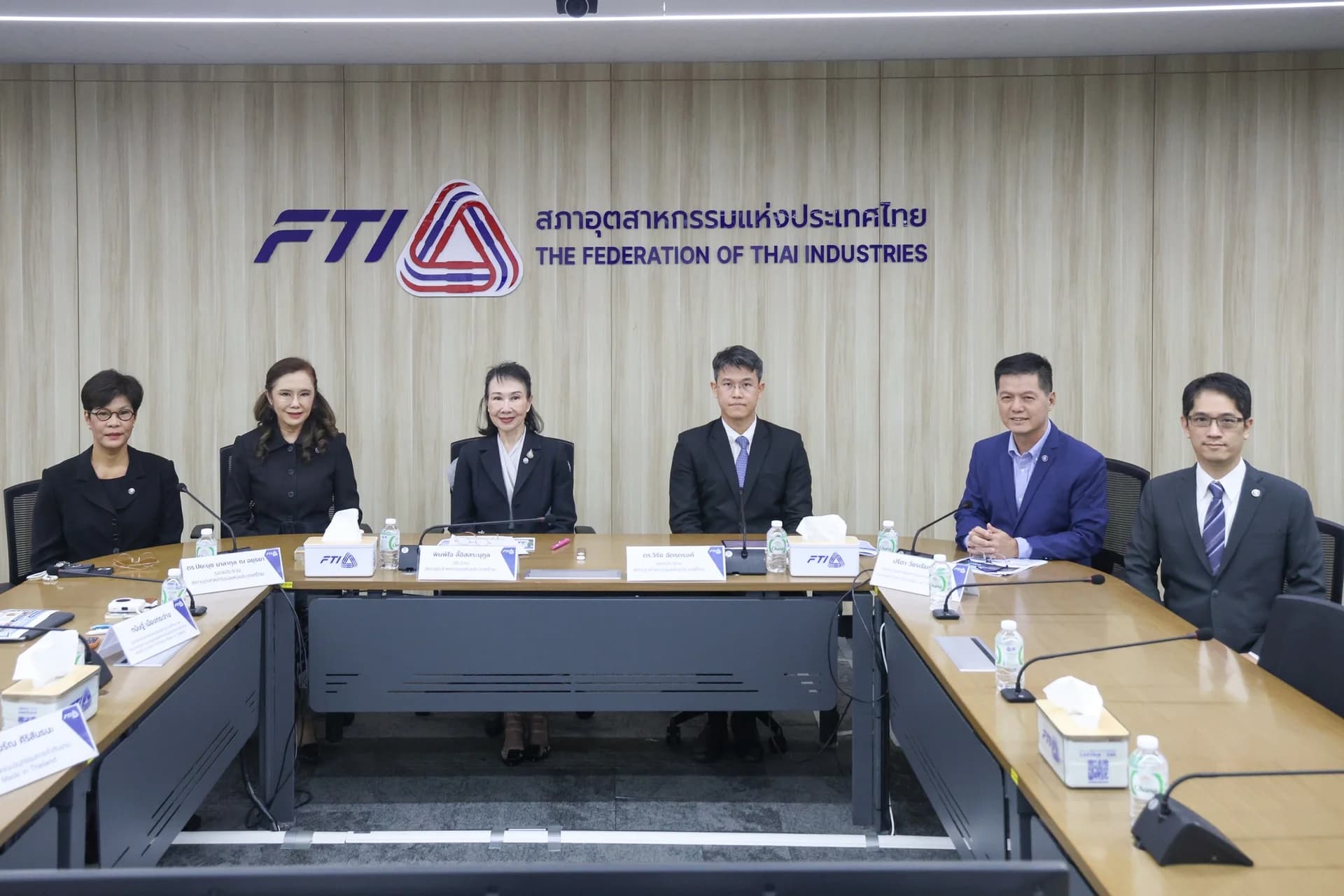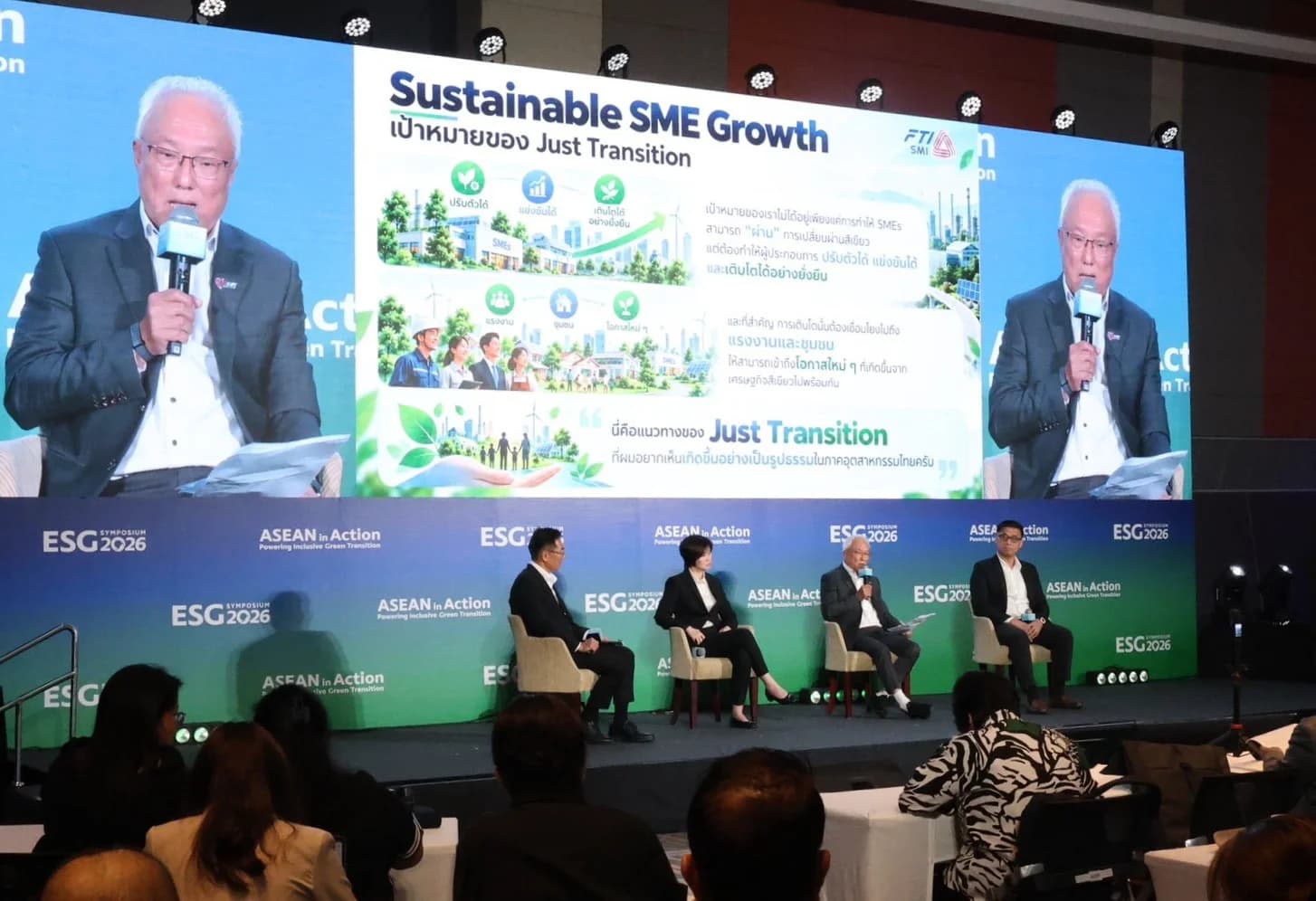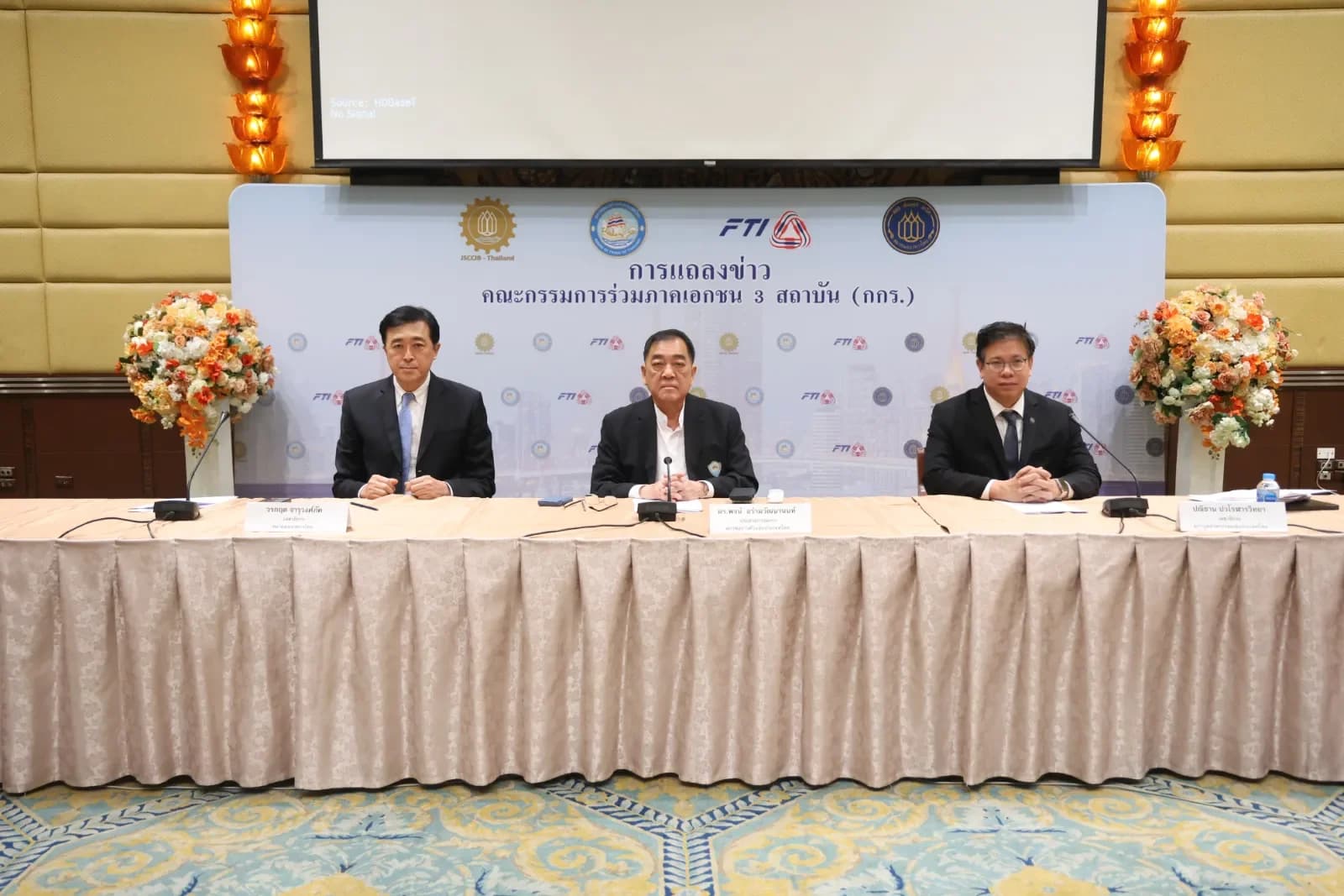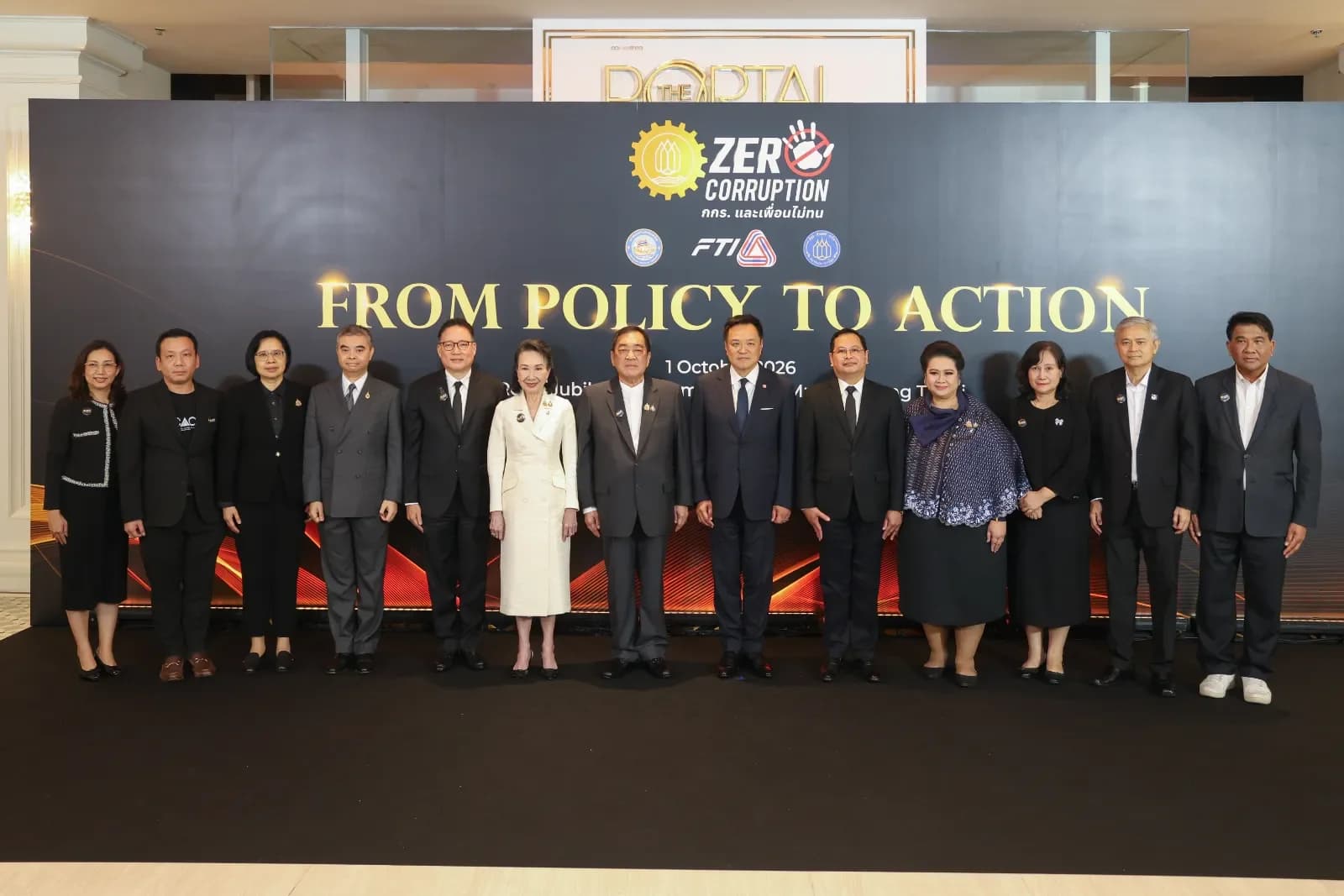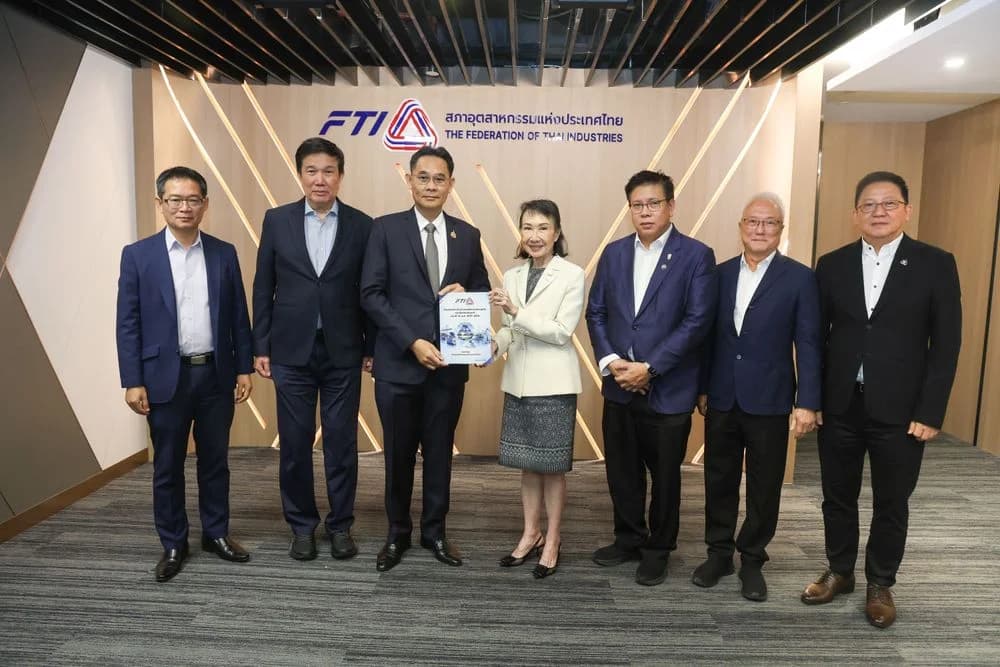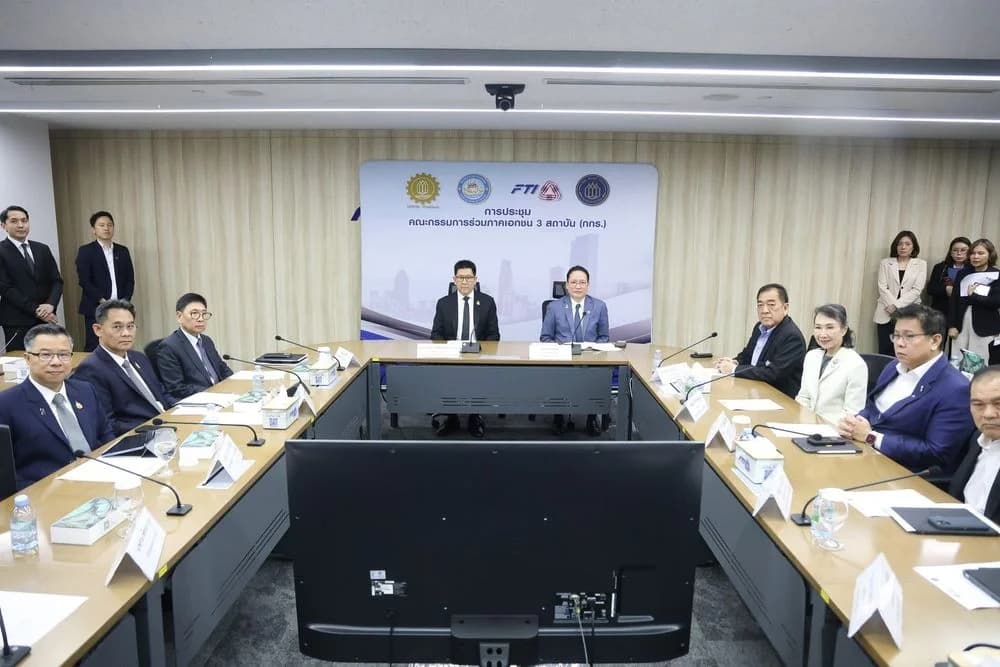

วันที่ 21 ตุลาคม 2568 สภาอุตสาหกรรมแห่งประเทศไทย (ส.อ.ท.) นำโดย นายเกรียงไกร เธียรนุกุล ประธาน ส.อ.ท. หารือความร่วมมือกับธนาคารแห่งประเทศไทย (ธปท.) นำโดย นายวิทัย รัตนากร ผู้ว่าการ ธปท. เพื่อสร้างเสถียรภาพทางการเงินและความมั่นคงของประเทศ ณ ห้อง Passion (802) ชั้น 8 ส.อ.ท.
“ประเทศไทยเผชิญความท้าทายรอบด้าน ไม่ว่าจะเป็นการรับมือผลกระทบจากภาษีนำเข้าของสหรัฐฯ การส่งเสริมการเปิดตลาดใหม่ การกระตุ้นและพลิกฟื้นเศรษฐกิจ การแก้ไขปัญหาหนี้และสภาพคล่องของภาคธุรกิจ การลดต้นทุนพลังงาน มาตรการเยียวยาผลกระทบจากการปิดด่านชายแดน รวมทั้งความกังวลต่อการแข็งค่าของเงินบาท วันนี้ได้มาพบปะและหารือร่วมกัน จะได้หาแนวทางการเพิ่มขีดความสามารถในการแข่งขันให้แก่ผู้ประกอบการมากขึ้น ถือเป็นโอกาสที่ดีและเป็นจุดเริ่มต้นที่สำคัญของความร่วมมือในครั้งนี้” นายเกรียงไกร เธียรนุกุล ประธานสภาอุตสาหกรรมแห่งประเทศไทย (ส.อ.ท.) กล่าว
นายวิทัย รัตนากร ผู้ว่าการธนาคารแห่งประเทศไทย (ธปท.) กล่าวว่า “ครั้งนี้เป็นการประชุมที่ ธปท. ได้มาพบปะกับสภาอุตสาหกรรมแห่งประเทศไทยเป็นที่แรกแบบฟูลทีม จริงๆ แล้ว เราทำงานกับทุกหน่วยงาน เพื่อให้เกิดการเชื่อมโยงระหว่างนโยบายการเงินและการคลัง และทำงานร่วมกันอย่างมีประสิทธิภาพ ทั้งนี้ เราจะทำงานร่วมกับภาคธุรกิจมากขึ้นอีก เพื่อให้เกิดการเติบโตของเศรษฐกิจอย่างยั่งยืน”
ในที่ประชุม นายเกรียงไกร นำเสนอนโยบายการขับเคลื่อนของ ส.อ.ท. ด้วยการยกระดับขีดความสามารถการแข่งขันในอุตสาหกรรมดั้งเดิม (First Industries) ไปสู่การสร้างเครื่องยนต์ใหม่ขับเคลื่อนเศรษฐกิจในอุตสาหกรรมใหม่หรืออุตสาหกรรมแห่งอนาคต (Next-Gen Industries) ผ่านการเปลี่ยนการผลิตจาก OEM-Original Equipment Manufacturer (ผู้ผลิตตามสั่งแบรนด์อื่น) เป็น ODM-Original Design Manufacturer (ผู้ผลิตที่ออกแบบเองด้วย) หรือ OBM-Original Brand Manufacturer (ผู้ผลิตและทำแบรนด์เอง) เปลี่ยนการใช้แรงงาน มาใช้เทคโนโลยี นวัตกรรม เช่น ดิจิทัล AI และระบบอัตโนมัติ เป็นต้น เปลี่ยนการผลิตเพื่อกำไร มาเป็นการผลิตเพื่อความยั่งยืน และเปลี่ยนจาก Unskilled Labour มาเป็น High-skilled Labour ผ่านกลไก Pay by skills
นอกจากนี้ ส.อ.ท. ยังดำเนินงานภายใต้แนวคิด 4GO เพื่อยกระดับ SMEs ประกอบด้วย Go Digital & AI ยกระดับอุตสาหกรรมด้วยเทคโนโลยีดิจิทัลและปัญญาประดิษฐ์ (AI) ใช้เทคโนโลยี Digital และ AI มาเพิ่มประสิทธิภาพการผลิต และเจาะตลาด e-Commerce Go Innovation สร้างผู้ประกอบการ “จิ๋วแต่แจ๋ว” ด้วยนวัตกรรม โดยการพัฒนา ผลิตภัณฑ์ด้วยนวัตกรรมเพื่อเพิ่มมูลค่าสินค้า และใช้เทคโนโลยี Automation & Robotic เพื่อลดต้นทุนการผลิต Go Global ยกระดับมาตรฐานสินค้าให้เป็นที่ยอมรับในระดับโลก เชื่อมโยง Global Supply Chain และกระจายการส่งออกไปยังตลาดในภูมิภาคอื่นๆ ควบคู่การพัฒนาแบรนด์สินค้าไทยให้เป็นสากล และ Go Green ขับเคลื่อนองค์กรสู่การพัฒนาอย่างยั่งยืน และบรรลุเป้าหมาย Net Zero โดยปรับกระบวนการผลิตและใช้วัตถุดิบที่เป็นมิตรกับสิ่งแวดล้อม สร้างจุดแข็งของสินค้าผ่าน เทรนด์รักษ์โลกและใช้โอกาสจากนโยบายส่งเสริม BCG Model รวมถึงพัฒนาองค์กรให้สอดคล้องกับแนวคิด ESG
ด้าน นายวิทัย รัตนากร ผู้ว่าการธนาคารแห่งประเทศไทย (ธปท.) กล่าวเพิ่มเติมว่า ภารกิจหลักของ ธปท. คือ การรักษาเสถียรภาพเศรษฐกิจการเงินในระยะยาว ประกอบด้วย 3 ส่วนด้วยกัน คือ 1) สร้างเสถียรภาพทางการเงิน โดยเฉพาะดูแลให้เงินเฟ้อในระยะปานกลางอยู่ในระดับต่ำและไม่ผันผวน รวมถึงไม่ให้เกิดภาวะเงินฝืดและให้เงินเฟ้อกลับเข้าสู่กรอบเป้าหมายในระยะปานกลาง 2) สร้างเสถียรภาพทางระบบสถาบันทางการเงิน โดยสถาบันการเงินเข้มแข็ง มีความมั่นคง สามารถให้บริการลูกหนี้ ประชาชนและธุรกิจได้ต่อเนื่อง และดูแลไม่ให้เกิดจุดเปราะบางในระบบการเงิน และ 3) สร้างเสถียรภาพทางระบบการชำระเงิน ดูแลให้มีระบบมีประสิทธิภาพ ตอบสนองความต้องการของประชาชน ธุรกิจ และภาครัฐ ทั้งด้านความสะดวก รวดเร็ว ปลอดภัย และด้วยราคาที่สมเหตุผล “วันนี้ เราอยู่ในจุดที่เห็นปัญหาเชิงโครงสร้างเศรษฐกิจต่างๆ เหมือนกัน และเราจะหารือร่วมกันเพื่อหาแนวทางป้องกันและแก้ไขปัญหาให้เป็นไปในทิศทางเดียวกัน เพื่อช่วยให้เศรษฐกิจเติบโตได้ในระดับที่เหมาะสม และเสถียรภาพเศรษฐกิจการเงินของประเทศดำรงอยู่ได้ ”
ด้าน นายนาวา จันทนสุรคน รองประธานสภาอุตสาหกรรมแห่งประเทศไทย (ส.อ.ท.) หารือเกี่ยวกับมาตรการรับมือผลกระทบจากภาษีสหรัฐฯ และสงครามการค้า โดยกล่าวว่า สิ่งที่กลุ่มอุตสาหกรรมกังวล คือ การใช้มาตรการภาษีของสหรัฐฯ ที่รายการสินค้ามีการบังคับใช้ที่ต่างกัน บางรายการบังคับใช้แล้ว บางรายการอยู่ระหว่างไต่สวน อุตสาหกรรมที่ได้รับผลกระทบแล้ว ได้แก่ เหล็ก อลูมิเนียม ยานยนต์และชิ้นส่วนไม้อัด ไม้บาง และวัสดุแผ่น เฟอร์นิเจอร์ อุตสาหกรรมที่ต้องพึ่งพาการนำเข้า ได้แก่ เหล็ก อลูมิเนียม หล่อโลหะเครื่องจักรกลและระบบอัตโนมัติ ไฟฟ้าและอิเล็กทรอนิกส์
ด้าน ผลกระทบต่อ GDP นั้น สถาบันวิจัยเพื่อการพัฒนาประเทศไทย (TDRI) ประเมินผลกระทบต่อ GDP ไทยและประเทศคู่แข่งว่า กรณีแข่งขันไม่ได้ GDP ไทยอาจจะอยู่ที่ -0.77% การส่งออกไปสหรัฐฯ -15.4% สูญเสียตลาดส่งออกโลก -0.9% ทำให้การส่งออกทั้งหมด -2.6% กรณีแข่งขันไม่ได้ (กรณีที่ 2) GDP ไทยอาจจะอยู่ที่ -0.42% การส่งออกไปสหรัฐฯ -13.9% ทำให้การส่งออกทั้งหมด -1.37% และกรณีแข่งขันได้ GDP ไทยจะอยู่ที่ -0.01% การส่งออกไปสหรัฐฯ -12.53% รวมทั้งสามารถชดเชยได้จากการขยายตลาดส่งออกในภูมิภาคอื่น
นายนาวา กล่าวเพิ่มเติมเกี่ยวกับ ข้อเสนอแนวทางการรับมือผลกระทบจากภาษี Reciprocal Tariff ของสหรัฐฯ ว่า ภาครัฐควรสนับสนุนข้อมูลให้กับผู้ประกอบการเกี่ยวกับผลกระทบทางเศรษฐกิจ เพื่อใช้เป็นแนวทางในการเตรียมความพร้อมของธุรกิจให้สามารถรองรับมาตรการทางการค้าของสหรัฐฯ ได้อย่างมีประสิทธิภาพ รวมถึงผลักดันมาตรการทางการเงินเพื่อส่งเสริมให้ผู้ประกอบการสามารถปรับตัว (Transformation) ของธุรกิจและปรับโครงสร้างห่วงโซ่อุปทาน (Supply Chain) พร้อมกับหาตลาดใหม่เพื่อกระจายความเสี่ยงทางการค้า
นอกจากนี้ ยังเสนอให้มีมาตรการบรรเทาผลกระทบในช่วงปรับตัวของผู้ประกอบการ เช่น การชะลอการจัดชั้นหนี้เป็นหนี้ที่มีปัญหา การปรับโครงสร้างสินเชื่อสำหรับผู้ที่ได้รับผลกระทบจากมาตรการภาษีของสหรัฐฯ รวมถึงการออกมาตรการสินเชื่อดอกเบี้ยต่ำเพื่อเสริมสภาพคล่องทางการเงิน เพื่อให้ผู้ประกอบการสามารถรองรับผลกระทบจากมาตรการของสหรัฐฯ และการเปิดตลาดใหม่ได้ โดยสินเชื่อพิเศษดังกล่าวจะมุ่งช่วยเหลือธุรกิจที่ได้รับผลกระทบให้สามารถปรับตัวทางธุรกิจและปรับ Supply Chain ให้สอดคล้องกับข้อกำหนดด้านมูลค่าเพิ่มในประเทศ (RVC) ของสหรัฐฯ รวมถึงสนับสนุนธุรกิจที่ต้องการเพิ่มศักยภาพในการผลิตเพื่อส่งออกไปยังตลาดใหม่แทนตลาดสหรัฐฯ
อีกทั้งยังมีแนวทางในการรักษาเสถียรภาพค่าเงินบาท เพื่อคงขีดความสามารถในการแข่งขัน โดยดูแลไม่ให้ค่าเงินบาทผันผวนหรือแข็งค่ากว่าประเทศคู่แข่งในภูมิภาค พร้อมส่งเสริมให้ผู้ประกอบการ โดยเฉพาะ SMEs ใช้เครื่องมือป้องกันความเสี่ยงจากอัตราแลกเปลี่ยน (Hedging)
ในส่วนของข้อเสนอแนวทางการส่งเสริมสินค้าที่ผลิตภายในประเทศ (Made in Thailand : MiT) นายนาวาเสนอให้ผลักดันการใช้สินค้า MiT อย่างจริงจัง โดยส่งเสริมการจัดซื้อจัดจ้างภาครัฐให้ใช้สินค้า MiT และกำหนดให้เป็นตัวชี้วัด (KPI) ที่ชัดเจนในมติคณะรัฐมนตรี ให้หน่วยงานรัฐจัดซื้อจัดจ้างสินค้า MiT ผ่านระบบ e-bidding ภายใน 5 ปี รวมถึงให้ครอบคลุมถึงโครงการร่วมลงทุนระหว่างรัฐและเอกชน (PPP) พร้อมทั้งขยายตลาดสินค้า MiT สู่ภาคเอกชนภายใต้โครงการ “ซื้อของไทยเพื่อคนไทย” และผลักดันให้สินค้า MiT ก้าวสู่ตลาดโลก
นอกจากนี้ ยังเสนอให้จัดทำมาตรการสินเชื่อพิเศษสำหรับผู้ประกอบการในห่วงโซ่อุปทาน (Supply Chain) ที่เกี่ยวข้องกับสินค้า MiT เพื่อเสริมความเข้มแข็งทางเศรษฐกิจภายในประเทศ
ด้าน นายอภิชิต ประสพรัตน์ รองประธานสภาอุตสาหกรรมแห่งประเทศไทย (ส.อ.ท.) กล่าวถึงมาตรการส่งเสริมสภาพคล่องทางการเงินและการแก้ปัญหาหนี้ของผู้ประกอบการ SMEs ว่าจากการระดมความเห็นของสมาชิก ส.อ.ท. ทั้ง 5 ภูมิภาค พบว่าปัญหาหลักของผู้ประกอบการส่วนใหญ่เกิดจากการขาดความรู้ ทักษะ นวัตกรรม บุคลากรเฉพาะทาง และเงินลงทุน ส.อ.ท. จึงได้เสนอแนวทางปฏิบัติเพื่อช่วยเหลือ SMEs อย่างเป็นรูปธรรม โดยเสนอให้มีมาตรการสินเชื่อดอกเบี้ยต่ำแบบมีเป้าหมาย เปิดโอกาสให้ธนาคารพาณิชย์สามารถเข้าถึงแหล่งเงินจากธนาคารแห่งประเทศไทย (ธปท.) ในอัตราดอกเบี้ยพิเศษ หากปล่อยสินเชื่อให้กับ SMEs ที่อยู่ในกลุ่มเป้าหมาย เช่น ผู้ประกอบการด้านการส่งออก นวัตกรรม หรือธุรกิจสีเขียว
นอกจากนี้ ยังเสนอให้สร้าง “ระบบเครดิตทางเลือก” ผ่านการพัฒนาแพลตฟอร์มกลาง เพื่อให้สถาบันการเงินสามารถใช้ข้อมูลในการประเมินความเสี่ยงได้อย่างแม่นยำมากขึ้น โดยอ้างอิงจากข้อมูลยอดขายผ่าน e-commerce ข้อมูลภาษีมูลค่าเพิ่ม และการชำระค่าน้ำ ค่าไฟ หรือค่าแรงของธุรกิจ พร้อมทั้งสนับสนุนสินเชื่อเพื่อการเปลี่ยนผ่านสู่ “ธุรกิจสีเขียวและดิจิทัล” ด้วยการออกกรอบสินเชื่อพิเศษดอกเบี้ยต่ำ 2% สำหรับ SME ที่ลงทุนในพลังงานสะอาด การลดคาร์บอน ระบบอัตโนมัติ หรือการทำ Digital Transformation พร้อมปรับลดหลักเกณฑ์และเงื่อนไขเพื่อกระตุ้นการลงทุนของภาค SME
อีกทั้งยังเสนอให้ภาครัฐสนับสนุนการขยายพอร์ตการค้าประกันสินเชื่อของบรรษัทประกันสินเชื่ออุตสาหกรรมขนาดย่อม (บสย.) จาก 30% เป็น 40% หรือปรับลดระยะเวลาการค้ำประกันต่อพอร์ตโฟลิโอลงจาก 10 ปี เหลือเพียง 5–7 ปี เพื่อเพิ่มความยืดหยุ่นในการเข้าถึงแหล่งทุน และเสนอให้จัดตั้ง “กองทุน SME” เพื่อใช้ในการออกแบบผลิตภัณฑ์ทางการเงินที่หลากหลาย ลดอุปสรรคเรื่องหลักประกันและขั้นตอนที่ซับซ้อน มีอัตราดอกเบี้ยหรือค่าธรรมเนียมที่เหมาะสม พร้อมทั้งให้กองทุนสามารถนำเงินหมุนเวียนกลับมาใช้ช่วยเหลือ SME รายอื่นต่อไป รวมถึงใช้ในการบริหารจัดการหนี้เสีย (NPL) อย่างมีประสิทธิภาพ
สำหรับประเด็นความกังวลต่อค่าเงินบาทที่แข็งค่า นายเกรียงไกร กล่าวเสริมว่า ค่าเงินบาทแข็งค่ามากกว่าประเทศคู่แข่งในภูมิภาค ส่งผลให้ภาคเอกชนที่ได้รับผลกระทบต้องบริหารความเสี่ยงจากอัตราแลกเปลี่ยนอย่างรอบคอบ เนื่องจากค่าเงินเป็นปัจจัยสำคัญต่อความสามารถในการแข่งขันของสินค้าส่งออก โดยเฉพาะในภาวะที่ประเทศคู่แข่งเผชิญมาตรการ Reciprocal Tariff
ประเทศพึ่งพาการส่งออก 60% ของ GDP และจากภาคท่องเที่ยว 10% ของ GDP ค่าเงินบาทแข็งเกินไป เป็นเรื่องที่ กกร.ส่งสัญญาณเรื่องนี้ตลอด เพราะประเทศต้องค้าขายต่างชาติ ถ้าบาทแข็ง ก็สร้างแรงกดดันต่อภาคส่งออกทันที สินค้าแพงขึ้น และยังกระทบการท่องเที่ยวด้วย ดังนั้นจึงต้องหาจุดสมดุลปรับค่าเงินบาทอย่าให้แข็งเกินไป โดยปัจจุบันยังขาดการ “Connect the Dots” ระหว่างหน่วยงานผู้รับผิดชอบในแต่ละกิจกรรมที่ส่งผลต่อค่าเงินบาท ไม่ว่าจะเป็นธนาคารแห่งประเทศไทย กระทรวงพาณิชย์ สำนักงานคณะกรรมการกำกับหลักทรัพย์และตลาดหลักทรัพย์ กรมศุลกากร และสำนักงานป้องกันและปราบปรามการฟอกเงิน
นายวิทัย กล่าวทิ้งท้ายว่า “ธปท. มุ่งรักษาเสถียรภาพของค่าเงินบาทให้สอดคล้องกับปัจจัยพื้นฐานทางเศรษฐกิจ และไม่ให้ผันผวนมากจนส่งผลกระทบต่อภาคธุรกิจ พร้อมเดินหน้าทำงานร่วมกับทุกภาคส่วนที่เกี่ยวข้องเพื่อบรรเทาผลกระทบ ตลอดจนผลักดันมาตรการต่างๆ เพื่อสนับสนุนให้เศรษฐกิจไทยเติบโตอย่างยั่งยืน”
-----------------------------------------------------
เผยแพร่โดยฝ่ายสื่อสารองค์กร สภาอุตสาหกรรมแห่งประเทศไทย โทร. 02-345-1051
On October 21, 2025, the Federation of Thai Industries (FTI), led by Chairman Krieng-krai Khearnnukool, discussed collaboration with the Bank of Thailand (BoT), represented by Governor Witthaya Watthana, to enhance the financial stability and security of the country at Passion Room (802), 8th Floor, FTI.
“Thailand is facing challenges on multiple fronts, including managing the impacts of U.S. import tariffs, promoting new market openings, stimulating and revitalizing the economy, addressing business debt and liquidity issues, reducing energy costs, remedying the effects of border closed measures, and concerns about the strengthening Thai baht. Today, we met and discussed to find ways to enhance the competitive capabilities of operators. This presents a valuable opportunity and marks an important beginning for this collaboration,” said Krieng-krai Khearnnukool, Chairman of the Federation of Thai Industries (FTI).
Governor Witthaya Watthana of the Bank of Thailand (BoT) stated, “This meeting is the first full team engagement between the BoT and the Federation of Thai Industries. We are collaborating with all agencies to ensure the connection between monetary and fiscal policies operates efficiently. We will work more closely with the business sector to ensure sustainable economic growth.”
During the meeting, Krieng-krai presented FTI's driving policy aimed at enhancing the competitive capabilities of traditional industries (First Industries) towards creating new engines for economic development in new industries or Next-Gen Industries by shifting production from OEM (Original Equipment Manufacturer) to ODM (Original Design Manufacturer) or OBM (Original Brand Manufacturer), incorporating the use of technology and innovations such as digital, AI, and automation systems. There's a shift from profit-driven production to sustainable production, and from unskilled labor to high-skilled labor through a pay-by-skills mechanism.
Moreover, FTI is also operating under the 4GO concept to enhance SMEs, which includes Go Digital & AI, elevating industries with digital technology and artificial intelligence (AI) to enhance productivity and penetrate e-Commerce markets; Go Innovation, developing ‘small but clever’ entrepreneurs through innovations by creating products with innovations to increase product value and utilizing Automation & Robotics technology to reduce production costs; Go Global, enhancing product standards to be recognized globally, linking the Global Supply Chain, and distributing exports to other regional markets while developing Thai brands to be international; and Go Green, driving organizations towards sustainable development and achieving net zero goals by adjusting production processes and using environmentally friendly raw materials to strengthen product advantages through green trends and seizing opportunities from BCG model promotion policies, as well as developing organizations to align with ESG concepts.
In addition, Governor Witthaya Watthana elaborated on the BoT’s key mission, which is to maintain long-term economic and financial stability comprising three components: 1) Ensuring financial stability, particularly by managing medium-term inflation at low and stable levels to prevent deflation and bring inflation back within target ranges; 2) Establishing institutional financial stability, where financial institutions are robust and stable, capable of providing continuous services to borrowers, citizens, and businesses while managing vulnerabilities in the financial system; and 3) Achieving stability in payment systems by ensuring they effectively respond to the needs of citizens, businesses, and the government in terms of convenience, speed, safety, and reasonable pricing. “Today, we are at a point where we collectively see various structural economic issues, and we will discuss together to find preventive and remedial solutions that align towards the same direction to help the economy grow at an appropriate level and maintain the financial stability of the country,” he noted.
Furthermore, Naiwa Chantanasurakorn, Vice Chairman of the Federation of Thai Industries (FTI), addressed measures to cope with impacts from U.S. tariffs and the trade war. He expressed concerns regarding the differential application of U.S. tariff measures across product categories, with some already enforced and others under investigation. Industries already affected include steel, aluminum, automotive, plywood parts, certain wood types, and furniture materials. Industries reliant on imports include steel, aluminum, metal casting of machinery and automation, and electrical and electronics.
Regarding the impact on GDP, the Thailand Development Research Institute (TDRI) estimates that in a non-competitive scenario, Thailand's GDP could decrease by 0.77%, with exports to the U.S. declining by 15.4%, resulting in a global export loss of 0.9%, leading to an overall export contraction of 2.6%. In a competitive scenario (Scenario 2), Thailand's GDP might decline by 0.42%, exports to the U.S. drop by 13.9%, causing total exports to decrease by 1.37%. Under a competitive circumstance, the GDP could fall by 0.01% with exports to the U.S. down by 12.53%, although this can be compensated by expanding export markets to other regions.
Naiwa further proposed strategies to address challenges posed by the U.S. Reciprocal Tariff, emphasizing that the government should support providing information regarding economic repercussions to operators, which could guide businesses in preparation to effectively meet U.S. trade measures, along with promoting financial measures to facilitate business transformation and restructuring supply chains while seeking new markets to mitigate trade risks.
Additionally, he recommended implementing measures to alleviate impacts during business transformation phases, such as delaying the classification of debts as non-performing, restructuring loans for those affected by U.S. tariffs, and introducing low-interest loan measures to enhance financial liquidity. This aims to support operators in managing impacts from U.S. measures and new market openings, ensuring such special loans focus on helping affected businesses adapt and adjust their Supply Chains to align with the U.S. value-added requirement (RVC), as well as assisting businesses wanting to enhance production capabilities for exports to new markets instead of the U.S.
Moreover, there are suggestions for maintaining baht stability to preserve competitiveness, ensuring that the Thai baht does not fluctuate or strengthen against regional competitors. There is a promotion for operators, particularly SMEs, to utilize foreign exchange risk hedging tools.
Regarding proposals for promoting domestic products (Made in Thailand: MiT), Naiwa suggested fostering genuine use of MiT products by encouraging government procurement to utilize MiT products and establishing clear KPI indicators within cabinet resolutions for state agencies to procure MiT products through e-bidding systems within five years. This should also encompass joint investment projects between the government and private sector (PPP), expanding MiT products to the private sector through the buy Thai for Thai people” program, and encouraging MiT products to access global markets.
Furthermore, it was proposed to create special loan measures for suppliers within the Supply Chain associated with MiT to strengthen domestic economic capacity.
Chairman Apichit Prasoprat of the Federation of Thai Industries (FTI) discussed measures to promote financial liquidity and solve debt issues for SMEs, noting that feedback from FTI members across five regions identified key problems faced by operators mainly due to a lack of knowledge, skills, innovation, specialized personnel, and investment funds. Consequently, FTI has proposed specific actionable measures to assist SMEs, including introducing targeted low-interest loans that would enable commercial banks to access funds from the Bank of Thailand (BoT) at special interest rates if they provide loans to target groups, such as export-focused businesses, innovators, or green businesses.
Moreover, it was suggested to create an “alternative credit system” through the development of a central platform to enable financial institutions to more accurately assess risks based on e-commerce sales data, VAT data, and business utility payments. Additionally, support would be provided for funding aimed at transitioning towards “green and digital businesses” with the establishment of a special low-interest loan framework at 2% for SMEs investing in clean energy, carbon reduction, automation, or digital transformation while easing criteria to stimulate SME investment.
Furthermore, it was proposed for the government to support expanding the credit risk backing portfolio of the Small Industry Credit Guarantee Corporation (SUKO) from 30% to 40%, or reduce the guarantee period from 10 years to 5–7 years to enhance flexibility in accessing funds. Also, to establish an “SME Fund” designed to produce diverse financial products that lower barriers related to collateral and complex procedures, with reasonable interest or fee rates, while ensuring the fund can recycle money to assist other SMEs, as well as manage non-performing loans (NPL) effectively.
Addressing concerns regarding the strengthening baht, Krieng-krai added that the baht has appreciated more than regional competitors, posing challenges for affected private sectors to manage foreign exchange risks cautiously. The exchange rate is crucial to the competitiveness of export products, especially in a context where competing nations face Reciprocal Tariff measures.
As the country relies on exports for 60% of GDP and tourism accounts for 10% of GDP, an excessively strong baht poses issues that the Joint Committee on Commerce, Industry, and Banking (JCCIB) has continually signaled. A stronger baht puts immediate pressure on exports due to increased product costs and affects tourism. Hence, a balance must be sought by adjusting the baht not to appreciate excessively, as currently, there is a lack of coordination between responsible agencies affecting the baht, including the Bank of Thailand, the Ministry of Commerce, the Securities and Exchange Commission, the Customs Department, and the Anti-Money Laundering Office.
Witthaya concluded, stating, “The BoT is focused on maintaining the stability of the baht in line with underlying economic fundamentals and preventing excessive fluctuations that could impact business sectors, while continuing to collaborate with all relevant sectors to mitigate impacts and push forward various measures to support sustainable economic growth in Thailand.”
-----------------------------------------------------
Published by the Corporate Communications Department, Federation of Thai Industries, Phone: 02-345-1051