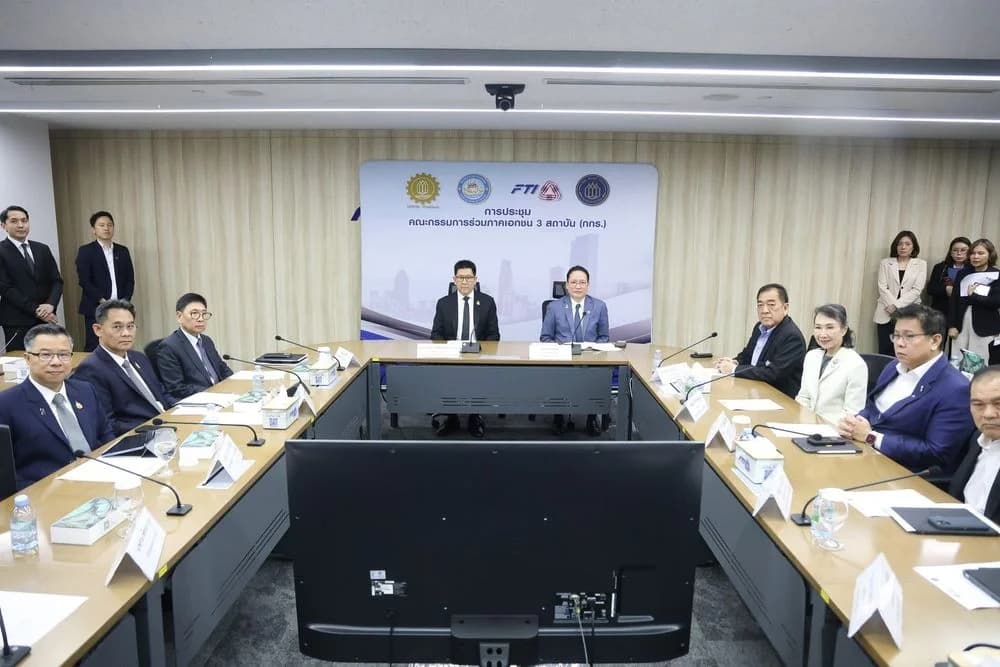

เมื่อวันที่ 7 สิงหาคม 2568 นายนาวา จันทนสุรคน รองประธานสภาอุตสาหกรรมแห่งประเทศไทย (ส.อ.ท.) เป็นผู้แทนเข้าร่วมประชุมกับคณะกรรมาธิการการต่างประเทศ เพื่อพิจารณาศึกษาบทสรุปการเจรจาภาษีระหว่างไทยกับสหรัฐฯ และฉากทัศน์ที่อาจเกิดขึ้นต่อการค้าและการส่งออกของไทยไปยังสหรัฐฯ และตลาดโลก ณ ห้องประชุม 407 อาคารรัฐสภา
ในการประชุมครั้งนี้ ได้มีการรับฟังความคิดเห็นจากหน่วยงานภาครัฐและภาคเอกชนที่เกี่ยวข้องต่อมาตรการภาษีของสหรัฐฯ โดย ส.อ.ท. ได้นำเสนอข้อมูลเกี่ยวกับสัดส่วนการใช้ Thai Content ของกลุ่มอุตสาหกรรมต่างๆ รวมถึงอุตสาหกรรมที่พึ่งพาตลาดสหรัฐฯ เป็นหลัก
นอกจากนี้ ยังได้นำเสนอข้อเสนอแนวทางในการรับมือผลกระทบจากมาตรการภาษี Reciprocal ของสหรัฐฯ เช่น
1. การเร่งสร้างความเข้าใจเกี่ยวกับหลักเกณฑ์และเงื่อนไขของสหรัฐฯ แก่ผู้ประกอบการ
2. การมอบหมายหน่วยงานหลักเพื่อให้คำปรึกษาและแนะนำผู้ประกอบการ
3. มาตรการสนับสนุนการปรับตัว (Transformation) ของธุรกิจ
4. การบูรณาการความร่วมมือเพื่อสร้างบทบาทเชิงรุก
5. การพัฒนาความสัมพันธ์เชิงหุ้นส่วนด้านการค้าและการลงทุนกับสหรัฐฯ อย่างต่อเนื่อง
6. การเร่งเจรจาความตกลงการค้า (FTA) เพื่อขยายโอกาสทางการค้าในตลาดอื่น
7. มาตรการดูแลค่าเงินบาทไม่ให้ผันผวนหรือแข็งค่าเร็วกว่าประเทศคู่แข่งในภูมิภาค
On August 7, 2025, Mr. Nava Chantanasurakorn, Vice Chairman of the Federation of Thai Industries (FTI), represented the federation in a meeting with the Foreign Affairs Committee to consider and study the summary of tax negotiations between Thailand and the United States and the potential scenarios that may affect Thailand's trade and exports to the United States and the global market at meeting room 407, Parliament Building.
During this meeting, opinions were gathered from relevant government agencies and the private sector regarding the U.S. tax measures, where the FTI presented information on the proportion of Thai Content used in various industry sectors, including industries that primarily rely on the U.S. market.
Additionally, proposals to address the impacts of the U.S. Reciprocal Tax measures were presented, such as:
1. Accelerating the understanding of the criteria and conditions set by the U.S. for operators.
2. Assigning key agencies to provide advice and recommendations to operators.
3. Measures to support business transformation.
4. Integrating cooperation to create a proactive role.
5. Continuously developing trade and investment partnership relations with the U.S.
6. Accelerating the negotiation of Free Trade Agreements (FTAs) to expand trade opportunities in other markets.
7. Measures to maintain the stability of the Thai Baht to prevent excessive fluctuations or appreciation compared to competing countries in the region.