
วันพฤหัสบดีที่ 17 กรกฎาคม 2568 นายนาวา จันทนสุรคน รองประธานสภาอุตสาหกรรมแห่งประเทศไทย (ส.อ.ท.) ได้รับเกียรติร่วมเสวนา เพื่อร่วมวางแนวทางใหม่ ปลดล็อกศักยภาพประเทศไทยสู่การแข่งขันในระดับโลก ในงาน "ปลดล็อกอนาคตประเทศไทย สู้วิกฤติโลก" Unlocking Thailand's Future จัดโดยช่อง 9 อสมท (9MCOT) ณ ห้องบอลรูม 1-2 ชั้น 1 ศูนย์การประชุมแห่งชาติสิริกิติ์
ภายในงาน มีผู้ร่วมเสวนาจากทั้งภาครัฐและเอกชน ได้แก่ นายเผ่าภูมิ โรจนสกุล รัฐมนตรีช่วยว่าการกระทรวงการคลัง นายสรวงศ์ เทียนทอง รัฐมนตรีว่าการกระทรวงการท่องเที่ยวและกีฬา นางมนพร เจริญศรี รัฐมนตรีช่วยว่าการกระทรวงคมนาคม และนายชนินทร์ ชลิศราพงศ์ รองประธานกรรมการหอการค้าไทย ซึ่งร่วมเสวนาในหัวข้อที่น่าสนใจ ได้แก่ มาตรการการเงิน-การคลัง การพลิกฟื้นกำลังซื้อในประเทศ แนวโน้มเศรษฐกิจและสงครามการค้า ภาษีสหรัฐ การเร่งพัฒนาโครงสร้างพื้นฐานแลนด์บริดจ์ รถไฟความเร็วสูง การขยายขีดความสามารถท่าอากาศยานไทย การค้าระหว่างประเทศ การส่งออก การเปิดตลาดท่องเที่ยวใหม่ การสร้างสมดุลนักท่องเที่ยวจากทุกภูมิภาค เป็นต้น
นายนาวา ได้กล่าวถึง สถานการณ์เศรษฐกิจไทยในช่วง 5 เดือนแรกของปี 2568 ว่าประเทศไทยยังคงเผชิญความท้าทายหลายด้าน แม้จะมีสัญญาณบวกจากภาคการส่งออกที่เติบโตถึง 14.9% YoY (มูลค่ารวม 138,202 ล้านเหรียญสหรัฐ) และ GDP ขยายตัวได้ 3.1% YoY จากแรงหนุนการส่งออก แต่ก็ยังมีสัญญาณลบหลายด้าน เช่น
• จำนวนนักท่องเที่ยวต่างชาติหดตัว -4.24% YoY เหลือ 16.04 ล้านคน (มกราคม–มิถุนายน)
• หนี้สินครัวเรือนสูงถึง 16.35 ล้านล้านบาท หรือ 87.4% ต่อ GDP
• หนี้ NPL ไตรมาส 1/2025 ยังสูงถึง 1.19 ล้านล้านบาท
• ต้นทุนการผลิตไทยยังสูงกว่าคู่แข่ง เช่น ค่าไฟฟ้า 3.98 บาท/หน่วย ราคาน้ำมันดีเซล 31.94 บาท/ลิตร
• อุตสาหกรรมยานยนต์ที่เคยเป็นหัวใจหลัก ยังคงชะลอตัว ยอดขายรถยนต์ลดลง 2.98% ยอดส่งออกรถยนต์ลดลง 13.65%
นอกจากนี้ ดัชนีความเชื่อมั่นภาคอุตสาหกรรม (TISI) เดือนมิถุนายน 2568 ปรับตัวลดลงต่อเนื่อง โดยอยู่ที่ 87.7 ต่ำสุดในรอบ 8 เดือน สะท้อนถึงความกังวลของผู้ประกอบการต่อสภาพเศรษฐกิจ ทั้งในเรื่องคำสั่งซื้อ ยอดขาย ปริมาณการผลิต ต้นทุน และผลประกอบการที่ยังไม่ฟื้นตัวชัดเจน
สำหรับครึ่งปีหลัง 2568 ไทยยังต้องเผชิญปัจจัยเสี่ยงสำคัญหลายด้าน เช่น
• มาตรการขึ้นภาษีของสหรัฐฯ โดยเฉพาะในกลุ่มเหล็กและอะลูมิเนียมที่ถูกปรับขึ้นจาก 25% เป็น 50% ส่งผลกระทบต่อความสามารถในการแข่งขัน
• ปัญหาสินค้าทุ่มตลาด และการสวมสิทธิ์ส่งออกที่รุนแรงขึ้น
• ความขัดแย้งภูมิรัฐศาสตร์ โดยเฉพาะสงครามอิสราเอล–อิหร่านที่ทำให้ราคาพลังงานผันผวน
• ความขัดแย้งชายแดนไทย–กัมพูชา รวมถึงการปิดด่านชายแดนที่กระทบต่อการค้าชายแดนและผ่านแดน
• ความไม่แน่นอนทางการเมืองและความกังวลของนักลงทุน
• ปัญหาหนี้ครัวเรือนและภาระต้นทุนแรงงานที่ปรับขึ้นค่าแรงขั้นต่ำในหลายพื้นที่
อย่างไรก็ตาม ยังมีข่าวดีบางส่วนที่ช่วยประคองเศรษฐกิจได้ เช่น
• การเร่งส่งออกก่อนสิ้นสุดมาตรการภาษีตอบโต้ (Reciprocal Tariff) กับสหรัฐฯ
• การจัดกิจกรรมส่งเสริมการขายภายในประเทศในช่วงกลางปี
• งบกระตุ้นเศรษฐกิจ 115,000 ล้านบาท ซึ่งคาดว่าจะช่วยเพิ่ม GDP ได้อีก 0.4%
• โครงการ “เที่ยวไทยคนละครึ่ง” ที่จะช่วยกระตุ้นเศรษฐกิจท้องถิ่น
นายนาวา เน้นย้ำว่า หากไทยต้องการเดินหน้าอย่างมั่นคงและแข่งขันได้ในเวทีโลก รัฐและภาคเอกชนต้องร่วมมือกัน ปลดล็อกทุกข้อจำกัด ตามข้อเสนอสำคัญ ดังนี้
1️⃣ ปรับโครงสร้างอุตสาหกรรมสู่อุตสาหกรรมแห่งอนาคต (Next-Gen Industry) พัฒนาเทคโนโลยีและนวัตกรรมให้ผู้ประกอบการมีมูลค่าเพิ่มสูงขึ้น ลดการพึ่งพาการผลิตเดิม
2️⃣ เร่งปรับปรุงกฎหมายและกฎระเบียบ เพื่อเอื้ออำนวยต่อธุรกิจ ลดอุปสรรคทางการค้าและการลงทุน
3️⃣ ส่งเสริม BCG Model หรือเศรษฐกิจชีวภาพ เศรษฐกิจหมุนเวียน และเศรษฐกิจสีเขียว เพื่อลดผลกระทบต่อสิ่งแวดล้อมและสร้างความยั่งยืน
4️⃣ เข้มงวดการบังคับใช้กฎหมาย ป้องกันการสวมสิทธิ์การนำเข้าสินค้าจากต่างประเทศ และควบคุมคุณภาพสินค้าอย่างเข้มข้น
5️⃣ ขยายตลาดใหม่ด้วยการเร่งเจรจาการค้าเสรี (FTA) ปัจจุบันไทยลงนาม FTA แล้ว 17 ฉบับกับ 24 ประเทศ และอยู่ระหว่างการเจรจากับ EU เกาหลีใต้ แคนาดา ตุรกี และประเทศอื่น ๆ เพื่อเปิดตลาดใหม่ ลดข้อจำกัดทางภาษี
6️⃣ ส่งเสริมการใช้ Local Content และ Made in Thailand (MiT) เพื่อกระตุ้นการใช้วัตถุดิบในประเทศและสร้างมูลค่าเพิ่มในห่วงโซ่อุปทาน
นายนาวา เสนอรัฐเตรียมงบกระตุ้นเศรษฐกิจกว่า 1.5 แสนล้าน ปรับโครงสร้างอุตสาหกรรมในประเทศ โดยไม่ปล่อยให้อุตสาหกรรมดั้งเดิมตาย รวมทั้งส่งเสริมซอฟต์พาวเวอร์ และเน้นใช้สินค้า Made in Thailand (MiT)
“นี่คือจังหวะสำคัญที่ไทยต้องเร่งปฏิรูปโครงสร้างเศรษฐกิจ ปรับตัวเชิงนโยบาย และร่วมมือกันทุกภาคส่วน ทั้งรัฐ เอกชน และประชาชน เพื่อ ‘ปลดล็อกทุกข้อจำกัด’ และสร้างความเข้มแข็งอย่างยั่งยืนให้กับเศรษฐกิจไทย เพื่ออนาคตของประเทศไทยที่มั่นคง แข่งขันได้ และยั่งยืนในระยะยาว” นายนาวา กล่าวทิ้งท้าย
On Thursday, July 17, 2025, Mr. Nava Janthasurakhan, Vice Chairman of the Federation of Thai Industries (FTI), was honored to participate in a seminar to discuss new strategies for unlocking Thailand's potential for global competition at the event "Unlocking Thailand's Future: Confronting Global Crises" organized by Channel 9 MCOT at the Ballroom 1-2, First Floor, Queen Sirikit National Convention Center.
During the event, there were participants from both the public and private sectors, including Mr. Phai Phoom Rojanasakul, Deputy Minister of Finance, Mr. Suwangthong Tiangthong, Minister of Tourism and Sports, Ms. Monporn Jaroensri, Deputy Minister of Transport, and Mr. Chanin Chaleesrapong, Vice Chairman of the Thai Chamber of Commerce. They discussed various interesting topics, including financial and fiscal measures, revitalizing domestic purchasing power, economic trends, trade wars, U.S. tariffs, accelerating the development of land bridge infrastructure, high-speed rail, expanding the capacity of Thai airports, international trade, exports, opening new tourism markets, and creating a balance of tourists from all regions, among others.
Mr. Nava addressed the Thai economic situation in the first five months of 2025, stating that Thailand continues to face multiple challenges. Despite positive signals from the export sector, which grew by 14.9% YoY (totaling 138.202 billion USD), and a GDP expansion of 3.1% YoY bolstered by exports, there remain several negative indicators, such as:
• The number of international tourists decreased by 4.24% YoY to 16.04 million (January–June)
• Household debt reached 16.35 trillion baht, or 87.4% of GDP
• NPL debt in Q1/2025 also remained high at 1.19 trillion baht
• Thailand's production costs are still higher than competitors, such as electricity costs at 3.98 baht/unit and diesel prices at 31.94 baht/liter
• The automotive industry, once a key sector, continues to slow down, with vehicle sales declining by 2.98% and automobile exports down by 13.65%
Moreover, the Industrial Confidence Index (TISI) for June 2025 has continuously decreased, standing at 87.7, the lowest in eight months, reflecting operators' concerns about the economic situation, including orders, sales, production volumes, costs, and profits, which have yet to recover clearly.
For the second half of 2025, Thailand must still face several significant risk factors, including:
• The U.S. tax increase measures, particularly on steel and aluminum, which have risen from 25% to 50%, impacting competitiveness
• Issues of dumping and heightened export certificate violations
• Geopolitical conflicts, especially the Israel-Iran war affecting energy prices
• Border conflicts between Thailand and Cambodia, including the closure of border checkpoints impacting cross-border trade
• Political uncertainties and investor concerns
• Household debt problems and increased labor cost burdens due to minimum wage hikes in various areas
Nevertheless, there are some positive news that could support the economy, such as:
• The acceleration of exports before the expiration of the Reciprocal Tariff measure with the United States
• Domestic promotional activities during mid-year
• An economic stimulus budget of 115 billion baht, which is expected to boost GDP by an additional 0.4%
• The “Let’s Travel Thailand Together” project aimed at stimulating local economies
Mr. Nava emphasized that if Thailand aims to move forward confidently and compete globally, the government and the private sector must collaborate to unlock all constraints, based on the following key proposals:
1️⃣ Restructure the industry towards the Next-Gen Industry, enhancing technology and innovation to increase value for operators and reduce reliance on traditional manufacturing.
2️⃣ Expedite improvements in laws and regulations to facilitate business and reduce trade and investment barriers.
3️⃣ Promote the BCG Model or bioeconomy, circular economy, and green economy to mitigate environmental impacts and foster sustainability.
4️⃣ Strengthen law enforcement to prevent import certificates violations and strictly control product quality.
5️⃣ Expand new markets by fast-tracking Free Trade Agreement (FTA) negotiations; Thailand has currently signed 17 FTAs with 24 countries and is in negotiations with the EU, South Korea, Canada, Turkey, and others to open new markets and reduce tariff limitations.
6️⃣ Encourage the use of Local Content and Made in Thailand (MiT) to stimulate the utilization of domestic raw materials and create added value in the supply chain.
Mr. Nava proposed that the government prepare an economic stimulus budget of over 150 billion baht to restructure local industries without allowing traditional industries to decline, while also promoting soft power and focusing on using Made in Thailand (MiT) products.
“This is a crucial moment for Thailand to accelerate the reform of its economic structure, adapt policy approaches, and collaborate across all sectors, including government, private sector, and the public, to 'unlock all constraints' and create a sustainable strengthening of the Thai economy for a stable, competitive, and sustainable future,” concluded Mr. Nava.
ข่าวสารที่เกี่ยวข้องRelated News
ส.อ.ท. เผยดัชนีเชื่อมั่นอุตฯ ก.ย. ขยับขึ้นแตะ 90.7 ชงรัฐรับมือน้ำท่วมเชิงรุก ลดต้นทุนพลังงาน–ดันสินค้า MiTFTI Reveals Industry Confidence Index for September at 90.7, Urges Government to Proactively Address Flood Issues, Reduce Energy Costs, and Promote MiT Products
14 ต.ค. 256914 Oct 2026#เศรษฐกิจ#Economy#อุตสาหกรรม#Industry
ส.อ.ท. เดินหน้า “Just Transition” ปั้น Ecosystem หนุน SMEs เปลี่ยนผ่านสู่ธุรกิจสีเขียวFTI Advances ‘Just Transition’ to Develop Ecosystem Supporting SMEs in Transitioning to Green Business
7 ต.ค. 25697 Oct 2026#ความร่วมมือ#Cooperation#การอบรม-สัมมนา#Training & Seminars#เศรษฐกิจ#Economy
กกร. ขยับ GDP ปี 69 โต 2.1–2.5% ชงรัฐยกเครื่องรับมือน้ำท่วม ดึงเอกชนนั่ง กนช.JCC (Joint Private Sector Committee) Adjusts GDP for 2026 to Grow by 2.1–2.5%, Proposes Government Overhaul for Flood Management, Inviting Private Sector to Sit in on the National Water Resources Committee
7 ต.ค. 25697 Oct 2026#เศรษฐกิจ#Economy
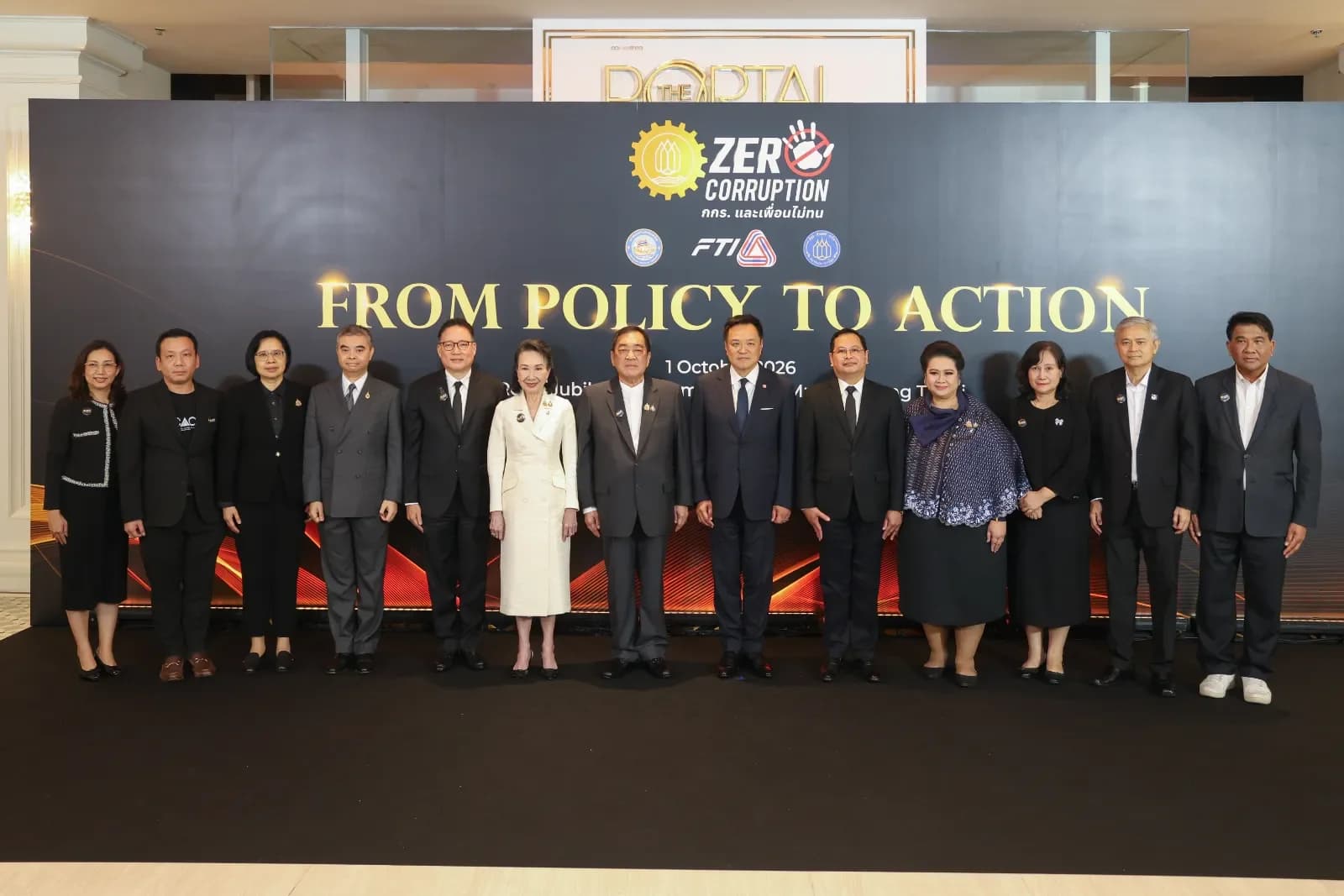
กกร. ผนึกกำลังรัฐ–เอกชน–ประชาสังคม เดินหน้า “Zero Corruption” จาก Policy สู่ Action เสริมธรรมาภิบาล สร้างเศรษฐกิจโปร่งใสFKR. Unites Government–Private Sector–Civil Society to Advance “Zero Corruption” from Policy to Action, Enhancing Good Governance and Creating a Transparent Economy
1 ต.ค. 25691 Oct 2026#ความร่วมมือ#Cooperation#เศรษฐกิจ#Economy
ส.อ.ท. คงเป้าผลิต–ส่งออกรถยนต์ปี 69 แม้น้ำท่วมหลายพื้นที่ ค่ายรถเร่งออกแคมเปญช่วยเหลือFTI Maintains Vehicle Production and Exports Target for 2026 Despite Flooding in Several Areas; Automakers Accelerate Relief Campaigns
28 ก.ย. 256928 Sept 2026#อุตสาหกรรม#Industry#เศรษฐกิจ#Economy
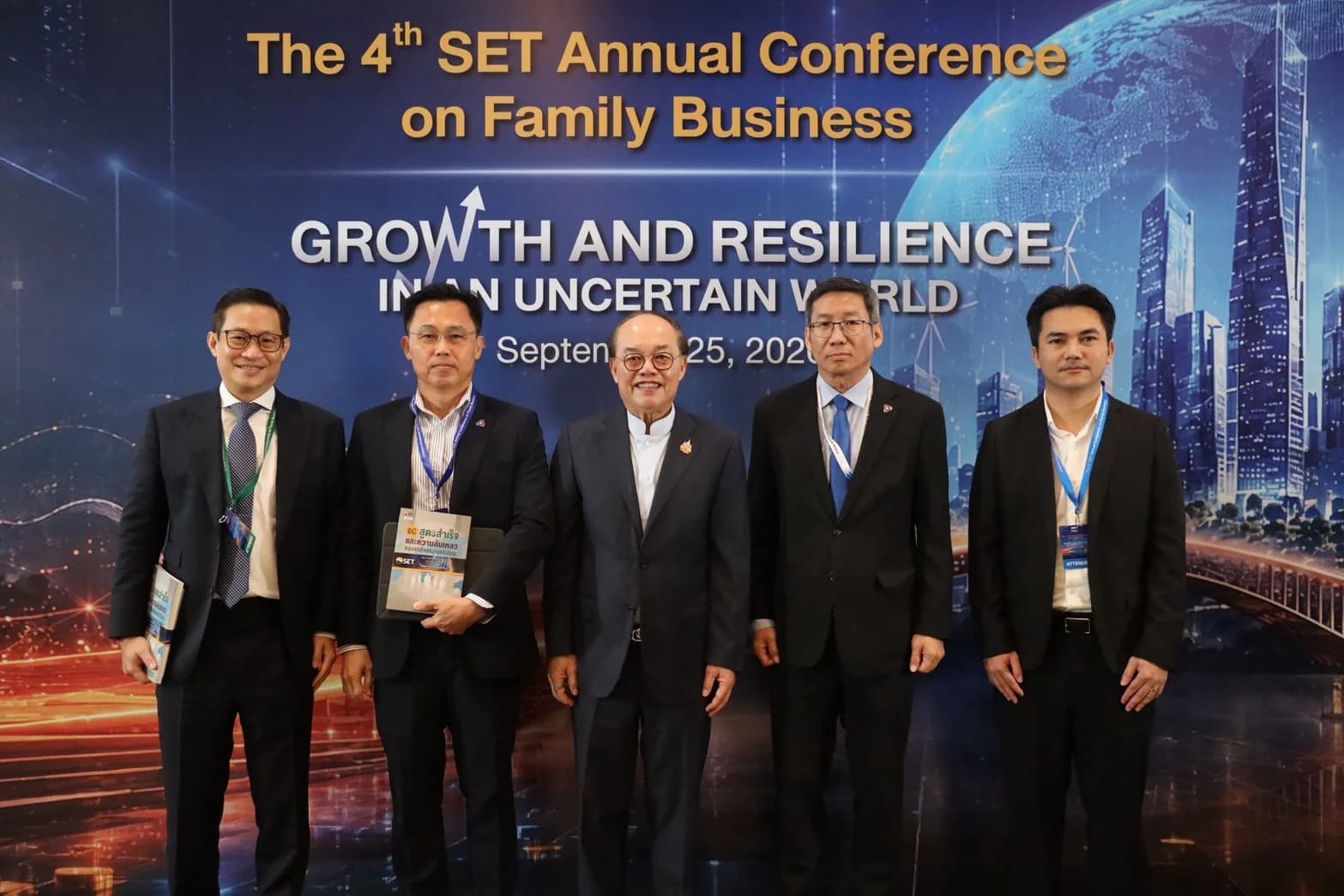
ส.อ.ท. เสริมแกร่งธุรกิจครอบครัว ชู Digital & AI–เงินทุน–ตลาดใหม่ หนุนโตอย่างยั่งยืนFTI Strengthens Family Businesses by Promoting Digital & AI, Funding, and New Markets for Sustainable Growth
25 ก.ย. 256925 Sept 2026#ความร่วมมือ#Cooperation#ธุรกิจ#Business#เศรษฐกิจ#Economy
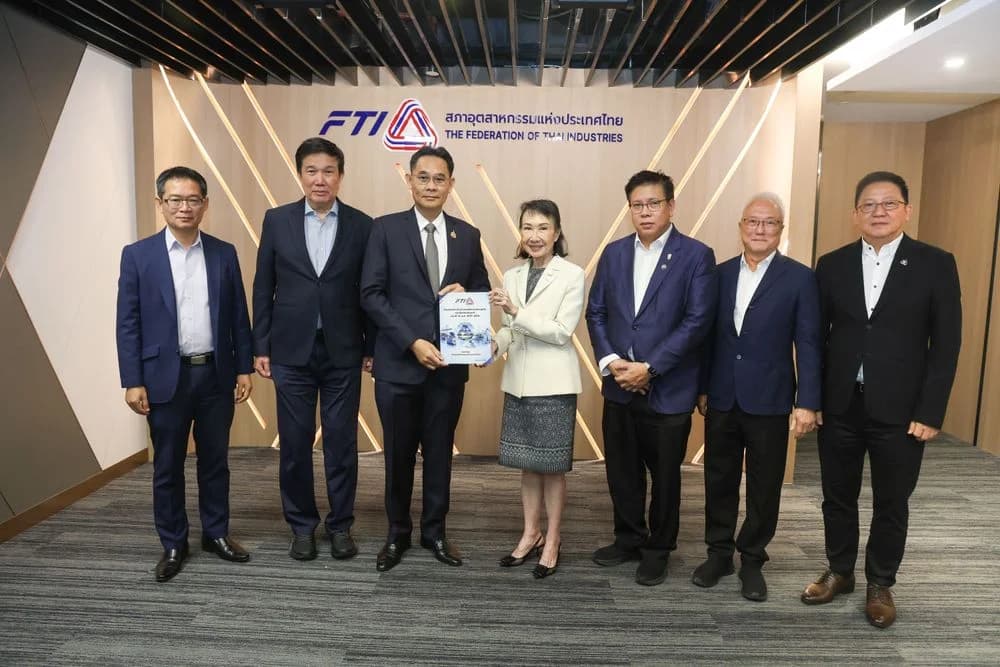
ส.อ.ท. เสนอ 5I เชื่อมแผนพัฒนาฯ ฉบับที่ 14 วางรากฐานเศรษฐกิจไทยสู่การเติบโตอย่างยั่งยืนFTI Proposes 5I to Align with the 14th National Economic and Social Development Plan Establishing a Sustainable Foundation for Thailand's Economy
21 ก.ย. 256921 Sept 2026#เศรษฐกิจ#Economy
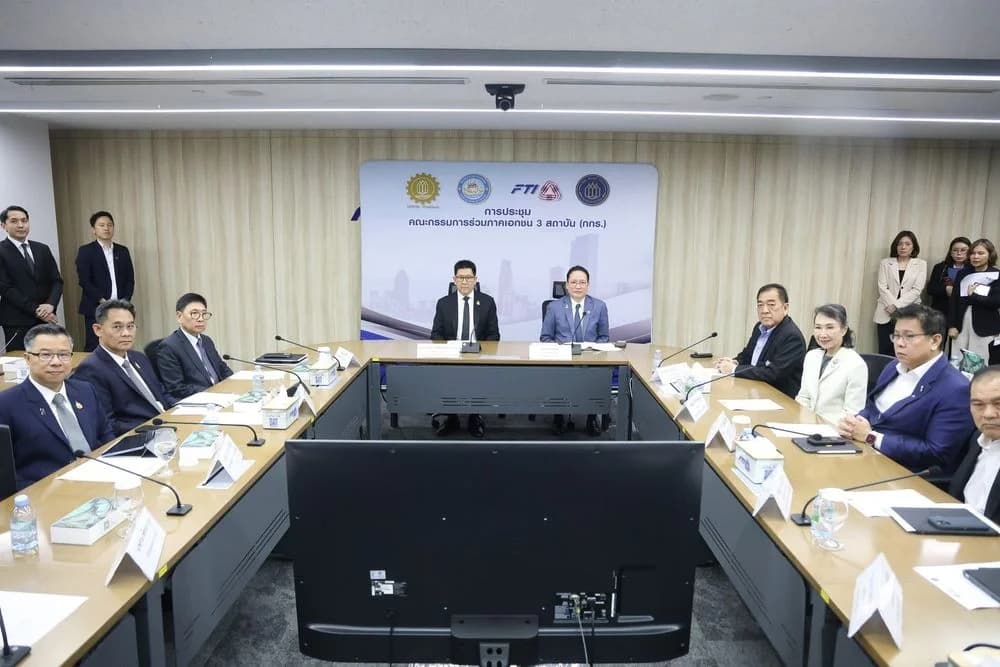
รองนายกฯ “เอกนิติ” ผนึกกำลัง กกร. เดินหน้า Reinvent Thailand เชื่อม 7 กลุ่มธุรกิจกับกลไก กรอ. เร่งเปลี่ยนข้อเสนอภาคเอกชนสู่การปฏิบัติDeputy Prime Minister “Ekniti” Partners with the JCC to Advance Reinvent Thailand
21 ก.ย. 256921 Sept 2026#เศรษฐกิจ#Economy
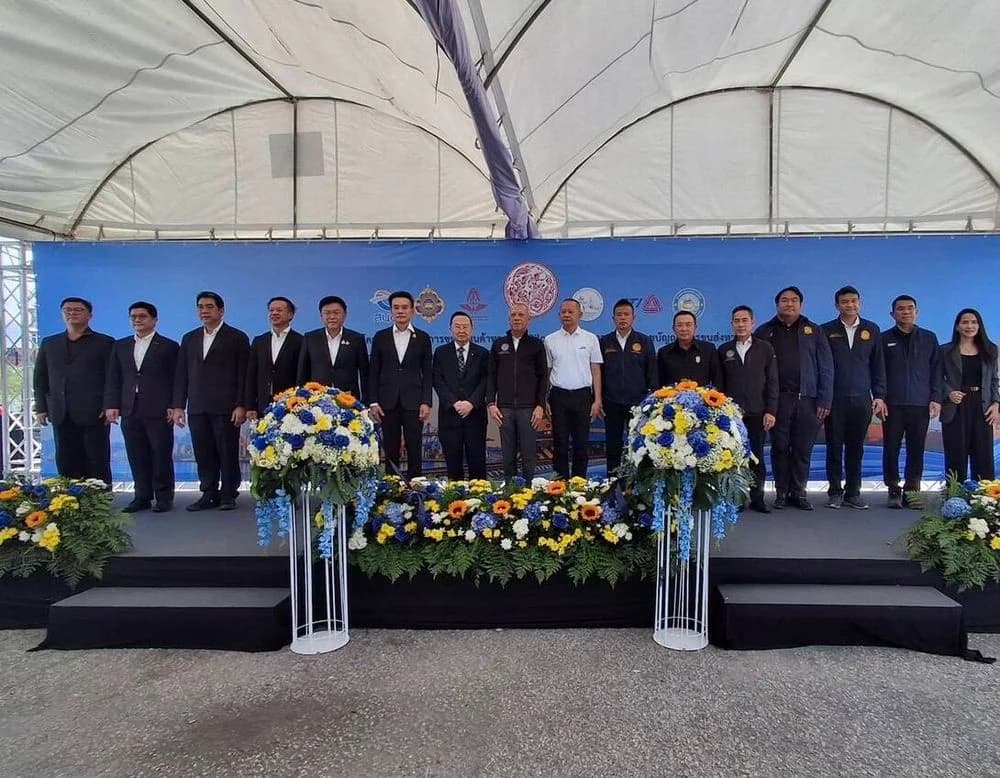
ส.อ.ท. เดินหน้าขนส่งสินค้าทางราง ลดต้นทุนโลจิสติกส์ไทย ผนึก “รัฐ–เอกชน” ปูทางสู่เชิงพาณิชย์FTI Advances Rail Freight Transportation to Reduce Thai Logistics Costs, Collaborating with Public and Private Sectors to Pave the Way for Commercial Operations
18 ก.ย. 256918 Sept 2026#เศรษฐกิจ#Economy
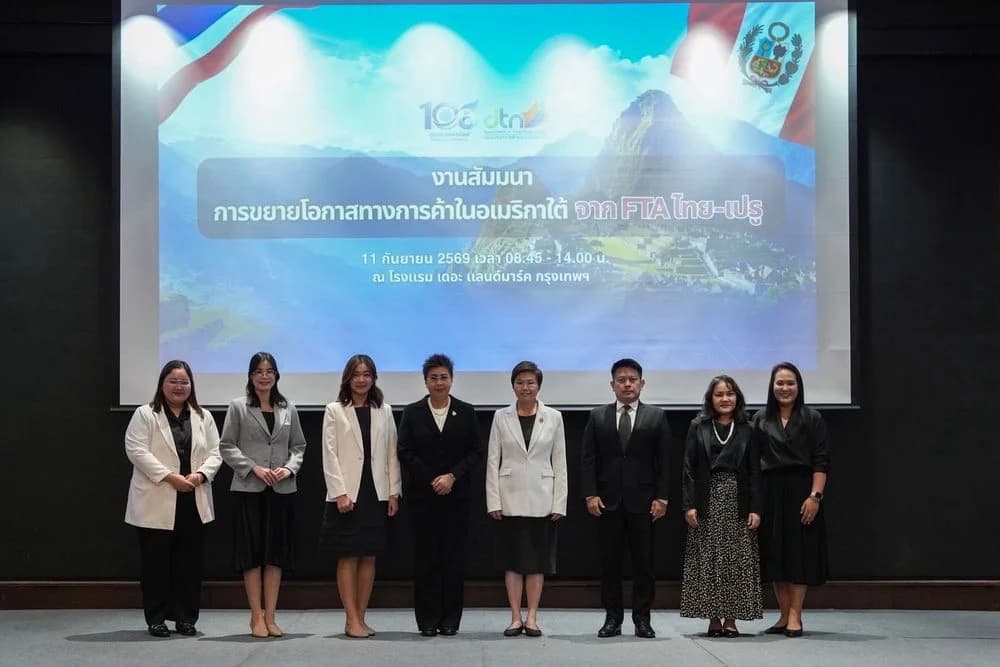
ส.อ.ท. ชู FTA ไทย–เปรู เปิดโอกาสสินค้าไทยเจาะตลาดลาตินอเมริกาFTI Promotes Thailand-Peru FTA, Opening Opportunities for Thai Products in Latin American Market
11 ก.ย. 256911 Sept 2026#เศรษฐกิจ#Economy