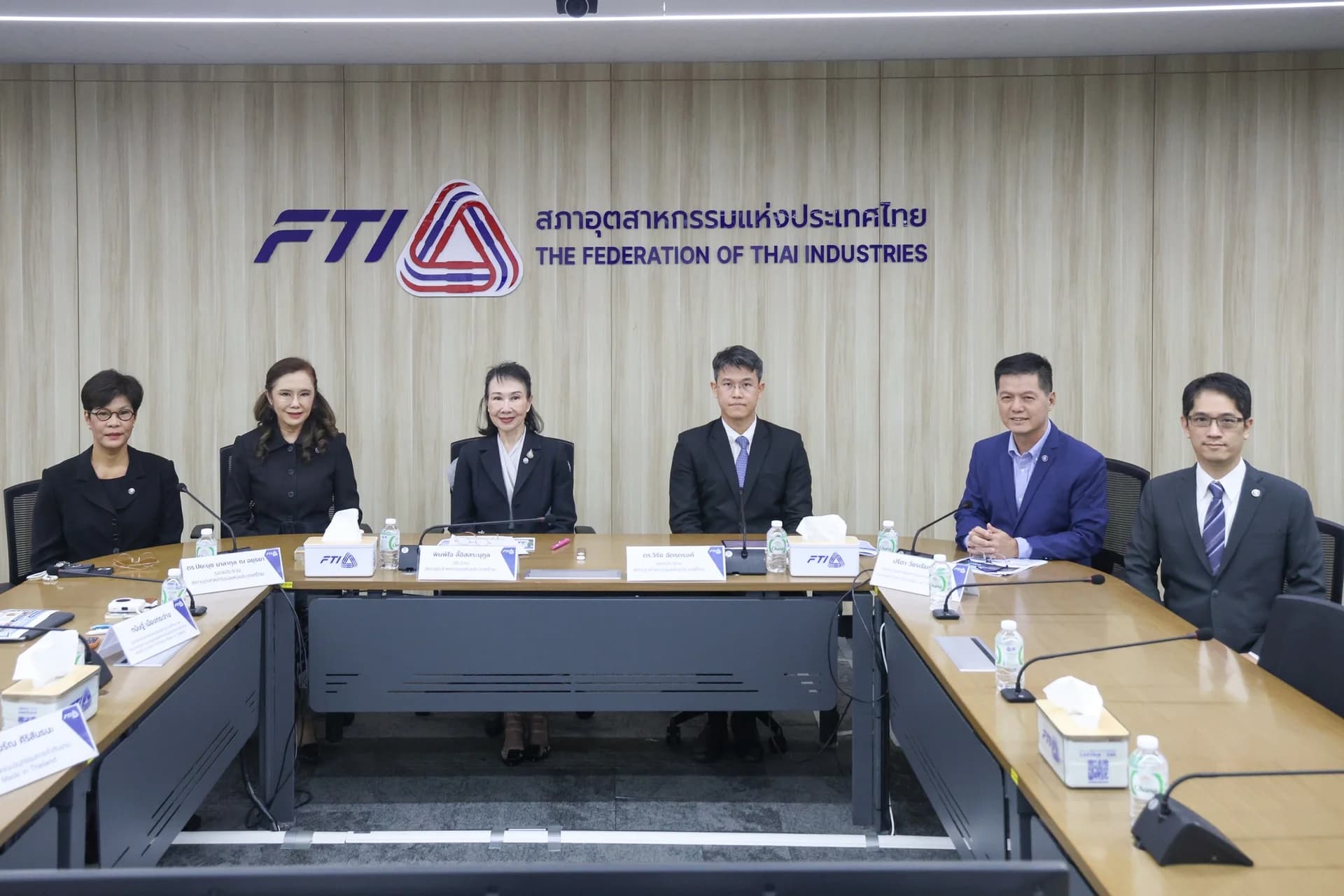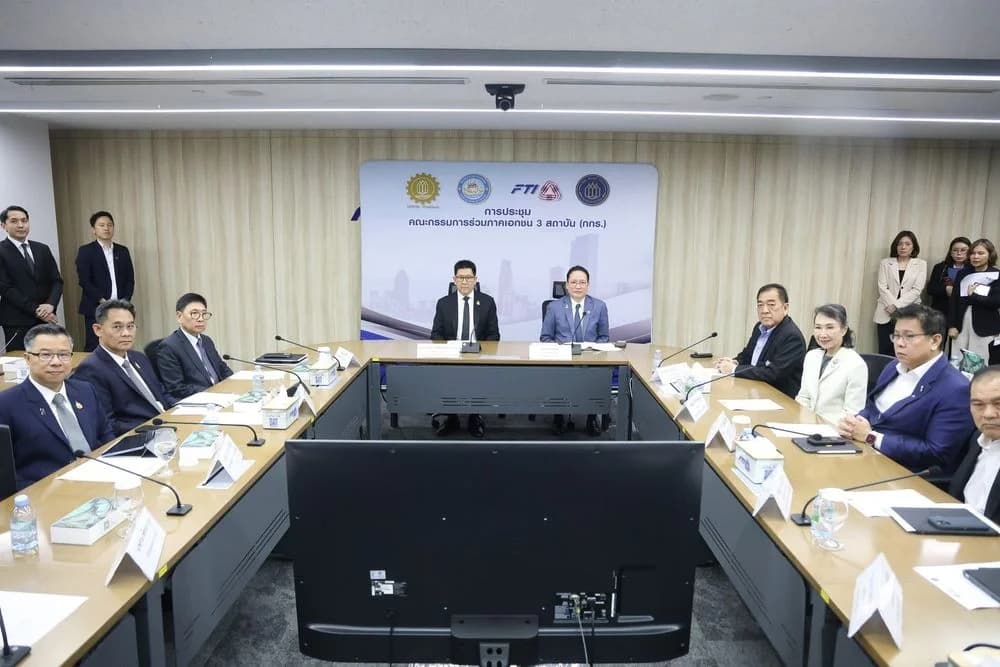

เมื่อวันที่ 6 กรกฎาคม 2569 นายณรงค์ฤทธิ์ พานิชชีวะ รองประธานสภาอุตสาหกรรมแห่งประเทศไทย (ส.อ.ท.) ประธานสายงานสมาชิกสัมพันธ์ และรองประธานสถาบันวิสาหกิจขนาดกลางและขนาดย่อมอุตสาหกรรมการผลิต (SMI) พร้อมด้วยนายชาธิป ตั้งกุลไพศาล ประธานคณะอนุกรรมการด้านการยกระดับศักยภาพ SMEs ของสถาบัน SMI เข้าร่วมการประชุมหารือเพื่อขับเคลื่อนเศรษฐกิจด้านการส่งเสริมเศรษฐกิจชุมชนและ SMEs ภายใต้คณะอนุกรรมการด้านการค้า พัฒนาการค้า การท่องเที่ยว และเศรษฐกิจชุมชน โดยมี ดร.กอบศักดิ์ ภูตระกูล ที่ปรึกษาของรองนายกรัฐมนตรี เป็นประธานการประชุม ณ ห้องประชุม 301 ชั้น 3 ตึกบัญชาการ 1 ทำเนียบรัฐบาล
คณะอนุกรรมการชุดดังกล่าวมีภารกิจขับเคลื่อนเศรษฐกิจใน 5 มิติ ได้แก่ 1) Tourism & Wellness Hub 2) Food Security Hub 3) Creative Hub 4) SMEs Trade Hub และ 5) International Trade Hub เพื่อยกระดับศักยภาพทางเศรษฐกิจของประเทศอย่างเป็นระบบ
การประชุมครั้งนี้มุ่งเน้นการส่งเสริมเศรษฐกิจชุมชนและผู้ประกอบการ SMEs เพื่อเพิ่มขีดความสามารถในการแข่งขัน สร้างความเข้มแข็งให้เศรษฐกิจฐานราก และยกระดับการเติบโตของเศรษฐกิจไทยอย่างยั่งยืน
ในการประชุม นายณรงค์ฤทธิ์ได้นำเสนอข้อเสนอเชิงนโยบาย 4 ประเด็นสำคัญ ดังนี้
1. เพิ่มโอกาสให้ SMEs เข้าถึงแหล่งเงินทุนเสนอให้สถาบันการเงินผ่อนปรนเงื่อนไข หลักเกณฑ์ และคุณสมบัติในการพิจารณาสินเชื่อ เพื่อเปิดโอกาสให้ผู้ประกอบการ SMEs เข้าถึงแหล่งเงินทุนได้มากขึ้น เนื่องจากปัญหาสำคัญในปัจจุบันไม่ได้อยู่ที่อัตราดอกเบี้ย แต่อยู่ที่ผู้ประกอบการจำนวนมากไม่ผ่านการอนุมัติสินเชื่อ
2. ยกระดับเศรษฐกิจชุมชนด้วยเศรษฐกิจสร้างสรรค์เสนอให้สร้าง Value Ecosystem จากการค้นหาอัตลักษณ์ (DNA) ของแต่ละจังหวัดหรือกลุ่มจังหวัด ผ่านการรวบรวมเรื่องราว วัฒนธรรม อาหาร สินค้า GI และภูมิปัญญาท้องถิ่น เพื่อต่อยอดสู่การพัฒนาต้นแบบสินค้าและเส้นทางการท่องเที่ยวเชิงอัตลักษณ์ โดยปัจจุบัน ส.อ.ท. อยู่ระหว่างผลักดันโครงการภายใต้แนวคิด From Product to Provincial Identity Economy ซึ่งมุ่งสร้างความสามารถในการแข่งขันของพื้นที่ผ่านการสร้างอัตลักษณ์และมูลค่าเพิ่ม มากกว่าการพัฒนาสินค้าเพียงอย่างเดียว พร้อมเสนอให้ภาครัฐร่วมสนับสนุนและผลักดันโครงการดังกล่าวให้เกิดผลเป็นรูปธรรม
3. ผลักดัน Thailand as a Brand สู่เวทีการค้าโลกเสนอแนวทางคัดเลือก Product Champion เพื่อยกระดับประเทศไทยสู่การเป็นศูนย์กลางการค้าและการผลิตระดับโลก พร้อมยกตัวอย่างการผลักดันอุตสาหกรรมอัญมณีและเครื่องประดับไทย ซึ่ง ส.อ.ท. กำลังดำเนินการอยู่ในปัจจุบัน เพื่อสร้างภาพลักษณ์และความเชื่อมั่นให้สินค้าไทยในตลาดโลก
4. สนับสนุนสินค้าไทยผ่าน Made in Thailand (MiT) เสนอให้เร่งผลักดันมาตรการจัดซื้อจัดจ้างภาครัฐที่ให้ความสำคัญกับสินค้า MiT เพื่อเพิ่มโอกาสทางการตลาดแก่ผู้ประกอบการไทย ส่งเสริมการใช้สินค้าและบริการที่ผลิตภายในประเทศ และกระตุ้นการหมุนเวียนของเม็ดเงินในระบบเศรษฐกิจไทย
ทั้งนี้ ที่ประชุมมีมติให้หน่วยงานที่เกี่ยวข้องจัดทำและส่งข้อเสนอหรือโครงการพัฒนาที่เกี่ยวข้องกับกลุ่มเป้าหมายที่ต้องการการสนับสนุน รวมถึงประเด็นปัญหาที่ต้องการผลักดันและแก้ไข ทั้งในระยะเร่งด่วนและระยะยาว เสนอต่อคณะอนุกรรมการด้านการค้า พัฒนาการค้า การท่องเที่ยว และเศรษฐกิจชุมชน เพื่อรวบรวม พิจารณา และผลักดันสู่การดำเนินงานในลำดับต่อไป
On July 6, 2026, Mr. Narongrit Panichchiwa, Vice President of the Federation of Thai Industries (FTI), Director of Member Relations, and Vice President of the Small and Medium Enterprises Institute of the Manufacturing Industry (SMI), along with Mr. Chatthip Tangkulpaisan, Chairman of the Subcommittee on Enhancing SMEs Capabilities of SMI, attended a discussion meeting aimed at promoting community economies and SMEs under the Subcommittee on Trade, Trade Development, Tourism, and Community Economy, chaired by Dr. Kob Suakula, Advisor to the Deputy Prime Minister, at Meeting Room 301, 3rd Floor, Government House.
The aforementioned subcommittee is tasked with driving the economy in 5 dimensions: 1) Tourism & Wellness Hub, 2) Food Security Hub, 3) Creative Hub, 4) SMEs Trade Hub, and 5) International Trade Hub to systematically enhance the economic potential of the nation.
The focus of this meeting was to promote community economy and SMEs to enhance competitive capabilities, strengthen the grassroots economy, and elevate sustainable economic growth in Thailand.
During the meeting, Mr. Narongrit proposed four key policy recommendations as follows:
1. Increase opportunities for SMEs to access funding sources by proposing that financial institutions relax the conditions, criteria, and qualifications for loan considerations, thus allowing more SMEs to access funding, as the main challenge currently is not the interest rates, but that many businesses do not pass the credit approval.
2. Enhance the community economy through creative economy by proposing the establishment of a Value Ecosystem based on identifying the uniqueness (DNA) of each province or group of provinces by compiling stories, cultures, foods, GI products, and local wisdom, to further develop prototype products and identity-based tourism paths. Currently, FTI is pushing for a project under the concept of From Product to Provincial Identity Economy, aiming to enhance regional competitive abilities through establishing identity and added value, rather than merely developing products, and urging the government to collaborate and support the implementation of this project effectively.
3. Promote Thailand as a Brand on the global trade stage by proposing a selection of Product Champions to elevate Thailand as a global trade and production hub, exemplifying the push for the Thai gemstone and jewelry industry, which FTI is currently undertaking to build confidence and a positive image of Thai products in the global market.
4. Support Thai products through Made in Thailand (MiT) by advocating for the acceleration of public procurement measures that prioritize MiT products to increase marketing opportunities for Thai entrepreneurs, promote the use of domestically produced goods and services, and stimulate the circulation of funds within the Thai economy.
In conclusion, the meeting resolved that relevant agencies should propose and submit proposals or development projects related to target groups needing support, including issues that require promotion and resolution, both urgently and in the long term, to the Subcommittee on Trade, Trade Development, Tourism, and Community Economy for consideration and subsequent action.